Mandala Painting Guide: Simple Circular Art for Beginners
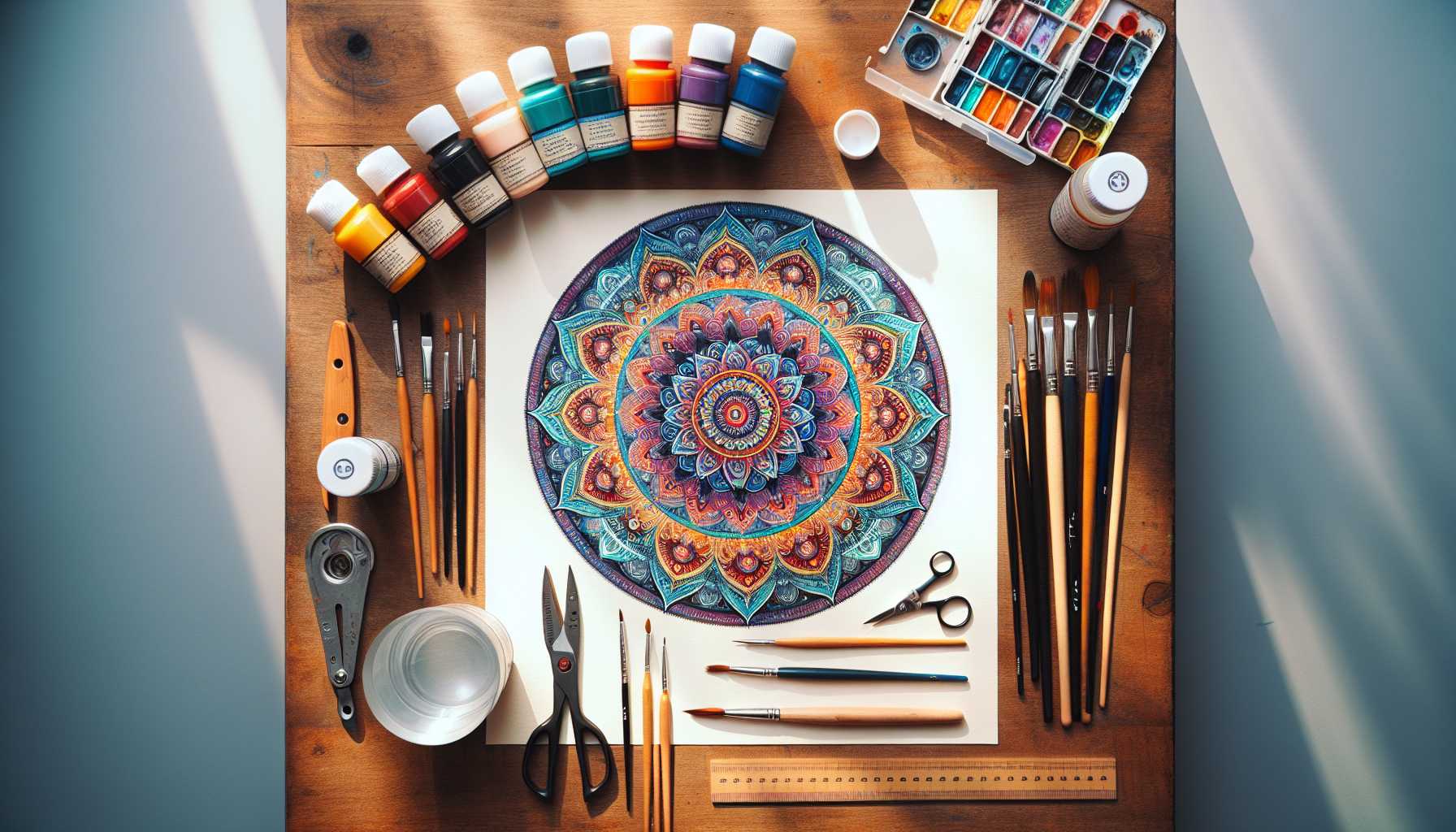
A Beginner's Guide to Mandala Painting: Unleashing the Power of Simple Circular Art
Mesmerized by the intricate circular patterns known as mandalas? Indeed, you're not alone. These beguiling designs have been wooing and winning hearts for centuries. Intriguingly, you can craft your very own captivating mandala paintings, regardless of your artistic experience.
Ready to explore the harmonious world of this serene art form? Fear not, it's much simpler than you might anticipate!
What Sets Mandala Art Apart?
Originating from Sanskrit, 'mandala' translates to 'circle' or 'completion'. These hallowed symbols embody unity and completeness. What's more, you don't have to be spiritually inclined to revel in the joy of making them.
For countless individuals, painting mandalas is an incredibly soothing experience, akin to meditating with a paintbrush. The recurring patterns are a serene way to quieten the mind and alleviate stress.
Basic Supplies for Kicking off Your Mandala Journey
Embarking on the path to mandala painting doesn't necessitate costly resources. Here's your essential checklist:
- Compass or disc stencils
- Pencil and rubber
- Straight ruler
- Acrylic colours or watercolours
- Fine paintbrushes (sizes 0-4)
- A surface such as a canvas, sheet of paper or piece of wood
- Containers for water
- Paper tissues
Don't burden yourself with buying everything all at once. Begin with the fundamentals and progressively extend your collection.
Selecting the Ideal Canvas for Your Art
For novices, paper is a wonderful starting point. Specifically, watercolour paper carries paints wonderfully and resists buckling. Canvas boards lend robustness and a professional touch to your work.
Certain artists take pleasure in painting on wood or pebbles, which naturally enrich your mandala paintings with texture.
The Basic Framework of a Mandala
Every mandala arises from a central dot, serving as your pivot. Patterns flow outward from this point in flawless symmetry.
Here's the uncomplicated structure most mandalas adhere to: - A central dot or tiny circle - An inner ring adorned with simple patterns - A middle zone displaying intricate designs - An outer boundary to frame it all
Bear in mind, symmetry is paramount. Your painting on one side should reflect its other half.
Step-By-Step Guide to Creating Your Mandala
Designing Your Mandala Blueprint
Start off by carefully penciling your mandala. Don't stress about perfection - these guidelines aid in creating a balanced design.
Begin drawing a large circle. Within it, draw smaller circles to separate sections. These rings will guide your pattern placement.
Initiating with the Centre Work
Always initiate painting from the core and proceed outward to avoid smearing your completed work.
Select a single focal color for your center. A modest dot or miniature flower is an ideal starting point for beginners.
Progressing with Expansion of Rings
Add designs to your rings progressively. Popular simple patterns for beginners include: - Basic dots - Shapes of petals - Straight lines - Tiny triangles - Twisted spirals
Remember to take your time. Mandala painting is a calm craft that needn't be rushed.
Harmonious Addition of Colour
For your first mandala, keep your palette to 3-4 colours. An excess of colours can be overwhelming.
For beginners, these color combinations are worth trying: - Mixes of blues and whites - Warm hues of oranges and reds - Purples mixed with gold - Earthly tones
Ideal Simple Patterns for Newbies
Don't stress about executing complex designs initially. Even simple patterns have the potential to be magnificent.
Dot Patterns: Develop lines of vibrant dots in varying sizes. Adjust the gap between them for an interesting visual appeal.
Petal Designs: Paint simple teardrop shapes radiating from the center. Layering them will generate depth to your work.
Geometric Structures: Triangles, squares, and diamonds yield attractive organized patterns.
Natural Elements: Leaves, flowers, and vine designs can impart a natural charm to your mandala.
Simplifying Colour Theory
Gaining basic insights on colour relationships can dramatically improve your mandala artwork.
Complementary colors (opposite sides on the colour wheel) yield a vibrant contrast. Consider pairings like blue and orange or red and green.
Analogous colors (adjacent hues on the colour wheel) result in a harmonious blend. Combinations like blue, blue-green, and green work particularly well together.
Monochromatic schemes employ varying shades of a single colour, generating sophisticated and calming effects.
Common Mistakes for Beginners to Sidestep
Mistakes are a part of the learning curve. Here are some typical ones to watch out for:
Don't rush the drying process. Patience is key to avoiding smeared colors.
Resist the urge to make your debut mandala overly complicated. Quite often, straightforward designs leave a stronger impact.
Never overlook the planning phase. A rough pencil sketch can save you from frustration later on.
Remember to rinse your brushes between colors to avoid muddy shades in your painting.
Developing Your Unique Mandala Style
In time, every artist cultivates their distinctive style. Some are drawn to geometric precision, while others prefer fluid, organic patterns.
Feel free to experiment with varied approaches. One day try bold, contrasting colours, and on another day, muted and understated tones.
Peruse mandalas from diverse cultures for inspiration. Tibetan, Indian, and Celtic designs are replete with unique pattern inspirations.
Making Mandala Painting a Habitual Practice
A daily rendezvous with mandala painting proves extremely gratifying for many artists. Even a few minutes can be meditative and yield a productive piece.
Set up a small dedicated art corner. Having ready supplies at hand fosters regular practice.
Consider maintaining a mandala journal. It could serve to document your evolution and favourite techniques.
Sharing Your Mandala Art Journey with Others
The mandala artist community is a treasure trove of support and encouragement. Sharing your work on social platforms or within local art groups could be very fulfilling.
Participate in online mandala art forums. It's a great place to find inspiration, pointers and constructive critiques.
Look out for local communities with mandala painting groups that congregate regularly. There's a special joy in creating art in the company of fellow artists.
Levelling up Your Skills
Once you're at ease with the basics, consider exploring advanced techniques:
Metallic paints can lend an elegant touch to your mandalas. Gold and silver details bring an added layer of sophistication.
Try your hand at mixed media. Incorporating fabric, beads, or natural materials can add interesting textures to your art.
Explore digital mandala creation. Modern apps and software open up fresh creative avenues.
Embarking on Your Mandala Journey
Mandala painting offers a beautiful marriage of a time-honoured tradition and a modern stress-relieving activity. The beauty of this art form is not limited to the completed piece but is equally present in the tranquil journey of creation.
Remember, every master was once a novice. Your initial mandala may not be flawless, and that's perfectly fine. Every circle you paint imparts a new lesson.
Prepare your supplies, find a serene space, and set off on your mandala voyage today. Who knows, it could unveil a deeply satisfying passion that injects both beauty and tranquility into your life.
The world could always do with more hand-crafted beauty. Your mandala paintings could serve as your unique contributions.
Happy painting!