String Pull Effects: Creative Fluid Art Tutorial
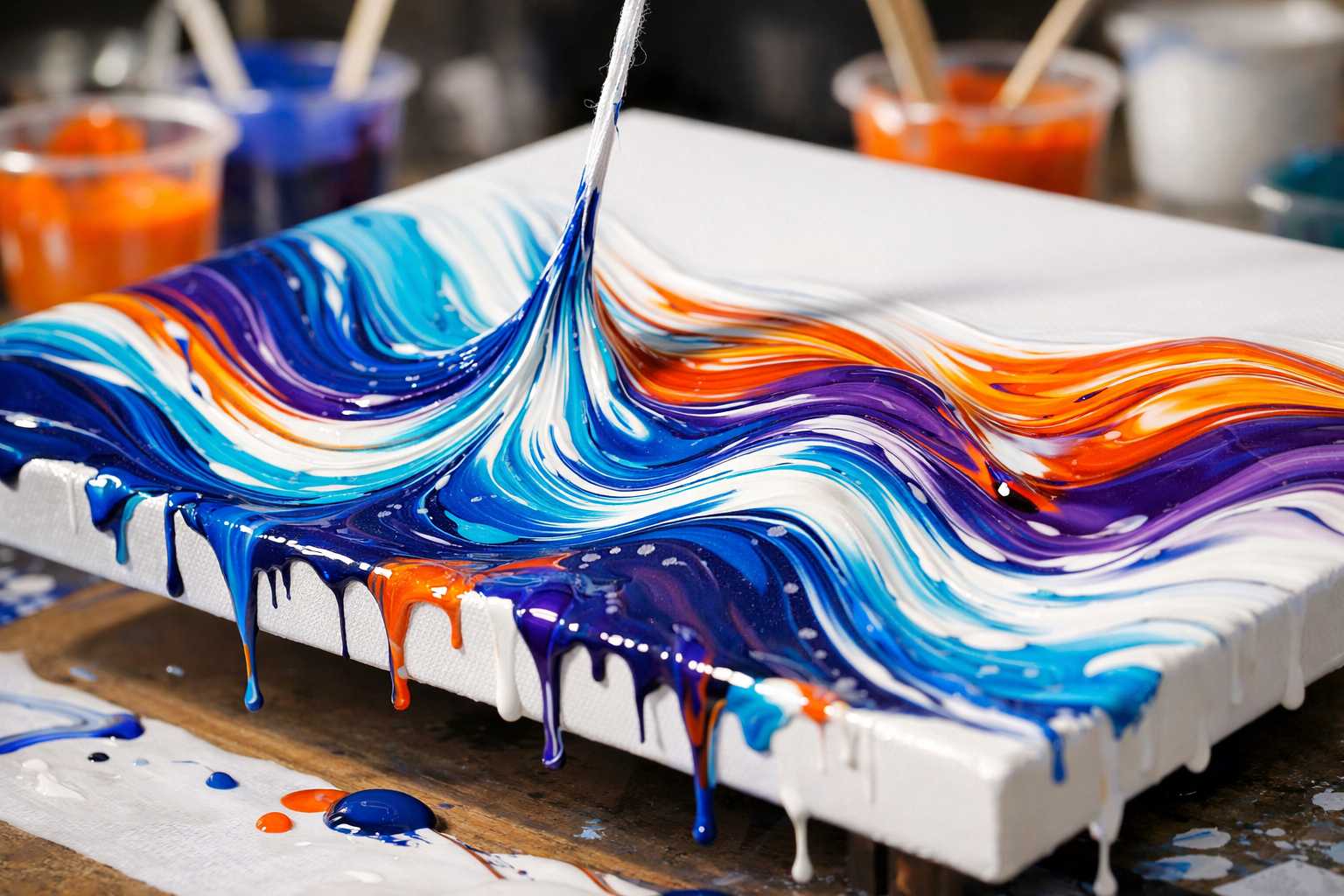
Unravelling String Pull Fluid Art
String pull fluid art is a captivating form of acrylic pouring. In this technique, you use a piece of string to pull paint across your canvas. The end results never cease to leave an audience spellbound!
This technique yields natural, undulating lines that seem to dance across your masterpiece. Every artwork becomes distinctly unique. No two string pull outputs will ever mirror each other.
The allure lies in the spontaneous character of this creative process. You maneuver the string, but it's the paint that pronounces the ultimate resultant.
Necessary Materials
To start the artistic process, you need less than you might have initially thought. The basic supplies include:
- Acrylic paints (2-4 colors generally yield the best results)
- Pouring medium
- Cotton string or yarn
- Canvas or canvas board
- Plastic cups
- Stirring sticks
- Gloves
- Drop cloth or plastic sheeting
Starting off, don't obsess over getting top-tier materials. Basic acrylic paints from any hobby shop will suffice.
Mixing Your Paint
The viscosity of your paint blend is significantly important, akin to warm honey dripping off a spoon.
In separate cups, mix each shade of paint with pouring medium. Maintain a ratio of around 1:1 or 1:2 (paint to medium), stirring gently to evade the formation of bubbles.
Check the consistency by lifting your stirring stick—the paint should flow steadily without breaking up instantaneously.
Preparing Your Workspace
Getting your workspace ready is highly crucial in fluid art. Begin by laying down your drop cloth—this will spare you from hours of cleaning later.
Station your canvas on an elevated platform. Mini cups or a wire cooling rack serve the purpose aptly. This arrangement lets the excess paint drip off naturally.
Do keep some paper towels within reach. They'll come in handy.
Implementing the String Pull Technique
Now comes the thrilling segment—trim your string to about 12-18 inches long for good control and desired effects.
Pour your palest color as a base layer on the canvas. Add spots or lines of other colors on top.
Place your string over the paint, leaving about 3-4 inches hanging off one side. Press the string gently into the paint.
Place a piece of plastic or another canvas on top. Apply a soft, even pressure across the breadth.
Orchestrating the Magical Pull
This is when the magic unfurls! With one hand hold down the top surface while with the other, pull out the string slowly.
Pull steadily but not rapidly to avoid causing the paint to splatter. Controlled, slow pulls yield smoother effects.
First, try pulling straight out, then gradually experiment with slight deviations or angles for varied patterns.
Advanced Variations of String Pull
Ready to escalate your string pull prowess? These compelling variations are worth trying:
Multiple String Pulls: Use 2-3 strings simultaneously for intricate patterns. Distribute them evenly across your canvas.
Curved Pulls: Rather than straight lines, give gentle S-curves or spirals a shot.
Directional Changes: Start pulling in one direction then switch midway.
Successful Color Combinations
Some color mixes render truly stunning conclusions! Here are some combinations that I personally adore:
Ocean Vibes: Combining deep blue, turquoise, and white creates magnificent wave effects.
Sunset Dreams: Orange, pink, yellow, and purple blend seamlessly together.
Forest Magic: Various shades of green speckled with brown and gold.
Monochrome Elegance: Different hues of one color family.
Common Pitfalls to Evade
All artists make errors—that's part of the learning curve. Here are the most reoccurring blunders:
Too Thick Paint: If your paint is too thick, it will not flow suitably. Add extra pouring medium if required.
Pulling Too Fast: Speedy movements birth chaos instead of desired effects.
Unclean String: Rinse your string between different hue application for enhanced results.
Insufficient Paint: Don't be frugal with your paint application!
Ironing out the Wrinkles
Unsatisfied with your result? Don't fret! Here's how to rectify everyday mishaps:
Muddy Colors: Your colors might be too blended. Try using fewer colors or expedite your pulling.
Broken Lines: Your paint is likely too dense. Add more pouring medium the next time.
Paint Won't Flow: Consistency is crucial, aim for that honey-like texture.
Final Touches and Drying
Once you've completed your string pull, resist touching it! Sometimes less is indeed more.
Allow your artwork to dry completely while lying flat. This typically takes 24-48 hours depending on the thickness of the paint.
Ponder on applying a protective varnish once fully dried. This will ensure that your work of art remains intact for years down the lane.
Exploring Your Art's Boundaries
The possibilities with string pull fluid art are virtually limitless! Consider using it as a backdrop texture for other techniques within larger pieces.
Think about creating a series with similar color schemes. Gallery walls are a vision with coordinated fluid art pieces.
Keep a record of your journey with photographs. Reflecting on your progress will enrich your learning.
Concluding Thoughts
String pull fluid art offers infinite opportunities for imaginative expression. Each experiment lends a new perspective on paint behavior and technique.
Don't expect to conjure perfection on your first attempt. Even the experienced artists at times create pieces they are less than enthusiastic about!
The real joy lies in the process itself. Embrace the element of unpredictability and let the paint surprise you.
Keep in mind, there's no "inaccurate" method to create art. Your distinct style will emerge naturally over time.
Now gather your supplies and set the ball rolling! You are merely a string pull away from your maiden masterpiece.
*Ready to embark on your fluid art journey? Note that practice ushers progress, not perfection. Let the creation begin!