Spontaneous Art: Quick Impressionist Painting Methods
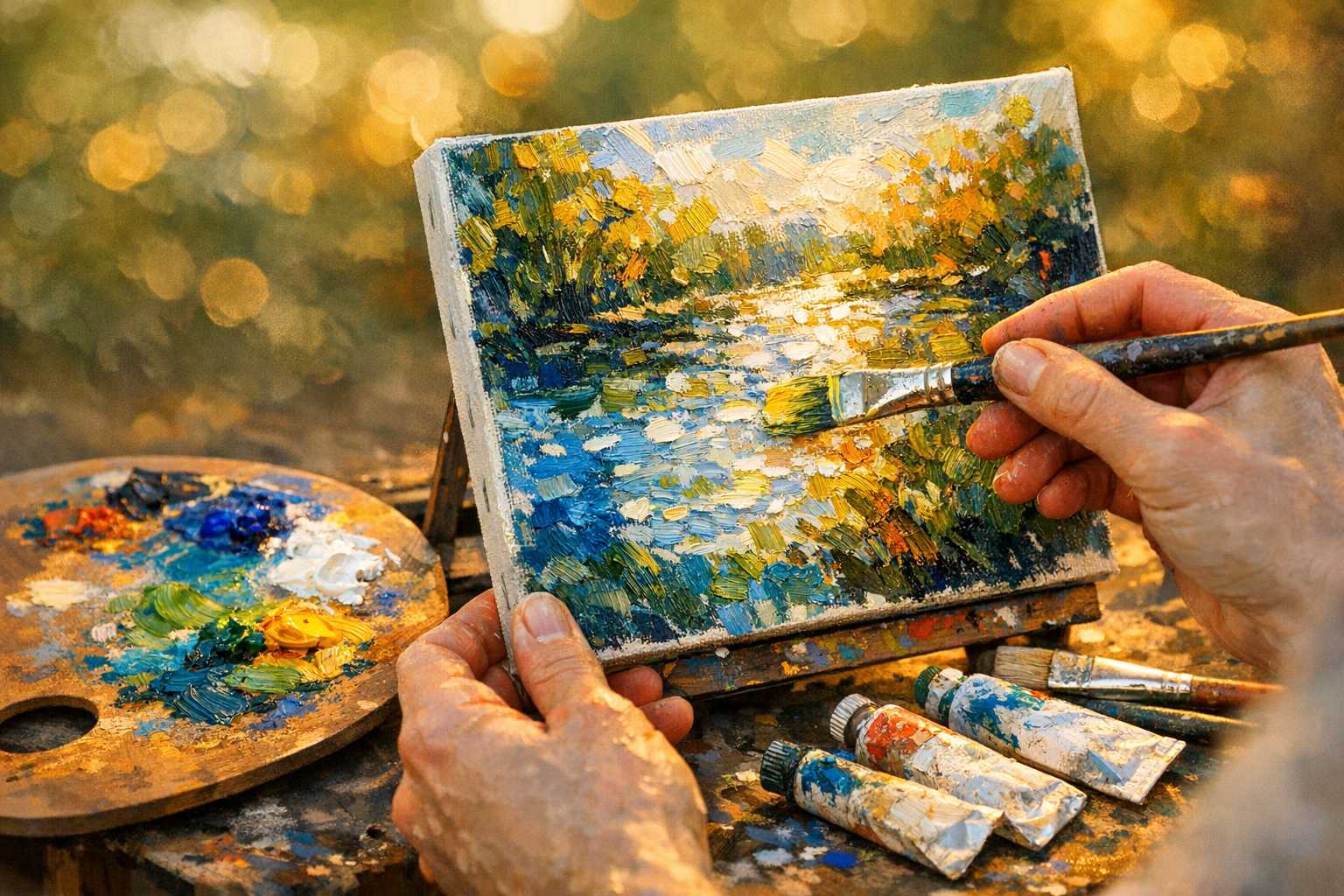
The Art of Spontaneous Creation: A Guide to Quick Impressionist Painting Techniques
Ever desired to paint in the style of Monet but been intimidated by seemingly complex techniques? You're not alone in that. Countless artists aspire to produce beautiful impressionist artwork but often feel it requires years of mastering.
In reality, the magic of impressionist painting lies in the remarkable spontaneity and swiftness of the process. I'm here to unravel some transformative techniques to help you kick start your artistic journey in capturing stunning art.
Grasping Quick Impressionist Painting Techniques
Impressionism revolves around encapsulating a fleeting moment. This artistic discipline isn't about flawlessness or intricate details. On the contrary, it thrives on setting the mood and producing a feeling.
Historically, impressionist painters frequently painted in the open air. They were compelled to work swiftly to capture the shifting natural light. This time constraint is what birthed their uniquely expressive and dynamic style.
You too can harness this sense of urgency. Quick painting enables you to concentrate on vital elements within your painting.
Essential Art Supplies for Spontaneous Creation
Here's the good news - you can commence without splurging on pricey equipment. Here's a simple list of what's necessary:
Brushes: - Arm yourself with large flat brushes to fill in forms - Medium-sized round brushes are ideal for detailing - A palette knife is a must-have for mixing and texture
Color Palette: - Begin with primary colors, complemented by white - Employ burnt umber as a mixing agent for darker hues - Introduce a few other convenient colors like yellow ochre
Canvas: - Smaller canvases (around 9x12 inches or less) work best - Canvas boards are ideal for practice
Remember to maintain a minimalist setup. Too many choices could distract you and slow your process.
Harness the Power of Alla Prima Technique
Alla prima, Italian for "at first attempt," is the perfect technique for spontaneous art.
This method involves completing your painting in one session without waiting for the layers to dry. No overthinking.
Here's a brief overview of how it's done:
- Quickly fill in your major forms
- Incorporate colors into the wet paint
- Blend directly on the canvas
- Progress from a broader perspective to specific aspects
This technique results in producing a fresh vibrancy that is hard to replicate with layered methods.
Swift Color Mixing Hacks
Quick impressionist painting techniques hinge on shrewd color mixing. Ditch the pursuit of mixing perfect colors on your palette and instead let the colors blend on the canvas.
Check out these mixing shortcuts:
- Employ the technique of broken color (placing small dabs of different shades side by side)
- Opt for optical color mixing over physical mixing
- Embrace "muddy" tones - these often mimic natural hues
- Utilize changes in temperature instead of value changes
Bear in mind, being an impressionist means being a rebel, breaking conventions of the time. You're free to create with your own set of rules!
Quickly Capturing Light and Movement
Depicting rapidly varying light is a crucial aspect of impressionist painting.
Pay attention to these elements:
Light direction: Where is the source? Color temperature: Is the light's hue warm or cool? Shadows: These help define the light Reflected light: This brings vitality to shadow areas
Don't just paint objects. Capture the light's interaction with the objects. This slight shift in perspective can create a major difference.
For implying movement, employ directional brushstrokes. Let the brush follow the natural contour. Use upward strokes for grass and horizontal strokes for water, for instance.
Brush Techniques for Instant Impact
Your brushstrokes should be firm and thoughtful. Hesitation disrupts spontaneity.
Experiment with these brush techniques:
Scumbling: Light and fractured strokes over dry paint Impasto: Bold strokes with thick paint Dry brush: Light touches with minimal paint Broken color: Pure, unmixed neighboring colors
Ensure each brushstroke is meaningful. Every mark counts.
Choosing Between Painting from Life vs. Photos
Nothing can emulate the enriching experience of painting in real-time. It involves all your senses.
If you decide to paint outdoors: - Begin with a quick sketch to capture the light and dark values - Initially, block in major shapes - Dedicate time to the entire canvas uniformly - Disregard getting caught up in tiny details
If you choose to paint from photos, go for ones with strong patterns of light and shadow. Lackluster light often results in dull paintings.
Effective Time Management for Swifter Sessions
Setting a timer while painting helps maintain discipline. Starting off with 30-45 minutes is advisable.
This time constraint can become your ally. It pushes you to make swift decisions which can lead to better outcomes.
Here's how to structure your time: - First 10 minutes: Block in the major shapes - Next 20 minutes: Enhance the color and light - Final 10 minutes: Highlight accents and details
Stop once the timer goes off. Overworking a piece can steal the vibrancy.
Common Pitfalls to Dodge
Despite quick techniques, certain mistakes may bog you down:
Overthinking color choices: Stand by your initial instinct Working too microscopically: Smaller brushes tend to result in rigid painting Correction of every "mistake": Some inadvertent errors turn out to be happy surprises Overuse of numerous shades: Limit your color palette Early detailing: Perfect the bigger shapes first, as always
Remember, impressionist paintings may look informal up close but they crystallize into clear, intelligible forms from afar.
Nurturing your Spontaneous Art Practice
Consistent practice triumphs over chasing perfection. Keep your paintings frequent and uncomplicated.
Try your hand at these practice exercises:
Daily color studies: 15-minute quick paintings of simple everyday items Weather sketches: Immortalize the different lightings cast by varied weather conditions Time-of-day collection: Paint the same scene at multiple hours Gesture paintings: Highlight movement and vitality
Maintain a log of all your paintings. Record what worked well and what fell short. Reflecting on your experiences speeds up your learning process.
Discovering Your Unique Artistic Voice
Quick impressionist painting techniques are about more than just speed. They guide you towards revealing your authentic artistic expression.
Every artist perceives the world individually. Honor your distinctive perspective. Refrain from trying to mimic other artists.
Your perceived "mistakes" could end up defining your style. Many renowned techniques originated as fortuitous accidents.
Advancing Your Spontaneous Art Journey
Once you have established a rudimentary understanding of quick methods, feel free to experiment with:
- Changing times of day
- A variety of weather conditions
- Urban and rural subjects
- Different color schemes
- Multiple canvas sizes
Join local plein air painting communities. Collaborating with other artists can fuel your motivation and offer valuable insights.
Consider enrolling in workshops centered on quick painting methods. Sometimes, a few tips from a seasoned artist can save you months of trial and error.
Adopting the Impressionist Mindset
Spontaneous art isn't just a set of tactics. It's about accepting imperfection, uncertainty, and discovering the beauty in the unexpected.
Impressionist painters were revolutionary. They faithfully painted their perceptions and not what they thought was correct.
You too can embrace this fearless approach. Trust your instincts, observations, and above all, patience with the process.
Unveiling quick impressionist painting methods impacts the manner you observe your environment. Ordinary situations are suddenly transformed into illustrative moments.
A billowing plume of steam from morning coffee? An ideal subject! The play of light on your kitchen table? Pure enchantment!
Embarking on Your Spontaneous Art Journey Right Now
You now possess the tools to design spontaneous, visually stunning impressionist paintings. All that's left for you to do is to begin.
Remember, every master was a novice once; Monet didn't perfect his famed water lilies in his initial attempts.
Take hold of your brushes. Set the timer. Start your painting.
Your journey in spontaneous art starts with a single, meaningful brushstroke.
There's a need for your unique artistic voice. This guide to quick impressionist painting techniques is just the start of your exciting creative journey.
Happy painting!