Simple Masking Tape Art: Linear Painting for Beginners
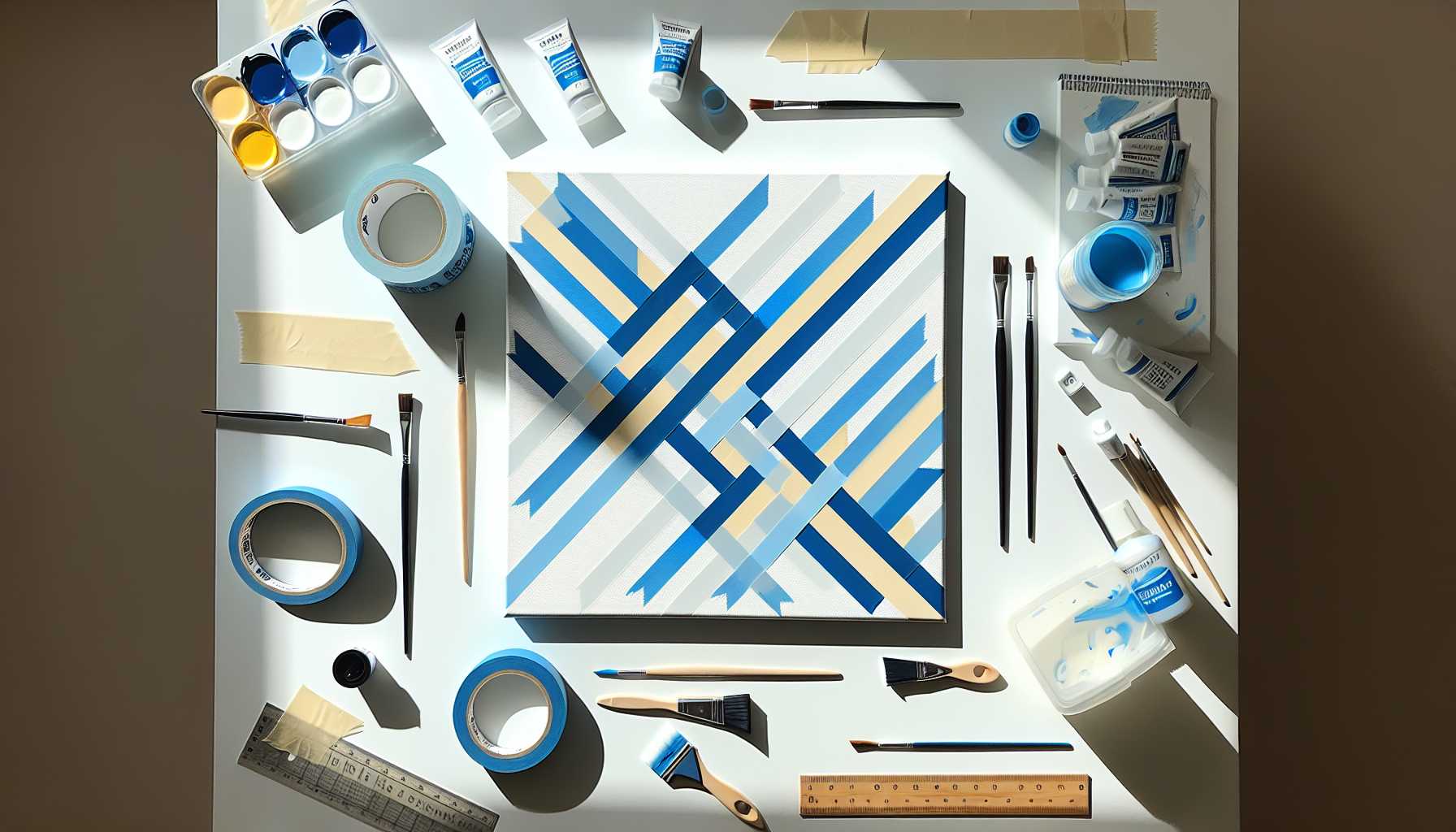
Easy Art Project: Beginners Guide to Linear Painting Using Masking Tape
Ever admired geometric paintings so crisp they seem almost perfect, and wondered the secret behind the clean lines? Here's a revelation - it's nothing fancy, just usual masking tape!
As an art instructor for over a decade, I find the art of using masking tape among the most delightful techniques for beginners. It's cost-effective, provides room for errors, yet ultimately produces topnotch artwork, guaranteed to make your friends go, "Did you actually make this yourself?"
The Basics of Masking Tape Art
Masking tape art utilizes masking or painter’s tape to carve out defined sections on a canvas. You'd paint over these tape partitions, then peel them off to expose clean, sharp lines beneath.
Suitable for geometric designs, stripes, abstract configurations, this technique wonderfully does not require steady hands or a long experience for its beautiful execution.
Must-Have Materials for Your First Artwork
For your first go at this, let's stick to the basics:
- A canvas or thick paper (8x10 inches works well for beginners)
- Masking or painter’s tape
- Acrylic paints (not more than 2-3 colors)
- Foam or standard paintbrushes
- Small roller (useful, but optional)
- Pencil and ruler
You likely have most of these materials somewhere at home, but if not, they shouldn't cost more than $20 at your nearby craft store.
Step-By-Step Guide to Linear Painting
Design Plan
Start off with something simple for your first masking tape art project. Consider stripes slanting diagonally or basic geometric patterns.
Firstly, lightly sketch your design using a pencil. This helps you preview the final picture and ascertain where to place your tape. With this technique, remember that the less complicated, the better.
Tape Placement
This is where the real creativity begins. Take it slow while applying your tape.
Ensure those edges are firmly pressed down. Avoid gaps that allow paint to seep through, spoiling your crisp lines.
Start from one end of the tape to the other to prevent the formation of air bubbles that could lead to paint bleeding underneath.
Effective Painting Techniques
Instead of sweeping brush strokes, dab. This keeps the paint from sliding underneath the tape borders.
Rather than applying a single, thick layer of paint, go for thinner multiple coats. A couple of thin layers work better and lower the chances of paint bleeding.
Ensure each layer dries fully before the next one. Exercising patience can really pay off in this step.
Tape Removal: The Grand Unveiling
This part is most people's favorite! When the paint is about 80% dry, slightly wet, start peeling off the tape.
Pull at a 45-degree angle. Take it slow and let yourself enjoy beholding those flawless lines make their appearance.
Should you spot any negligible errors, there's no need to stress. Simply wait till everything dries, then use a small artist's brush to fix the tiny mistakes.
Beginner-Level Creative Ideas
Elementary Stripe Patterns
Kick off with alternations of three horizontal stripes in two colors. Count the background of the canvas as your third color.
Vertical stripes give off a totally different vibe. For an intriguing variation, combine narrow and wide stripes.
Basic Geometric Shapes
By applying tape in a zigzag manner, you can create triangles. Though it may seem complicated, the shape is surprisingly easy to get.
Squares and rectangles are easy, proven options that can be fashioned in a grid design or randomly scattered over your canvas.
Color Palette Suggestions
For a calming, Seaside ambiance, a duo of blue and white works wonders.
For bold expressions, a combo of black, white, and a vibrant color, like yellow or red, rarely fails.
Earthy tones like brown, cream, and sage green create naturally sophisticated art.
How to Prevent Common Errors
Paint Leaking Under Tape
This essentially occurs when the tape edges aren't firmly pressed to the canvas. Spend more time securing those borders.
Clear sealant can help fortify the tape edges and discourage paint sipping through.
Late Removal of Tape
Don’t wait until the paint completely cures before peeling off the tape. Fully dried paint may get yanked off with the tape.
Once the paint feels dry to your touch but is not entirely hardened, that's the most appropriate time for tape removal.
Improper Tape Choice
Ordinary scotch tape can ruin your canvas or paper when removed. Use only suitable masking tape or painter’s tape.
For delicate surfaces, low-tack tape is your best bet. High-tack tape may be too robust for paper but just right for canvas.
Enhancing Your Art Skills
Layering Methods
Once proficient in the basics of masking tape art, progress to layering different colors. Apply tape, paint over it, peel it off, then apply new tape in varied areas.
Such simple techniques can create complex-looking portraits.
Experimenting with Textures
Use different painting tools over the taped sections. Sponges, palette knives even textured rollers can create interesting effects.
Importantly, maintain the dabbing technique to stop paint sliding under the tape lines.
Mixed Media
Combine your masking tape artwork with other mediums. Once you've removed the tape, add smaller details using markers.
Collages look excellent with geometric tape designs.
Showcasing and Maintaining Your Artwork
Your completed masking tape art deserves a fitting showcase. A snug frame can make even the simplest creations seem professional.
With the use of acrylic paints, your artwork can stay untarnished for years, just keep it away from direct sunlight.
Consider doing a series of paintings, instead of one big artwork. A collection of 4-6 small geometric artworks can leave quite an impression on a wall.
Why Masking Tape Art is Ideal for Beginners
This technique is perfect for beginners, rapidly instilling confidence as you see impressive results from day one, keeping you eager to keep creating.
It teaches valuable skills like map-out and color scheme planning and the practice of patience. These fundamental skills are applicable even as you explore other painting styles later on.
With inexpensive supplies, you can explore more freely without worrying about the cost.
Start Creating Today
Don't overcomplicate your first attempt at this. Get your tape and paints and get to work. The charm of masking tape art lies in its simplicity and instant gratification.
Remember, every master artist was once a beginner. Your first piece might not be flawless, but it'll surely be one of a kind.
What pattern will you go with first? Commence with something easy, relish the process, and look forward to that exhilarating moment when you peel off the tape to reveal your neat lines.
It's time to delve into the world of masking tape art. You might just discover that your true masterpiece was a roll of tape away all this while.