Easy Foil Texture Painting: Simple Mixed Media Guide
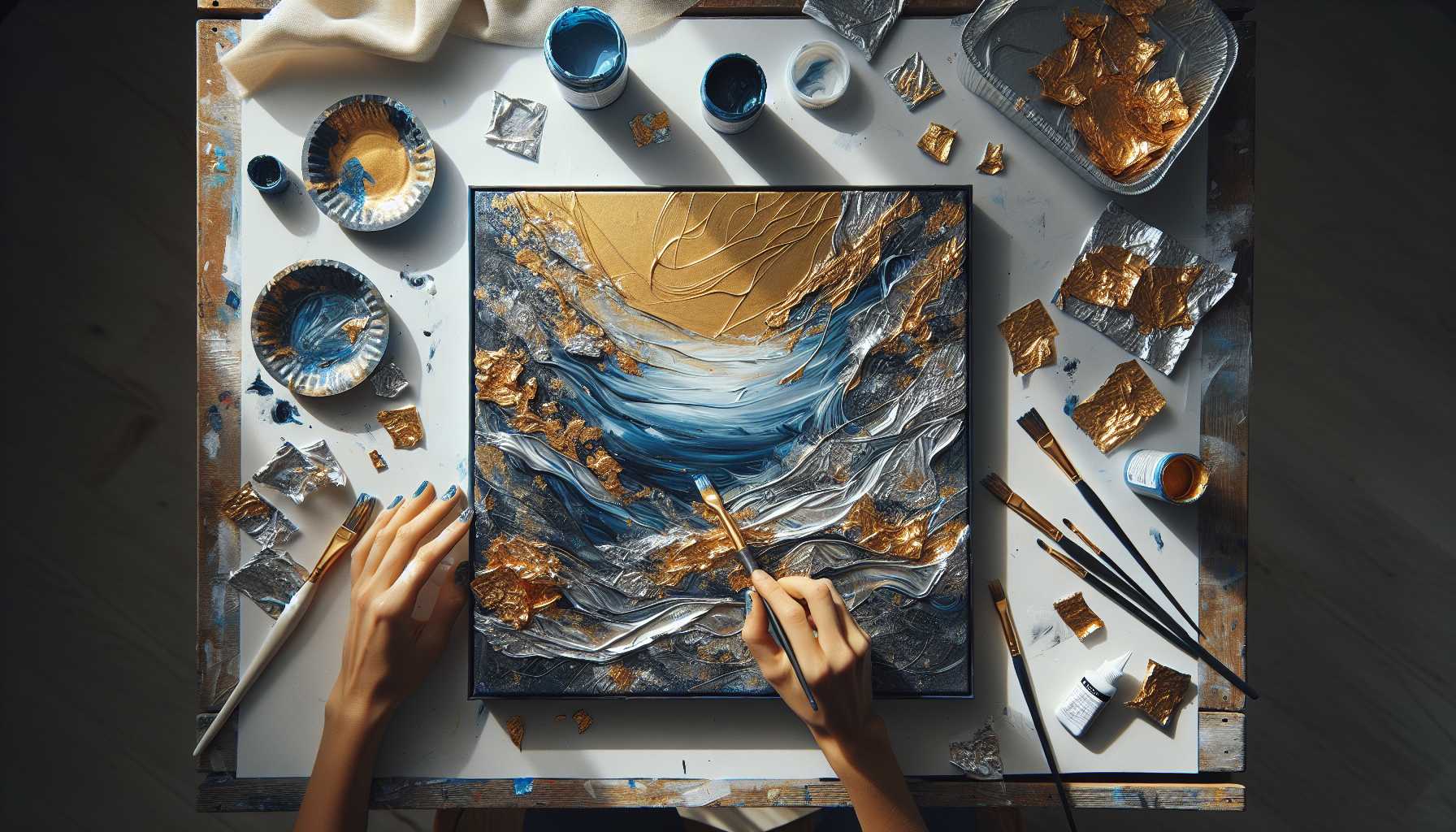
An Easy Guide to Creating Foil Texture Paintings: Harnessing the Power of Mixed Media
Have you ever admired the mesmerizing metallic textures in art pieces and wondered how artists craft them? The secret lies in a technique known as foil texture painting! This awe-inspiring method of art combines the traditional elements of painting with the dazzling allure of foil, resulting in pieces that come alive as they interact with light.
Having personally experimented with foil texture painting over several years, I can confirm that it's simpler than you might think. It requires neither pricey tools nor excessive expertise - all you need is eagerness to get started.
Unveiling the Art of Foil Texture Painting
Foil texture painting, a popular mixed media technique, injects a touch of metallic glamour into your artwork. The process involves applying a special adhesive to your painting, followed by pressing foil onto it. The end product is an enchanting piece of art complete with metallic accents that enhances its visual appeal.
Interestingly, this technique can be applied to various surfaces including canvas, paper, wood, and even fabric, essentially broadening your artistic horizons.
Gathering the Must-Have Supplies for Foil Texture Painting
Before we embark on this artistic journey, let's gather our essentials:
Necessary Materials
- Acrylic paints (any brand will suffice)
- Foil transfer adhesive or size
- Metallic foil sheets
- Brushes of various sizes
- A canvas or other painting surface
- Soft cloth or burnishing tool
Supplementary Materials
- Texture paste or gel medium
- Palette knife
- Stencils
- Sponges
All of these supplies are readily available in most craft stores. Alternatively, you can purchase starter kits from online retailers.
A Step-by-Step Guide to Foil Texture Painting
Now that we're equipped, let's begin our artistic endeavor!
Step 1: Set Up Your Base
Ensure your surface is clean and dry. Apply your chosen background colors and give them ample time to dry completely. This is an important step because wet paint and foil aren't the best companions.
Step 2: Strategize Your Foil Placements
Decide where you want the metallic accents to appear on your artwork; these can be borders, highlights, or specific design elements. With foil texture painting, less is frequently more impactful.
Step 3: Apply the Adhesive
Brush on the foil adhesive to areas where you want to create metallic effects. It's best to work in small sections. When wet, the adhesive will appear milky, clearing up once ready for foil application.
Step 4: Test the Adhesive
The adhesive should feel tacky yet not wet to touch - this typically takes around 15 to 30 minutes.
Step 5: Apply the Foil
Position foil sheets with their colored-side facing upwards over the adhesive, and gently rub them with a soft cloth or burnishing tool. Use a consistent, circular motion.
Step 6: Remove the Foil
Now, peel the foil backing off slowly - the metallic layer should adhere to your painting. If the foil coverage is not perfect, don't worry; those slight imperfections enhance the character of your artwork.
Techniques to Enhance Your Foil Texture Painting
The Dry Brush Technique
Using a dry brush dipped in adhesive, lightly brush it across textured areas of your painting for subtle, yet striking metallic highlights.
The Stencil Technique
With this method, apply adhesive with stencils for well-defined patterns. Ideal for geometric or repeating designs, make sure to clean stencils promptly after each use.
The Sponge Dabbing Technique
Blend adhesive using a natural sponge for an organic, cloudy effect. This technique is superb for replicating natural textures in your artwork.
The Palette Knife Application
Slather adhesive using a palette knife for bold textured strokes that result in dramatically metallic sections.
Perfect Color Pairings for Foil Texture Painting
Certain color combinations accentuate the benefits of foil texture painting. Here are my personal favorites:
Classical Pairings
- Deep blue with gold foil
- Black with silver foil
- Purple with copper foil
- Forest green with gold foil
Bold Pairings
- Bright red with gold foil
- Turquoise with silver foil
- Orange with copper foil
The contrast between the matte finish of the paint and the shine of the foil adds visual interest. Don't hesitate to experiment!
Common Pitfalls to Avoid
Having committed my fair share of mistakes while learning this technique, here are some tips to avoid them:
Timing Missteps
Avoid applying foil on wet adhesive as it will not adhere properly. Only apply foil when the adhesive is tacky.
Overdoing the Foil
Though it might be tempting, avoid covering your entire artwork with foil. Strategic placement results in a more polished look.
Applying Excessive Force
A light touch works best. Hasty, rough handling can tear the foil or create undesired textures.
Skipping the Base Layer
Seal your base painting before you add adhesive to prevent it from being absorbed into your canvas.
Suggestions for Your First Foil Texture Painting Project
Nature-Inspired Scenes
Consider adding golden foil to depict sunsets or water reflections. Silver foil works well with moonlight effects.
Abstract Art
Design metallic rivers floating through a vibrant backdrop or opt for geometric patterns adorned with foil accents.
Portrait Highlights
Introduce subtle foil highlights to earrings, clothes, or hair in portraits. Keep it minimal for realistic effects.
Mixed Media Collages
Pair foil with different materials such as fabric, paper, or found objects. The metallic elements will bind everything gloriously.
Maintenance of Your Foil Texture Paintings
To ensure that your masterpiece lasts, it requires proper care:
Sealing the Artwork
Apply a clear protective coating over your finished piece. Use matte medium to maintain the appearance of the foil.
Displaying the Piece
To prevent fading, hang your artwork out of direct sunlight as it can compromise the paint and foil.
Storing the Artwork
Unframed pieces should be stored flat and covered with protective tissue paper. Avoid folding or rolling artwork with foil texture.
Quick Fixes to Common Foil Texture Painting Challenges
Foil Not Sticking
Verify your adhesive timing. The surface should feel tacky, not wet or entirely dry.
Inconsistent Coverage
Having a bit of inconsistency can add character! If you want a fuller coverage, apply more adhesive followed by an additional layer of foil.
Foil Tearing During Application
Apply the foil gently and take your time. Higher quality foil tends to tear less.
Hone Your Foil Texture Painting Skills
Feel ready to take your foil texture painting abilities up a notch? Try these intermediate methods:
Layering Different Foils
Mix and match gold, silver, and copper foils on a single piece. Apply them in different stages to achieve intricate effects.
Creating Custom Textures
Form raised areas on your painting by mixing texture paste with base paint. These raised surfaces will attract and hold the foil in a beautiful way.
Combining with Other Media
Introduce pastels, charcoal, or ink into your foil paintings to add an extra element of contrast and visual interest.
Concluding Thoughts on Foil Texture Painting
Foil texture painting offers a myriad of artistic possibilities. It's a forgiving and fun technique that can yield professional-looking results rapidly.
Start off with basic techniques and simple projects. As you gain confidence, diversify your foil types, textures, and color combinations.
Remember that when it comes to art, there's no "wrong." Some of the best pieces are born from unplanned occurrences!
The essential thing is to enjoy the process and let your creativity break free. Though your first foil texture painting may not be flawless, it will certainly be uniquely yours.
So, gather your supplies and let's plunge into the world of metallic textures. I eagerly await the unveiling of your beautiful metallic masterpieces.