Simple Sunset Painting: Easy Sky Color Tutorial for Beginners
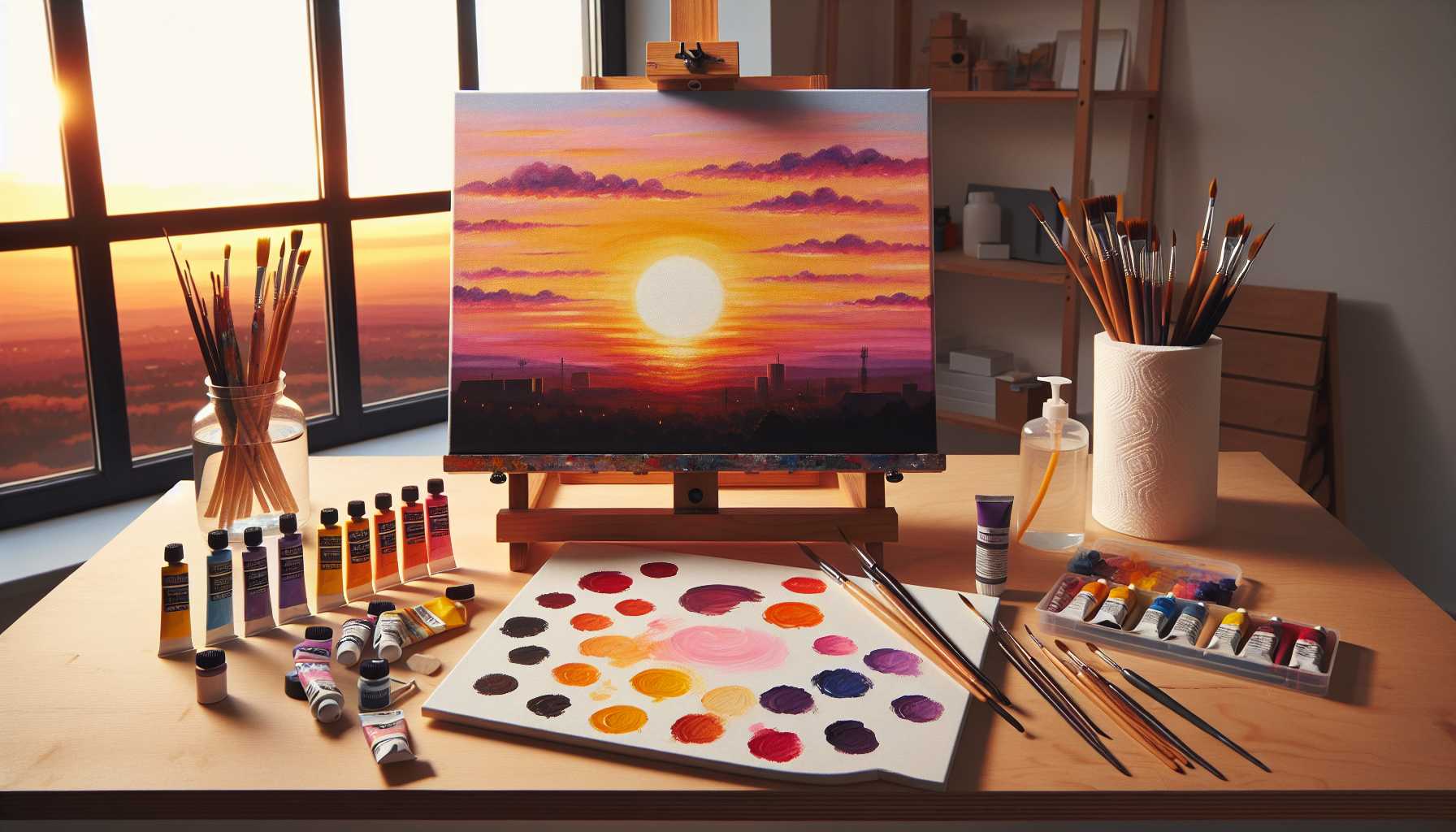
Effortless Sunset Painting: Beginner-Friendly Sky Color Guide
Have you ever beheld a sunset and desired you could capture its magnificence on a canvas? You're in for a treat! Painting sunsets is among the most gratifying ventures for newbie artists.
The cherry on top? Expensive supplies and years of formal training are not requisites. With a handful of basic colors and simple techniques at your disposal, you'll master the art of painting stunning sunset portraits in no time.
Why Begin With Sunset Paintings?
Sunset paintings are the perfect stepping stone for beginners, and here are the reasons:
- Sunsets are naturally resilient subjects
- Minor blunders often create the illusion of intentionality
- It offers stress-free practice for color blending
- The outcomes are invariably enchanting
- It bolsters your confidence rapidly
Moreover, sunset paintings are universally adored. They serve as splendid gifts and can be converted to exquisite wall art for your abode.
Key Supplies for Easy Sunset Painting
Kickstarting your painting journey requires bare necessities. Here's your fundamental shopping list:
Paints: - Yellow (preferably cadmium yellow or similar) - Orange (ideally cadmium orange) - Red (suggested cadmium red) - Purple (typically dioxazine purple or violet) - Blue (best with ultramarine blue) - White (opt for titanium white)
Brushes: - A large flat brush (1-2 inches wide) - A medium-sized flat brush - A minute detail brush
Additional Supplies: - Canvas or canvas board (8x10 inches is optimum) - Paper towels - A water container - A palette for blending colors
Art stores often sell affordable starter kits that encompass everything you need. They’re perfect for getting initiated.
Sunset colors: The Foundation
Before diving into painting, let's decipher the colors of a sunset. Authentic sunsets adhere to a natural pattern:
- Peak of the Sky: Deep hues of blues and purples
- Median Area: Pinks contrasted with oranges and reds
- Skyline: Vibrant yellows complemented by warm oranges
- Sun Area: Soft yellows and whites
The secret lies in the seamless continuity between the colors. Perfect precision isn't necessary; after all, even nature has its imperfections!
Step-By-Step Guide to Effortless Sunset Painting
Step 1: Organizing Your Workspace
Identify a comfortable location with sufficient light. Arrange your supplies conveniently. Wear old clothes or an apron as painting can become quite sloppy!
Get your water container filled and squeeze small quantities of paint onto your palette. Remember, you can always top up the paint as you progress.
Step 2: Paint the Sky's Undercoat
Kickstart with your large flat brush. We begin painting from the top and then move downwards.
Top Section: Blend blue and a pinch of purple. With horizontal strokes, paint across the top-third of your canvas.
Middle Section: Add some orange to your brush (No need to clean it first). The colors will naturally blend as you paint, conjuring an elegant color transition.
Bottom Section: Use predominantly yellow with a hint of orange near the skyline.
Proceed swiftly while the paint is moist. This technique is termed "wet-on-wet" blending.
Step 3: Craft the Sun
While your paint is damp, utilize your medium brush with white and yellow. Paint a circle to represent the sun.
Avoid crafting a perfect circle. Real suns often appear somewhat elliptical or blurry in paintings.
Subtly merge the perimeters of your sun into the surrounding sky hues. This generates a natural radiant effect.
Step 4: Enhance Depth with Layered Colors
Once your base has dried a little, introduce more colors:
- Speckle some purple and pink in the sky's upper regions
- Intensify the core sections with more orange and red
- Accentuate the area encircling the sun with a touch of light yellow
Adopt gentle, sweeping movements and allow the colors to naturally amp up your canvas.
Step 5: Painting Basic Clouds (Subject to Choice)
Clouds enrich the drama in sunset paintings. Keep them straightforward in your preliminary attempt.
Leverage your medium-sized brush with white amalgamated with minimal pink or orange. Paint wide, horizontal shapes transcending your horizon.
Bear in mind: In the case of clouds, less quantity yields more impact. A handful of strategically positioned clouds outperform a sky filled to the brim with them.
Step 6: Incorporate a Basic Landscape Silhouette
Earthly elements maximize the appeal of sunset paintings. Try these beginner-approved options:
Basic Horizon: Utilize dark purple or black to paint a straight line across the bottom Elementary Trees: Paint elementary tree shapes with dark hues Water Reflection: Include horizontal streaks of your sky hues beneath the horizon line
Maintain landscape components minimalistic and dark. They should meld into your colorful sky as silhouettes.
Typical Beginner Blunders to Sidestep
Learning from others' missteps will save both time and discontent:
Overdoing the paint: Desist from blending when the hues seem suitable. Overblending culminates in murky colors.
Excessive Use of Water: Watercolor methods aren't hailed as effective when using acrylics. Use paint straight from the container or with a limited amount of water.
Overbrightening the Sun: Actual sunset suns lean towards pale and blurry, not fiercely bright.
Overcomplicating the Details: Simplistic sunset paintings trump intricate ones in their appeal.
Hastening the Process: Spend ample time with color transitions, as this is the main spectacle.
Color Merging Tips for Staggering Sunsets
A sunset painting's grandeur relies heavily on proficient color blending:
For Toasty Oranges: Merge red and yellow in fluctuating ratios For Sunset Pinks: Add white to red, supplemented by minimal yellow For Deep Purple: Combine blue and red, supplemented by white to lighten it For Natural Grays: Merge the three primary shades (red, yellow, blue)
Always concoct more paint than you deem necessary. It's irksome to run out of a custom hue midway through your painting.
Before applying them to your masterpiece, assess your color mixtures on scrap paper.
Practice Drills to Bolster Your Skills
Color Gradient Practice: Paint smooth transitions between two hues on a sample canvas.
Sky Studies: Sketch 15-minute sunset briefs focusing solely on color and ambiance.
Photo References: Utilize photos of sunsets to practice diverse color amalgamations.
Daily Color Merging: Spend 10 minutes each day blending sunset hues without painting complete portraits.
One-Color Sunsets: Attempt painting sunsets relying solely on one color spectrum (all blues or all oranges) to comprehend the relationships in value.
Upleveling Your Sunset Paintings
Once you're at ease with basic methods, experiment with these enhancements:
Variations in Layout: Position the sun in different locations Toy with Weather: Paint tempestuous sunsets or tranquil evening skies Include Intriguing Foregrounds: Embrace boats, edifices, or people as silhouettes Experiment with Canvas Sizes: Tiny paintings evoke intimacy, large ones exude drama Study Genuine Sunsets: Dedicate time to observe how colors transition during actual sunsets
Showcasing and Sharing Your Artistry
Don't seclude your sunset paintings in a wardrobe! Here's how to relish and share them:
- Frame your cherished pieces for wall display
- Present them as meaningful, heartfelt presents
- Share snapshots on social platforms with painting-related hashtags
- Participate in local art groups or online communities
- Contemplate selling them at craft fairs or even online
Keep in mind that every established artist was once a novice. Your preliminary sunset painting might not be flawless, but it holds your unique signature.
Wrapping Up: Effortless Sunset Painting
Sunset painting marries technical prowess with emotional articulation. It's a combination of meditation clubbed with creativity, resulting in a serene pastime.
Embark with these elementary techniques. Don't shy away from venturing into experimentation. Artistry primarily revolves around personal impression instead of strictly adhering to rules.
Above all, make sure to enjoy the process! The ecstasy of crafting something beautiful single-handedly is unrivaled.
Your journey of painting the sunsets begins with the first brush stroke. So, assemble your equipment, find a cozy spot, and fashion your debut simple sunset painting today.
Every sunset is unique, as will be your paintings. Embrace the process, learn from each endeavor, and monitor your skill evolution with every vibrant sky you reproduce.