Simple Sky Art: Easy Cloud Painting Techniques
Simple Sky Drawings: Beginner Techniques for Cloud Painting
Ever glanced at the sky wishing you could translate the soft billows of clouds onto a canvas? If so, you're not the only one! Painting clouds may appear challenging at first, but it's one of the most fulfilling exercises for beginner painters.
As someone who has been achieving the hues of the sky on canvas for years, I'm thrilled to impart some uncomplicated techniques that will have you producing stunning cloud art in no time.
Why Choose Cloud Painting as a Beginner?
Clouds are lenient subjects. They don’t adhere to strict rules or finite shapes. Each cloud is distinctive, and so will be your painting.
Moreover, you probably see clouds daily. This familiarity makes them less daunting than other subjects. You already have an idea of what they should resemble!
Essential Equipment for Cloud Painting
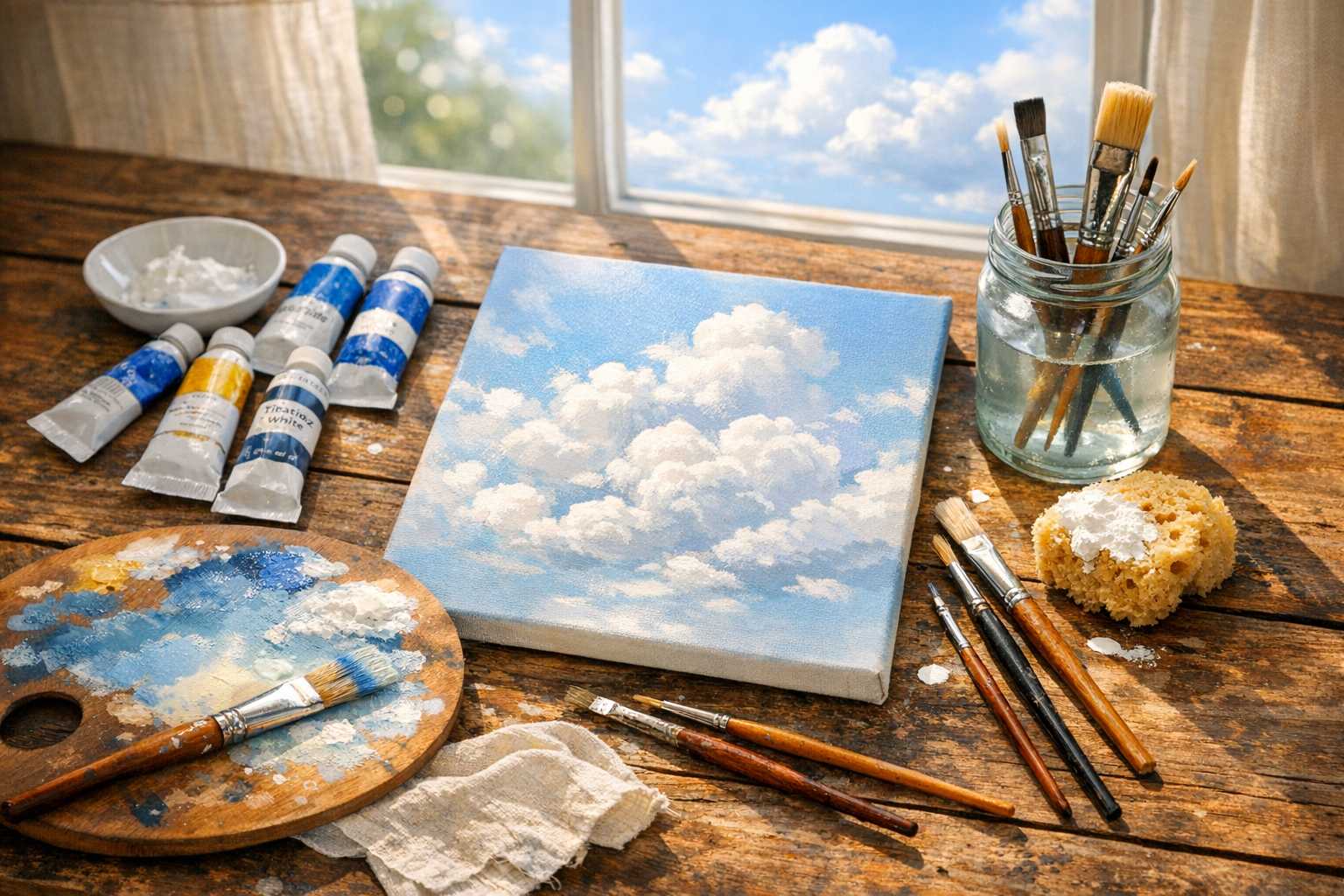
An expensive set of tools isn't a prerequisite to start. I recommend the following equipment:
- Canvas or paper (any size of your preference)
- Basic brushes (flat and round)
- Acrylic or oil paints (primarily white, blue, gray, and yellow)
- Palette knife (optional, but very useful)
- A water container and paper towels
That's all! Simple tools for simple sky art.
The Wet-on-Wet Painting Technique
This technique is an ideal starting point for beginners as it results in smooth, natural-looking clouds.
Begin with a slightly moist canvas or paper. Apply your sky color - typically a soft blue. While the paint is still wet, introduce some white paint to depict your clouds.
The colors will naturally merge, giving your clouds the soft edges characteristic of real clouds. Don't over-analyze it, let the paint do its magic!
Constructing Clouds with Layers
Here's another simplistic method that grants you more control.
First, paint your sky background. Allow it to dry entirely. Then, introduce your clouds in layers, beginning with the lightest parts.
Utilize the dry brush technique. Fill your brush with white paint, then dab most of it off on a paper towel. Delicately sweep it across your canvas, creating ethereal, life-like cloud textures.
The Sponge Technique
Looking to experiment with another method? Grab a natural sponge!
Lightly immerse it in white paint and gently dab it on your sky background. This technique instantly creates cloud textures with the least amount of effort.
This method works wonders, especially for the creation of large, voluminous cumulus clouds that are spotted on sunny days.
Recognizing Cloud Shadows
Actual clouds are not purely white. They possess shadows and depth. Adding these nuances makes your painting seem more credible.
Incorporate a soft gray tone for shadowed areas. Generally, the bases of clouds are darker, while the tops receive more sunlight and stay bright white.
Be sure not to darken the shadows too much. Subtle shadows trump excessive ones.
Color Temperature in Sky Painting
Here's an insider's tip to create realistic-looking clouds: work on color temperature.
Warm colors (like yellows and pinks) suggest the presence of sunlight, while cool colors (such as blues and purples) indicate shadows or depth.
Sprinkle a tiny dash of yellow to your whites for sunlit spots. Use a touch of blue-tinted grays for the shadows.
Avoidable Errors in Cloud Painting
Often, I come across the following mistakes in paintings by beginners:
Depicting clouds too white. Authentic clouds have slight color variations. Pure white can seem mismatched.
Creating rigid edges everywhere. Clouds tend to be soft and fluffy. Aim to gently merge those edges!
Excessive trial with the paint. Remember, sometimes less is more. Step back and reassess your work before adding further details.
A Practice Task: Your Maiden Cloud Study
Let's amalgamate these techniques in a basic task.
Begin with a small canvas, approximately 8x10 inches. Paint a plain blue sky. While it's still moist, introduce some white to form the basic shapes of clouds.
Strike off perfection from your expectations. Prioritize soft edges and natural-looking shapes. Remember to pause and observe actual clouds outdoors for reference.
This initial study provides a practical understanding of how the paint operates. Subsequent paintings will be noticeably easier.
Introducing an Atmosphere and Depth
To give your clouds a three-dimensional appearance, consider including an atmosphere.
Clouds in the distance seem lighter and lack complete clarity. Clouds closer to the viewer display sharper details and greater contrast.
Start off with faint, hazy clouds in the background. Follow up by adding well-defined, foreground clouds atop.
Digital vs Traditional Methods
The techniques mentioned are applicable whether you're using physical paints or digital tools. The principles are identical.
If using digital tools, work with soft brushes and lower opacity settings to mimic the wet-on-wet technique.
Traditional painters can experiment with diverse brush textures and paint consistency to achieve varying effects.
Finding Inspiration Everywhere
The most exciting part about cloud painting is the ever-changing references!
Capture photographs of intriguing cloud formations. Maintain a sketchbook to record impromptu cloud studies. Even a few minutes of daily cloud observation can considerably improve your painting skills.
Different weather conditions create various cloud types. Clouds during a storm, at sunset, or in the morning mist, each serve as a unique painting opportunity.
Building Your Skills Incrementally
Perfection shouldn't be an immediate expectation. Cloud painting is a skill that gradually develops with regular practice.
Begin with the basics. Master simple techniques before moving on to complex storm clouds or dramatic sunsets.
Set small, achievable goals. Start by painting one cloud study a week. This consistent practice ensures natural progression.
Conclusion
Cloud painting offers a treasure trove of artistic possibilities. The techniques mentioned above provide a solid foundation to build upon.
Always remember, there is no incorrect way to paint clouds. Just as nature creates infinite variations of clouds, you can too.
Grab your brushes and begin experimenting. There are no limits with these easy cloud painting techniques!
For beginners, your initial cloud painting may not meet your expectations. However, it is perfectly okay. Each attempt enhances your understanding of how to capture the ethereal beauty of the sky.
Persistently practice and be patient. Most importantly, relish the experience. You'll soon be surprised at the exquisite sky art you're able to create that leaves others in awe!