Flow Art Mastery: Advanced Paint Pouring Techniques
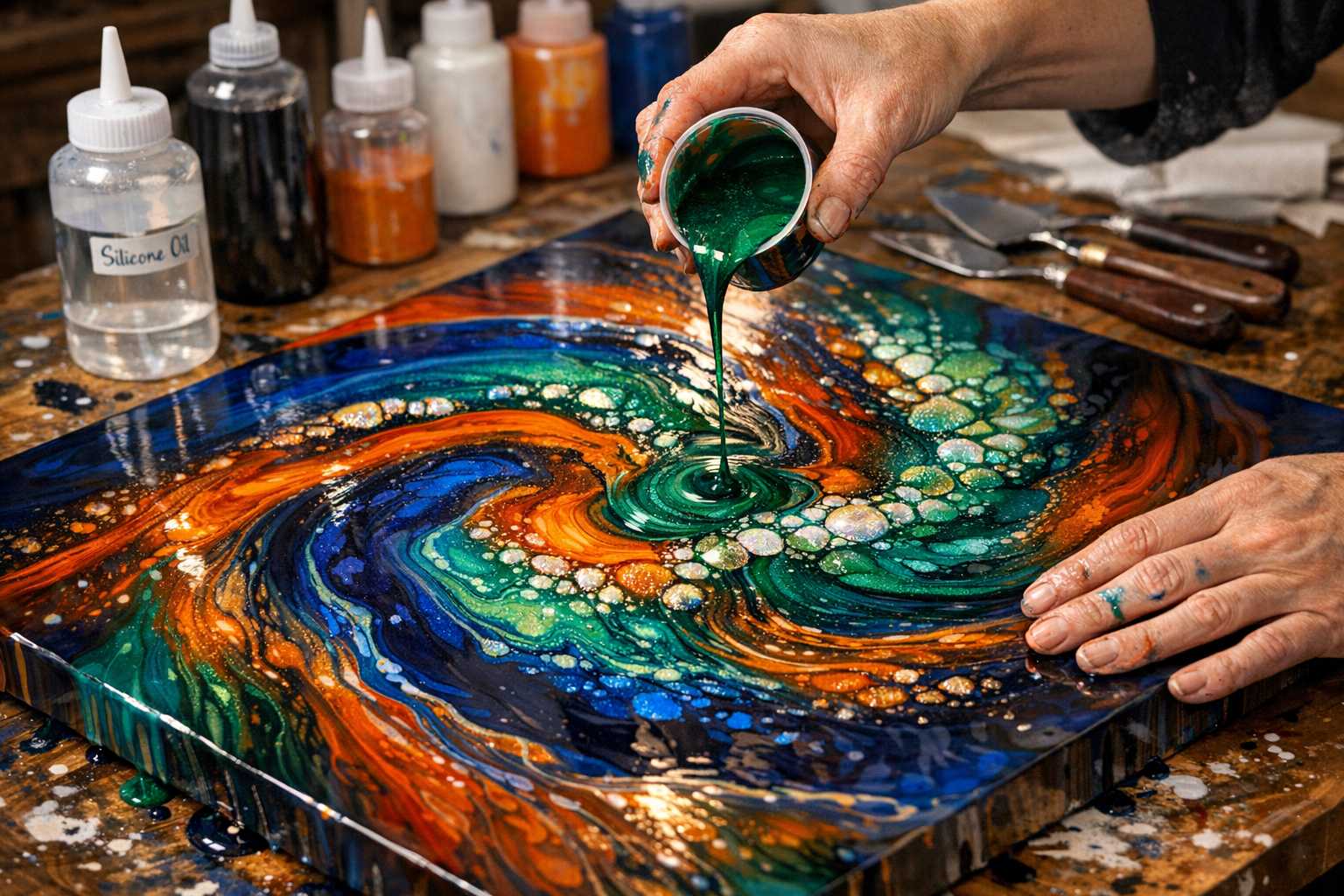
Mastering Flow Art: Delving into Advanced Paint Pouring Techniques
Have you been dabbling in paint pouring techniques and are now ready to elevate your flow art abilities? You've come to the right place!
In this article, we'll delve into a range of advanced paint pouring techniques that can help transform your simple artwork into truly spectacular displays of creativity.
Deciphering "Advanced" Paint Pouring Techniques
Advanced paint pouring techniques demand a greater level of skill and a good deal of patience, often involving multi-step processes. The end result? Strikingly compelling artworks that outshine basic pour pieces.
Some elements inherent to these techniques include: - Precision in timing control - Variability in paint consistencies - Utilization of specialized tools - Perseverance and patience in honing one's skills
Remember, perfection doesn't usually come easily or instantly. Even seasoned artists often need many attempts to curve out mastery in these techniques.
Essential Supplies for Enhancing Flow Art
Before we delve into the techniques, let's first take a look at the necessary supplies. Utilizing quality materials can ensure the best results.
Paint and Medium Supplies: - Superior quality acrylic paints - Professional-grade pouring mediums - Silicone oil (key for cell formations) - Distilled water
Essential Tools: - A range of cup sizes - Palette knives - A hairdryer or a heat gun - Plastic squeeze bottles - Canvas or wooden panels
Keep in mind, quality outweighs quantity. Choosing cheap supplies often leads to disappointing results such as muddled colors and cracked artwork.
The Art of the Ring Pour Method
The Ring Pour method creates strikingly beautiful concentric circles, but demands steady hands.
Start by choosing up to five complementary colors. Blend each with your pouring medium until each mixture coats your mixing stick without dripping excessively.
Apply your base color evenly across the canvas. Then pour additional colors in concentric circles, working from the center outward.
Swiftly but steadily execute the process, as once paint starts flowing, it moves quickly.
Tilt your canvas gently, observing as the colors form natural, flowing patterns. The trick lies in subtle movements - remember, less is often more.
The Negative Space Technique Mastery
Operating with a dramatic contrast in mind, the Negative Space Technique excels in making colors stand out against clean backdrops.
Before pouring, arrange objects on your canvas. Consider stencils, leaves or cut-out patterns. Ensure they are securely taped down.
Pour paint around the secured objects, allowing it to naturally flow around them.
While the paint is still wet, carefully remove the objects to reveal sharply defined shapes, surrounded by a melting cacophony of colours.
The Dynamic String Pull Technique
String pulls can produce incredible linear patterns, making them ideal for conceptual landscapes or organic designs.
Cut several strings approximately 12 inches in length and submerge them in diluted paint. Arrange them on your canvas, creating curved patterns.
Pour contrasting colors over the stringed canvas, making sure to leave small portions of each string visible at the canvas edge.
Pull the strings gently yet firmly, experimenting with different pull rates and directions.
The resulting creativity lies in the unique patterns that emerge with each string pull. For a more complex design, try pulling multiple strings simultaneously.
Layered Bloom Technique
Layered blooms add interest and depth. This intricate variant employs multiple layers of blooms.
Start by creating your base pour using any favored method. Let it set and dry partially for around 5-10 minutes.
Add specks of silicone oil mixed with paint, making small indentations with a toothpick.
After waiting for some additional minutes, construct a second bloom layer with a distinctive color.
The time lapse between these layers determines difference in bloom size, some slight, others more dramatic.
To enhance cell formation, gently blow heated air on the surface with a hair dryer or heat gun.
Color Theories for Advanced Pour Techniques
Understanding the interactions between colors can drastically elevate your flow art. Gorgeous colors are just a part of the equation.
In the Complementary color scheme, colors that are opposite to each other on the color wheel are paired together. Pairs like blue and orange, or red and green, result in visually captivating contrasts.
Analogous color schemes involve colors that are adjacent to each other. Colors like blues, blue-greens, and greens, when combined, generate a harmonious and flowing palette.
Triadic color schemes employ three colors equally spaced on the color wheel. These color combinations are bold, but can create balanced compositions when used skilfully.
Mixing in terms of temperature can add a sense of sophistication. Skillful consolidation of warm colors (reds, oranges, yellows) with cool colors (blues, greens, purples) can lead to visually attractive results.
Experimentation with Multiple Paint Consistencies
This feature is what truly makes these advanced techniques stand out from the rest. Different paint consistencies can result in unique visual effects.
While thin paints flow rapidly to create light, delicate details, thick paints maintain their structure, allowing for texture in the artwork.
Utilize thin paint for backgrounds and flowing elements, and thick paint for focal elements and definition.
Starting with thick paint for structure, followed by introducing thin paint for movement and flow, results in artwork with visual depth, appearing to have multiple layers.
Troubleshooting Common Issues in Advanced Techniques
Even the most skilled artists can run into issues. Here are some solutions to common problems:
- Muddy colors? You may be overmixing or using too many colors. Stick to a maximum of 3-5 colors.
- Paint cracking? Your paint may be too thick or drying too rapidly. Introduce more pouring medium and work in environments with moderate temperature.
- No cells forming? Increase the amount of silicone oil and ensure your paint isn't too thin.
- Colors bleeding into each other? Up your pace or aim for a slightly thicker paint consistency.
- Uneven coverage? Prior to starting, ensure your canvas is perfectly level.
Timing and Patience: The Hallmark of Flow Art
Perfect timing is crucial in advanced techniques, honed as a skill over time with practice.
Specific timing windows are crucial to many advanced pours. While Ring Pour technique demands immediate execution, techniques like Bloom require slow and patient actions.
Conduct observations regarding timing for each successfully attempted process. Environmental elements like temperature and humidity can significantly influence the drying period.
Avoid rushing through the process. Remember, sublime flow art is achieved when you work in harmony with the paint, not against it.
Enhancing Your Flow Art Business
Are you ready to turn your honed skills into a profit? These techniques can help you demand higher prices.
Capture the transformation of your process through photos or videos; audiences love to see the journey from start to end.
Consider offering workshops to teach these advanced techniques. Your skills are valuable and sought out by other artists.
Create limited edition series using specific advanced techniques; these unique processes are highly appreciated by collectors.
Don’t be hesitant to price your advanced pieces higher; the additional time investment and skill level make it justified.
The Power of Practice
Mastering advanced paint pouring techniques requires time, don't be disheartened by initial stumbling blocks.
Begin by practising new techniques on small canvases, an effective way of saving resources while improving skills.
Maintain a journal to track your technique progress, noting both successful and unsuccessful attempts, and including pictures of results.
Stick to practising one technique at a time, aiming for mastery before progressing onto the next.
Engage with online communities of flow artists; sharing your work and learning from others could be a valuable source of feedback and inspiration.
Pursuing Your Journey in Flow Art
Now armed with the knowledge to produce sophisticated flow art pieces, these advanced paint pouring techniques are sure to set your artwork apart from the rest.
Remember, every master artist was once an amateur. The road to excelling in advanced flow art is just beginning.
Keep on experimenting, practising, and above all, enjoying the process. Your distinctive artistic voice is sure to find its expression through these advanced techniques.
With flow art continually evolving, stay curious, creative, and allow your paint to flow, shaping something extraordinary.
Which advanced technique are you most eager to try first? Your next magnum opus could be just a pour away.