No-Fail Nature Painting: Easy Techniques for Beginners
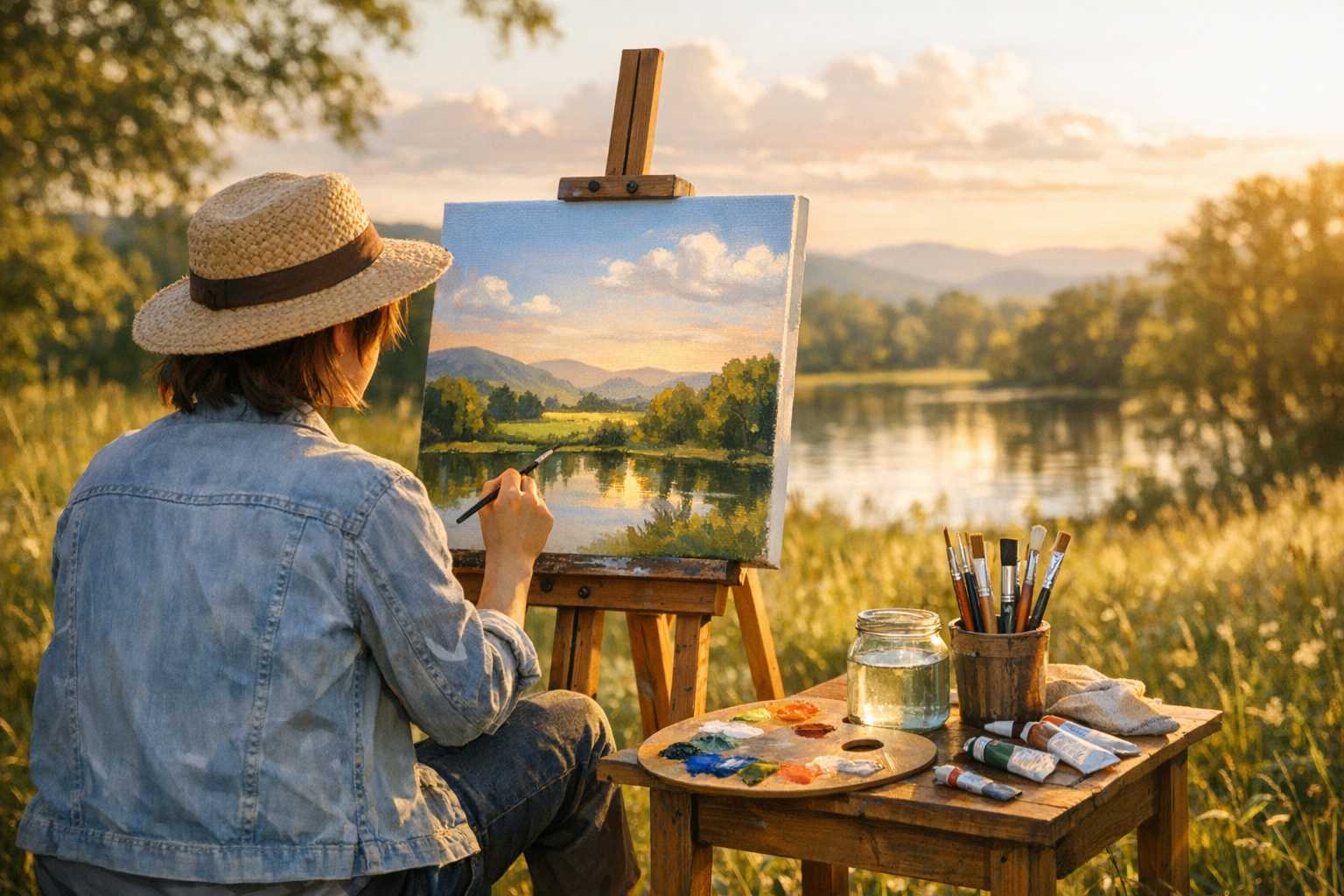
Unfailing Methods for Nature Painting: Easy Techniques for Novices
Embarking on your journey of painting nature might seem daunting at first. However, here's a reassurance: anybody can craft stunning landscapes with the right approach and guidance. Expertise gained over years or pricey materials isn't a necessity.
In this guide, we'll walk you through some user-friendly techniques which are guaranteed to work. Let's together explore the captivating world of nature painting.
Initial Steps: What Supplies to Begin with
Embrace simplicity when you're starting. Painting nature doesn’t have to be a complex undertaking.
Must-have supplies include: - Acrylic paints (primary colors, white, and black) - Canvas boards or watercolor paper - Different sized brushes (small, medium, large) - A vessel for water - Paper towels - Basic palette or paper plate
Avoid overcomplicating your choice of supplies. Remember that several renowned artists began with only the basics. Your creativity is more significant than any fancy brush.
Basic Color Theory for Capturing Nature's Beauty
Nature communicates in its own color dialect. Mastering this code will make your paintings come alive.
Inherent charm of nature's shades: - Distance fades blue colors - Greens have both warm and cool versions - Shadows aren't strictly black or grey - Morning and evening light drastically alters shades
Try to mix colors on your palette before applying them. Experiment and see what results. Remember, there's no mistakes in practice - only learning opportunities.
Uncomplicated Sky Techniques That Always Deliver
The sky sets the tone for your entire painting. Master a couple of easy techniques and you're halfway there.
The Gradient Sky Technique
Begin with white at the horizon, blending into blue as you move up. Remember to do this swiftly while the paint is still wet.
This technique applies to both sunny and cloudy days. It's unfailing and always looks professional.
Effortless Cloud Painting
Soft and natural-looking clouds can be achieved with a dry brush technique. Lightly dab white paint onto your blue sky. Don't sweat over the cloud formations.
Just like in reality, clouds in your painting should be irregular and random.
No-Fail Strategies for Mountains and Hills
Mountains might seem formidable to paint, but they're indeed quite forgiving.
The Layering Technique
Paint distant mountains in light blue-gray. Add slightly darker layers as the mountains near you. The closest hills should be the darkest and more detailed.
This method automatically generates a sense of depth. It’s like casting a spell on your canvas.
Handy Texture Tricks
For rocky surfaces, use vertical brushstrokes. Horizontal strokes are most effective for gently sloping hills. Feel free to mix these techniques for variation.
Don't fret about detailing every rock or feature. Implying tends to work better than too much precision.
Simplified Water Painting
Water mirrors the sky and its surroundings. Keep this primary rule in mind and your depiction of water will always look authentic.
Techinques for Still Water
Paint the water a shade darker than the sky above it. Use horizontal brushstrokes to represent the surface of the water. Keep reflections simplistic and slightly fragmented.
Reflected images in the water are often more effective when kept subtle.
Tips for Moving Water
Use short, turbulent brushstrokes to depict rivers and streams. White highlights can denote movement and shimmering water. Don't stress about achieving a perfect ripple.
Embrace the beauty in the irregularities of nature, and let it shine in your art.
Basics of Tree and Forest Painting
Trees are a common feature in nature paintings. Learn a few basic techniques and you'll be able to craft confident forest scenes.
Straightfoward Tree Shapes
Begin with basic geometric shapes. Triangles for coniferous trees and ovals for broadleaf ones. Gradually build up the details.
This is a commonplace strategy even amongst professional artists. It’s smart painting, not cheating.
Hassle-free Foliage Techniques
Use a dabbing motion with your brush for foliage. For varied greens, mix in yellows, blues, and tinges of red.
Avoid the need to paint each individual leaf. Grouping colors to represent clusters of leaves tends to work better.
Inculcating Depth and Distance
Atmospheric perspective is your tool in making flat paintings appear three-dimensional.
Easy-to-implement rules for creating depth: - Distant object appear fainter and colder - Nearby things are darker and warmer - Details diminish with increasing distance - Overlapping shapes will add depth to your work
Employ these rules and your paintings will seem to gain an authentic depth. It's akin to having an artist’s well-guarded secret.
Frequent Beginner Mistakes to Steer Clear of
Every budding artist is liable to make these errors initially. Learning to sidestep them will greatly expedite your progress.
Overworking Your Artwork
Knowing when to leave your artwork be is crucial. Overworked paintings can appear stale and lack spontaneity. Occassionally, less paintwork can have a greater impact.
Take frequent pauses to assess your work.
Relying Solely on Tube Colors
Unmixed tube colors seldom align with nature's hues. Make it a point to always blend and modify your colors a bit. This will enhance the harmony and realism in your work.
Even minor tweaks can hugely influence your final painting.
The Urge to Paint Every Detail
Novices often feel compelled to recreate every aspect they see. This usually results in crowded, hard-to-understand compositions. Prioritize broader shapes first.
Details should only enhance the overall composition, not overpower it.
Fostering Confidence Through Practice
Confidence stems from practice, not flawlessness. Be realistic with your goals and appreciate your improvements along the way.
Starting Small and Basic
Begin with more straightforward compositions. A basic sky and field can be breathtaking too. Start mastering simpler scenes before venturing into more complex landscapes.
Small accomplishments pave the path to bigger achievements.
Repetitive Painting of the Same Scene
Professional artists employ this approach frequently. Each iteration offers something new to learn. Don't strive for identical outcomes - instead, welcome the variations.
This repetition-based method boosts learning faster than continuously shifting subjects.
Becoming a Part of a Community
Locate other novice artists online or in your local community. Sharing your work and observing others' progress can work wonders for your motivation. Remember that everyone initially faces similar challenges.
Understand that you're not alone on this venture.
Concluding Your Nature Painting Expedition
Be assured, nature painting is not intended to be intimidating. These methods work because they’re based on our genuine perceptions of the natural world.
Bear in mind, every accomplished artist began as a beginner. They all made errors, faced frustration, and doubted their improvement. The key difference is that they continued to paint.
Your unique perspective holds value. No one can perceive and interpret nature quite like you do. This individuality is what makes your paintings distinctive and desirable.
Take the first step and begin practicing these basic techniques today. Gather your materials and head outdoors or use a photograph for reference. The most critical move is just to start.
Your adventure of nature painting begins now. Enjoy the ride, embrace simplicity, and have faith in the process. You've got this within your grasp.