Easy Plant and Flower Painting Ideas for Beginners
Beginner's Guide to Painting Plants and Flowers
Have you ever gazed upon a lovely flower and wished you could recreate that beauty through paint? Well, guess what? You can!
Launching your artistic side by painting flowers and plants can be a truly rewarding experience. The magic of encapsulating the splendid beauty of nature on a canvas doesn't demand you to be an artistic genius like Van Gogh.
Allow me to suggest a few simple ideas to help you flourish as an artist.
Why Begin with Plant and Flower Paintings?
For amateur artists, plants and flowers are excellent starting points, and here's why they come highly recommended:
Nature is kind. If your leaf drawing isn't perfect, it's okay. Real plants are also imperfect!
Inspiration is everywhere. Gardens, local parks, or even a grocery store flower section can be sources of artistic inspiration.
Colors in nature are naturally compatible. Mother Nature has pre-coordinated the colors for you.
Necessary Supplies for Botanical Painting
You don't have to spend a fortune. Here are some essential supplies I suggest:
Basic paint colors: Start with red, blue, yellow, white, and brown. You can mix these to create nearly any color.
Brushes: A palette of different sizes is essential. Small detail brushes and medium flat brushes would suffice.
Painting Surface: You could start with watercolor paper or small canvases. Both affordable and forgiving.
Water containers: Two jars would suffice - one for cleaning brushes and the other for clean water.
Paper towels: Unexpectedly helpful!
Beginner-Friendly Watercolor Flower Ideas
Watercolors are ideal for beginners. They are simple to use and can produce gorgeous, smooth effects.
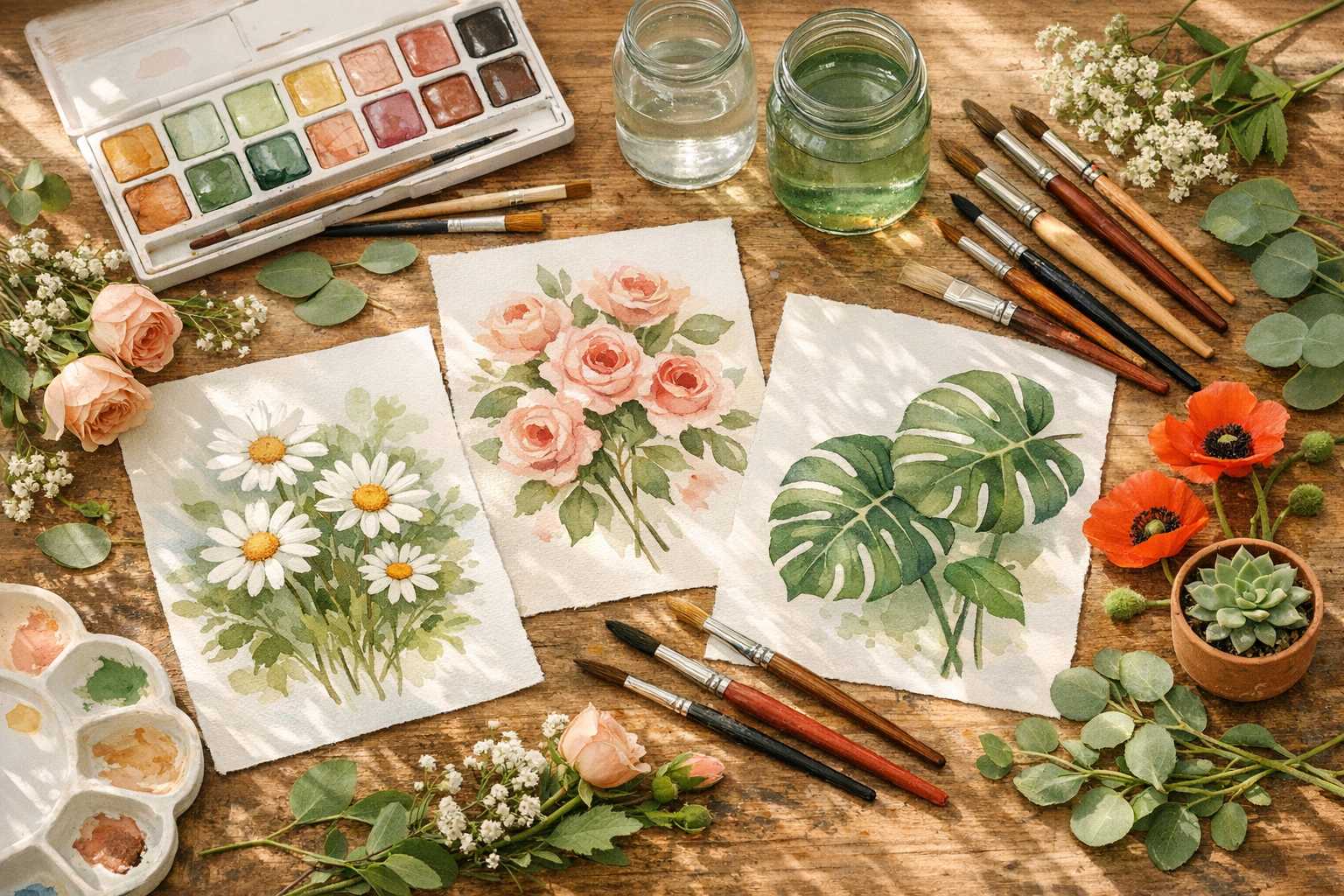
Daisies Painting
Start with uncomplicated daisy forms. Paint a yellow center first, then add the white petals around it. Allow the colors to blend naturally - the enchantment of watercolor!
Loose Roses
Don't chase perfection. Paint circular shapes in pink or red and add darker shades while the watercolor is still damp. The bleeding effect gives a dreamy look to the roses.
Wild Poppies
Bright reds and oranges capture this flower well. Paint loose petals and a dark center. Even an imperfect poppies painting can look beautiful.
Beginner's Guide to Acrylic Plant Paintings
Acrylic paints are favorable as they dry fast and allow for correction.
Garden of Succulents
Succulents with their simple, geometric shapes are great for beginners. Paint the leaves with various shades of green. It's truly satisfying!
Monstera Leaves
These trendy plants have distinctive split leaves. Start with a basic leaf shape, add the splits and holes, and use different shades of green to create depth.
Collection of Cacti
Start by painting straightforward cylinder and oval shapes, then add spines with thin brush strokes. Desert colors like sage green and dusty pink work well.
Basic Beginner Techniques
Wet-on-Wet Technique
This watercolor technique creates magnificent soft effects. Begin by wetting your paper, then drop in colors and watch them blend. Ideal for flower petals and leaves.
Dry Brush Method
Load your brush with paint and keep it relatively dry. This technique creates texture that's perfect for tree bark or rough stems.
Color Mixing on Paper
Try out mixing colors directly on the paper rather than on your palette. This method creates more interesting and natural-looking results.
Common Beginners Mistakes to Avoid
We all make errors - they're a part of the learning process! Here are some common ones:
Overworking the paint. Often, less is more. Take a step back and let your work breathe.
Using too much water. With watercolors, remember, you can always add more water, but removing excess is not possible.
Being overly critical of yourself. Keep in mind, every artist was once a beginner. Revel in the journey!
Discovering Inspiration Around You
You don't need an exotic flower to create beautiful art. Check your surroundings:
Your own backyard is probably teeming with inspiration. Even unwanted weeds can look beautiful on canvas!
Snap photos of plants that intrigue you. These can serve as a reference collection on your phone.
Visit local botanical gardens or parks. Carry a sketchbook to practice tracing shapes and colors.
Boosting Your Confidence
Start small and uncomplicated. Don't aim for a full garden in your first attempt.
Try to master the basic shapes first. Circles, ovals, and simple lines are often all you need for plant shapes.
Art is subjective. What matters most is that you intrinsically enjoy the process.
Carve out time for regular practice. Even a commitment of 15 minutes per day can yield vast improvement.
Showcasing Your Botanic Art
Once you've crafted pieces you're proud of, don't hesitate to display them!
Group and hang your framed paintings to create an elegant botanical gallery wall.
Gifting your art can make presents more personal and touching.
Don't shy away from sharing your progress on social media. The art community is generally very supportive and encouraging.
Developing as an Artist
Once you're at ease, challenge yourself with new subject matter:
Try capturing the essence of different seasons. Spring flowers, fall leaves, or winter branches - each has its unique charm.
Experiment with different art styles. From realism to impressionism, find what resonates with you.
Join local art clubs or online communities. Learning together makes the journey more enjoyable.
Embarking on Your Artistic Journey
The most crucial aspect of painting plants and flowers is to begin. Don't wait for the perfect moment or the perfect supplies.
Seize whatever paints you have and start with a straightforward leaf or flower. Spend initial 20 minutes exploring shapes and colors.
It's important to remember that even artistic masters were once beginners. The difference is they persisted in painting, learning, and most importantly, enjoying the journey.
Your first painting might not precisely mirror the flower you're attempting to depict - and that's perfectly alright! Art is about interpretation, emoting, and personal expression.
So, take a deep breath, grab your brush, and let's embark upon this creative journey together. Nature awaits to inspire you, and I am excited to see where your artistic journey leads you.
Here's to your artistic endeavors - happy painting!