Minimalist Portrait Art: Essential Simplification Guide
A Simplified Guide to Minimalist Portrait Art: Capturing Essence with Less
Harnessing the creative force of the art world today is Minimalist Portrait Art. Exceptionally clean, powerful and statement-making with fewer elements, this art form exemplifies simplicity at its best.
If you've ever been intrigued by how artists create these remarkably simplistic portraits, you're certainly in the right spot. This guide will hand-hold you through everything you need to be aware of.
What Sets Minimalist Portrait Art Apart?
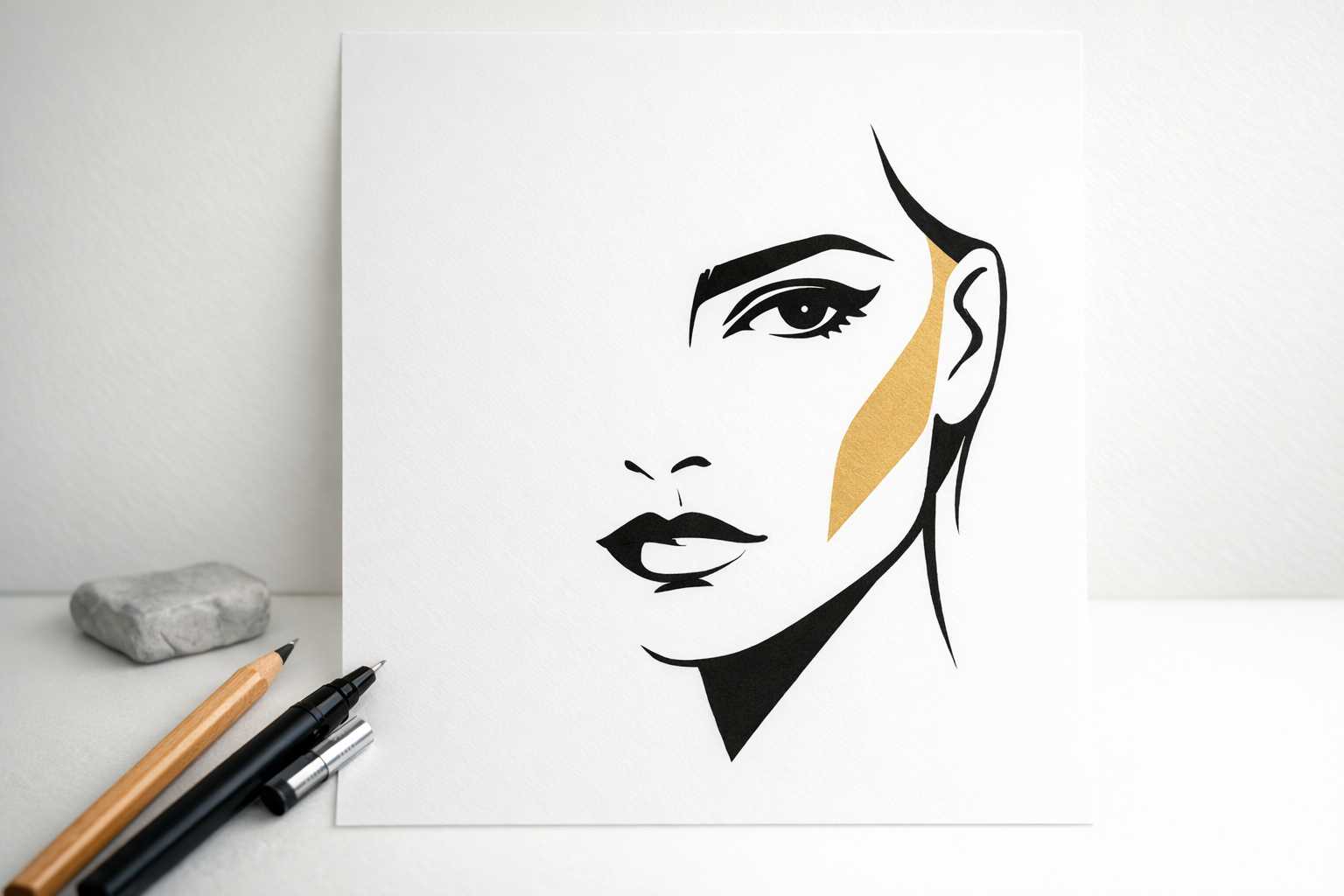
Minimalist portraits cast off what's not needed, centering on the elements that truly matter.
Consider it akin to visual poetry, where each line serves a meaningful purpose and every shadow narrates a story.
The allure resides in the art of simplification. Artists manage to express a person's personality with a few, meticulously picked elements.
Key Elements of Minimalist Portraits
Line Work
Clean, bold lines will become your indispensable allies. They delineate features without intimidating the viewer.
Begin with elementary shapes—an oval for the head, simple curves to outline facial features.
Negative Space
Empty space is not redundant—it provides breathing space for your subject.
Use such negative space wisely to create equilibrium as it assists in drawing attention towards the key features.
Limited Color Palette
Adhere to a maximum of 2-3 colors. It engenders harmony and eliminates visual clutter.
The simplicity of black and white works wonders; adding just one accent color if required.
The Basics You'll Need to Kick Start
For Digital Artists
- Drawing tablet
- User-friendly drawing software
- Basic stylus
For Traditional Artists
- Good-quality pencils
- Smooth paper
- A decent eraser
- Fine-tip markers
You can forget about splurging on high-priced equipment. Very often, it's the simplest tools that yield the best outputs.
Starter's Step-by-Step Process
Step 1: Analyze Your Subject
Whether it's photographs or live models, look carefully and find the most compelling features.
Concentrate on elements that make your subject unique.
Step 2: Construct Basic Shapes
Begin with uncomplicated forms, not paying heed to fine details just yet.
Mark out the shape of the head and place the basic features.
Step 3: Refine Key Features
Pinpoint 2-3 features to highlight—perhaps the eyes and nose, or the lips and jawline.
Keep in mind, being minimalistic pays off.
Step 4: Introduce Subtle Shading
Add modest shadows. They should act as enhancers, not suppressors.
Imagine where light would naturally fall.
Step 5: Review and Simplify
Stand back and scrutinize what you have created. Ask yourself, "What can I eliminate?"
Consider taking off an element if it doesn't make a meaningful contribution.
Potential Missteps to Dodge
Overcomplicating
A prevalent error beginners commit? Incorporating unwarranted details.
Trust in the power of simplicity. Less indeed is more.
Ignoring Proportions
Even simplified portraits require appropriate proportions. Learn the basics of facial anatomy.
Overdoing Lines
Ensure each line serves a purpose. Inconsiderate markings can take attention away from your subject.
Discovering Your Unique Style
Try Out Different Styles
Some artists lean towards geometric shapes while others favour smooth lines.
Explore varied techniques; see what feels intuitive for you.
Learn from Other Artists
Study works by accomplished minimalist portrait artists. What techniques do they employ?
Try to learn from their practices instead of copying them.
Practice, Practice, and Some More Practice
Dedicate some time each week to practice. Remember, consistency outperforms intensity.
Start with simplified subjects. Gradually add complexity.
Digital vs. Traditional Techniques
Advantages of Digital
- Simple corrections
- Flawless lines
- Infinite color possibilities
- Swift sharing
Benefits of Traditional
- Organic feel
- Unique textural elements
- Absence of technical hurdles
- Personal touch
Both methods have their respective strengths. Choose what resonates with you.
Curating Your Portfolio
Start Small
Begin by creating a collection of 10-15 portraits. This shows uniformity in your style.
Keep a Log of Your Process
Upload work-in-progress snapshots. Observers enjoy peeping into the artist's journey.
Seek Constructive Criticism
Become a part of art communities. Obtain fair opinions about your work.
Maintain Consistency
Foster a trademark style. This bolsters the image of your artistic brand.
Generating Revenue with Minimalist Portraits
Accept Commissions
Offer personalized portraits. Many clients seek simplification of their family portraits.
Sale of Prints
Your artwork can form posters, postcards, or home décor pieces.
Online Tutorials
Pass on your learned techniques. Share your insights and earn along.
Stock Art
Contribute your artwork to stock photo websites. Simple portraits are always sought after.
Secrets for Long-term Success
Never Stop Learning
Art is an unending journey. Stay inquisitive, grow persistently.
Network with Fellow Artists
Forge connections with other artists. Share experiences, opportunities and feedback.
Stick to Your Artistic Vision
Resist the temptation of running after every trend. Hone your genuine artistic style.
Be Patient
Perfection in minimalist portrait art takes time. Relish in the process.
In Summary
Minimalist portrait art presents a potent method to encapsulate human essence. While the path is filled with challenges, the rewards are immensely gratifying.
Begin with simplicity. Concentrate on the basics. Allow your unique style to flourish organically.
Never forget, every legendary artist was once a novice. Your creative journey starts with the first line you draw.
The world is eagerly waiting for your artistic perspective. So, seize the day and start creating today.