Minimalist Art: Essential Modern Painting Principles
The Core Principles of Minimalist Art: A Comprehensive Guide
Minimalist art has a unique allure that captivates audiences globally, exuding a powerful message through simplicity. This intriguing art genre substantiates the idea that less truly can offer more.
Let's delve into the underlying principles that set apart minimalist painting as an enchanting and ageless art form.
A Deep Dive into the Philosophy of Minimalist Art
The minimalist art movement gained traction in the 1960s, with artists on a quest to simplify and remove unnecessary elements. Their objective was clear-cut: spotlight the essence of the art.
Minimalism is founded on the potency of simplicity, deliberately eliminating distractions to magnify essential forms, hues, and sentiments.
It's akin to a visual form of meditation - each component serves a distinct purpose in the complete composition.
Harnessing the Magic of Negative Space
Negative space is crucial to a minimalist painting. It involves the unoccupied areas present around and between your primary subjects.
These "empty" spaces are genuinely not vacant - they allow your subjects breathing space and ensure they standout.
Negative space can be intimidating for novice artists. However, mastering the power of emptiness reaps exceptional results and comes with practice.
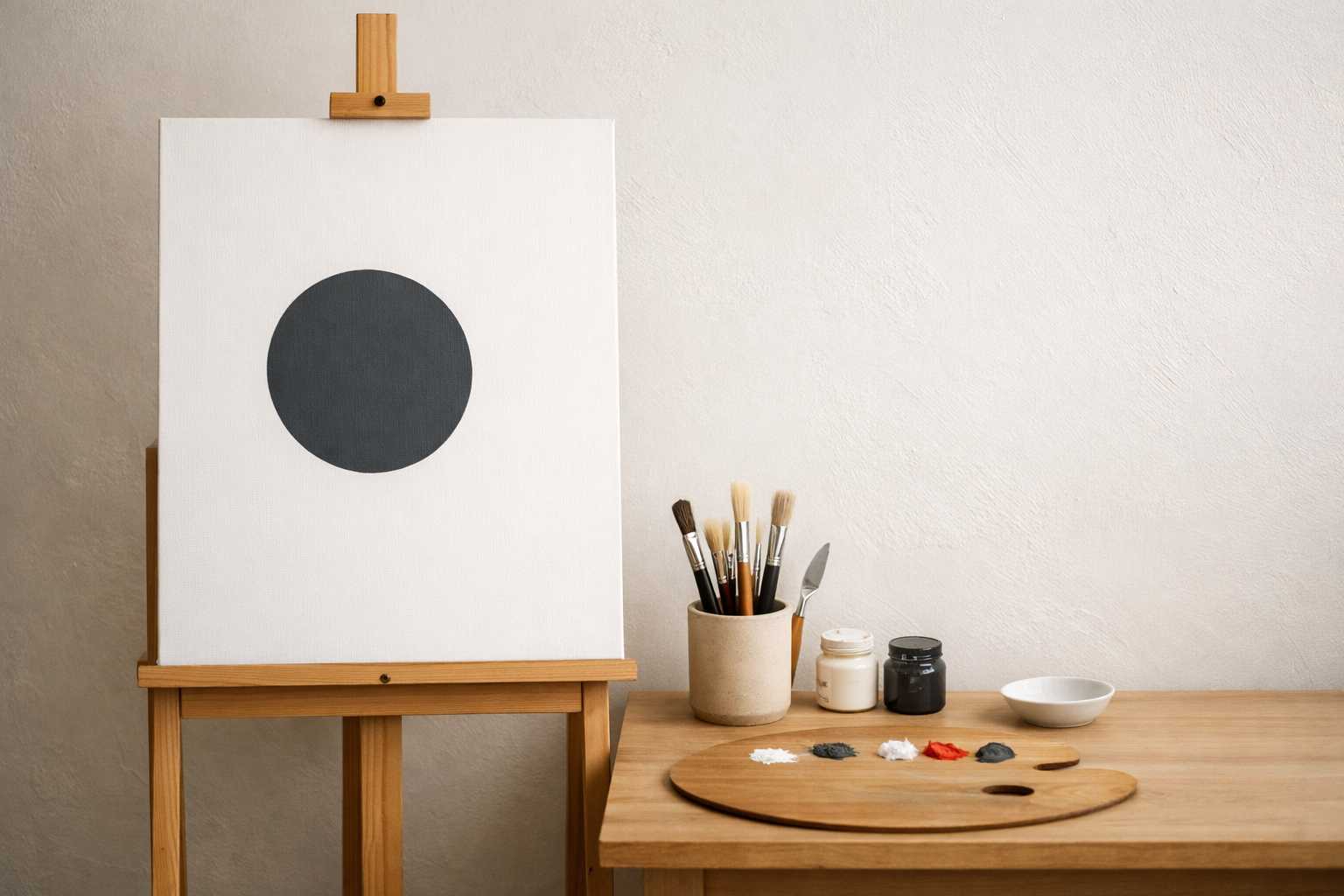
Test this technique: paint a simple figure on an expansive canvas. Observe how the surrounding space takes on as much significance as the shape itself.
The Role of Color Theory in Minimalist Painting
In minimalist works, artists typically employ limited color palettes. Interestingly, this limited choice expands their creative liberty.
Monochromatic schemes use varied shades of the same color to induce harmony and a sense of tranquility.
Neutral hues - whites, grays, beiges - are commonplace in minimalist pieces. These shades lend an air of sophistication and agelessness.
However, daring accent colors can also come into play. Use them sparingly for a potent impact.
Key Composition Techniques
Rule of Thirds
Conveniently partition your canvas into nine equal sections. Position key elements along these lines or at their intersection points.
This creates an organic equilibrium without the need for perfect symmetry.
Geometric Shapes
Plain geometric shapes are integral to minimalist art. Circles, squares, and triangles convey powerful messages spontaneously.
These shapes have a familiar feel and can express a myriad of emotions.
Repetition and Rhythm
Use uniform elements to create a visual rhythm. It could be identical colors, shapes, or brushstrokes.
Repetition cohesively binds your composition and leads the viewer's gaze.
Prudently Picking Your Material
In minimalist art, quality trumps quantity. Invest in top-notch brushes and paints.
Smooth, even surfaces are well-suited for minimalist pieces. Canvas boards or stretched canvas are great options.
Acrylic paints are ideal for beginners and quick to dry. Alternatively, oil paints provide rich textures but necessitate patience.
Explore Texture and Surface Treatment
Even pared-down paintings can present intriguing textures. Play around with diverse brushstroke techniques.
Palette knives render smooth, level surfaces. They're excellent for geometric shapes and color blocks.
Incorporating subtle texture adds visual intrigue without overwhelming the composition.
Discovering Your Unique Minimalist Voice
Begin by gaining insights from accomplished minimalist artists like Mark Rothko and Donald Judd. Observe their usage of space and color.
Start with basic subjects. Practice painting simple shapes before embarking on more complex compositions.
Maintain a sketchbook for ideas. Often, the most basic sketches translate into the most impressive paintings.
Avoiding Typical Minimalist Painting Mistakes
Be wary of cluttering your canvas. Minimalism prides itself on valuing empty space.
Avoid excessive color use. Adhere to your selected palette throughout the piece.
Don't succumb to the temptation to add "just one more element." Trust your instincts to identify when a piece appears complete.
Simplicity's Emotional Influence
Minimalist art creates a space for viewers to imbue their own emotions, making each piece uniquely personal.
Simple compositions often hold greater power than congested ones. They command attention with their serene confidence.
Your artwork should instigate feelings without prescribing specific emotions.
Establishing a Minimalist Art Practice
Keep your workspace clean and well-arranged. Your surrounding environment should mirror minimalist principles.
Aim to paint regularly, even if it's only for 15 minutes. Consistency accelerates skill development more than extensive inconsistent sessions.
Present your work to others. Constructive feedback facilitates artistic growth.
In Conclusion
The principles of minimalist art provide a framework for impactful, meaningful painting. Embracing simplicity allows you to produce artwork that conveys so much more.
Remember, minimalism isn't about limiting yourself but about making purposeful choices. Every component in your painting should have a reason for being.
Embark on your journey with simplicity, maintain your focus, and trust the process. Your minimalist adventure begins with a single brushstroke.
The real beauty of minimalist art lies in its inclusivity. These principles can be learnt and employed by anyone to create profound artwork.
What's going to be your first masterpiece?