Minimalist Abstract Shapes: Basic Geometric Art Tutorial
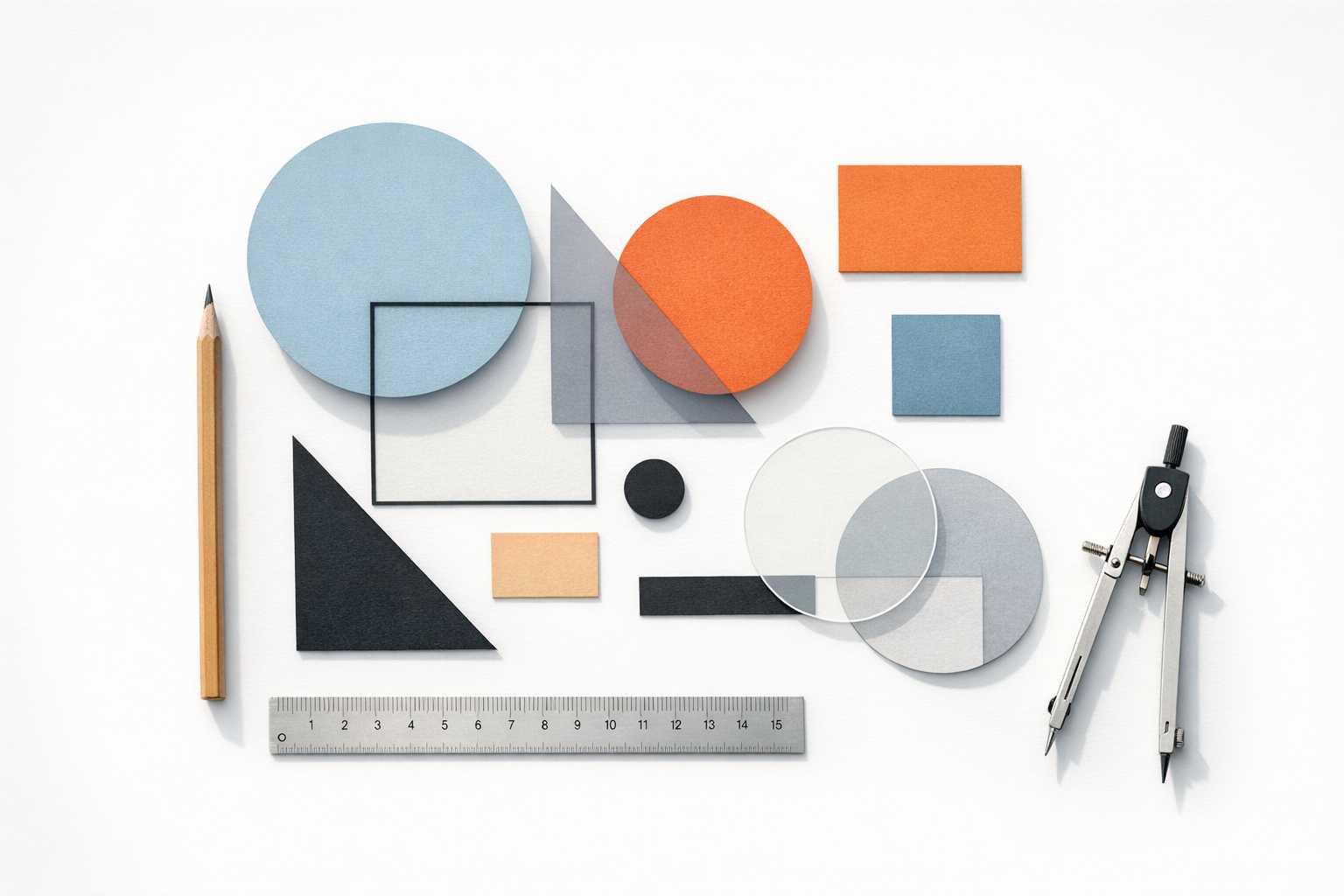
A Simple Guide to Minimalist Abstract Shapes: An Introduction to Geometric Art
Art, even in its simplest form, has the power to captivate. Minimalist abstract shapes, with their simplicity and visual strength, make a great starting point for anyone new to art. Let's explore this fascinating realm together.
Unveiling Minimalist Abstract Shapes
Minimalist abstract shapes are essentially uncomplicated geometric figures. They are characterized by sleek lines and basic elements such as circles, squares, triangles, and rectangles. Their simplicity is capable of creating a strong visual impact, which makes them an ideal choice for modern home decor. Remarkably, they are quite easy to create.
The Advantage of Starting with Geometric Art
Beginning with geometric art is a confidence booster. It does not demand advanced drawing skills as basic shapes are enjoyable and forgiving to work with. Many accomplished artists, including Mondrian and Kandinsky, found joy in geometric forms, so you're in good company!
Must-Have Tools and Materials for Beginners
You don't need to break the bank for art supplies. Here are some suggestions for beginners:
- Unadorned white paper or canvas
- A ruler or straight edge
- A compass for creating perfect circles
- Pencils (2H and 2B are excellent choices)
- Black markers or pens
- Colored pencils or markers (optional)
There's no need to complicate things at the start. You can always upgrade your supplies later.
Initial Geometric Shapes to Master
Circles and Curves
Begin with freehand circles. Don't stress about getting them perfect, because imperfect circles add a charming dimension to your artwork. Experiment with drawing circles of various sizes, overlap them, and see how they interact with each other.
Squares and Rectangles
A ruler can be useful for achieving neat edges. Try drawing different sized squares and rectangles on a single page and play around with line thickness. Rotating squares to transform them into diamonds is a great technique to introduce visual variety.
Triangles
Triangles introduce a sense of dynamism to compositions. Practice with equilateral triangles at first, and then explore different angles and sizes. You can even experiment with different orientations to see how it alters the overall feel of your artwork.
Crafting Your Premier Composition
Planning Your Composition
Begin with rough sketches and don't get too analytical at this phase. It's best to place shapes randomly at first. Then step back, scrutinize your arrangement, and adjust until you achieve balance.
Implementing the Rule of Thirds
Envision your canvas divided into nine equal portions. Position key shapes where these portions intersect to create natural focal points. This rule gives your composition a significantly improved and professional appearance.
Experimenting with Size
Variation in sizes of shapes constructs a visual hierarchy. Our eyes naturally gravitate from larger to smaller elements. Try combining one large shape with several tiny ones for a compelling contrast.
Ensuring Visual Appeal
Stacking Shapes
Let your shapes overlap. This strategy imparts depth to your artwork as some shapes will seem to be in front of others. Experiment with lighter or darker shades for overlapping areas to create a transparency effect.
Leveraging Negative Space
Do not feel obliged to fill every inch of your canvas. Allowing empty, or negative, space provides a spot for your eyes to rest and contributes to a well-balanced and serene composition.
Varying Line Weight
Thick lines can be used for emphasis while thin lines create delicate details. A composition becomes rhythmical by combining both. Try some shapes with outlines and others filled solidly for an exciting visual contrast.
The Role of Color in Minimalist Art
Beginning with Monochrome
Starting with monochrome pieces allows you to concentrate on form and composition without color as a distraction. Additionally, black and white artwork has a classy appeal and is perennially popular with collectors.
Introducing Limited Color
When you’re ready to introduce color, proceed cautiously. Select a maximum of two or three colors as too many can overwhelm a minimalist design. Experiment with complementary colors like blue and orange, or stick to several shades of one color.
Understanding the Psychology of Color
Respective to the mood you want your artwork to evoke, use warm colors for an energetic and bold impact while cool colors convey calmness and tranquility. For instance, red triangles can feel dynamic and stimulating while blue circles express peace and stability.
Common Newbie Mistakes
Overcomplicating Composition
In minimalist art, less is usually more. Resist the urge to crowd your composition with too many elements. If something feels too busy, remove something instead of adding more.
Neglecting Balance
Balance is more about visual weight than symmetry. Dark shapes feel heavier than light ones, influencing the balance within a composition. Regularly step back and evaluate whether your composition feels stable.
Falling into the Trap of Perfectionism
Embrace the imperfections in your work. The charm that your hand-drawn lines bring cannot be replicated by cold, computer-generated shapes. Remember, small mistakes give your work a unique, personal touch.
Nurturing Your Art
Adding Texture
It’s worth introducing texture to basic shapes. Cross-hatching, dots, or lines can add an interesting visual dynamic without adding complexity. Intermixing smooth and textured areas keeps the viewer engaged.
Creating a Series
Developing multiple pieces around a similar theme can look very professional when displayed together. Small differences between the pieces add to the visual rhythm. Series work is often favored by collectors.
Digital vs. Hand-Drawn Art
Although hand-drawn art has a unique charm, digital tools can provide precision and easy corrections. Trying out both approaches is recommended, and many artists often combine the two, initially sketching by hand and then refining digitally.
Showcasing Your Minimalist Art
Selecting Frames
Simple frames pair best with minimalist artwork so as not to compete with it. White or black frames are infallibly safe choices. Providing plenty of white space around your artwork enhances the minimalist aesthetic.
Ideas for a Gallery Wall
Consider grouping several small pieces together, maintaining consistent spacing between frames. This lends a professional gallery look. Mixing sizes can also create an engaging display while maintaining a consistent overall style.
Discovering Inspiration Everywhere
Geometry in Nature
Seek out shapes in the world around you. For instance, tree branches make interesting triangles, flowers form perfect circles, and architecture offers a range of rectangles. Carry a sketchbook with you and sketch the fascinating shapes you come across. These will serve as a reference for future artworks.
References from Art History
Draw inspiration from celebrated minimalist artists such as Sol LeWitt and Agnes Martin. While it’s important not to directly imitate their work, it’s entirely okay to let their approach inspire your unique vision.
Building Confidence in Your Artistic Abilities
Cultivating Daily Practice
Allocate about 15 minutes daily for geometric art practice as consistency tends to be more effective than occasionally long sessions. You'll see a steady improvement in your skills. Dating your practice sheets will enable you to track your progress.
Sharing Your Creations
Don't hesitate to show your creations to friends and family or even join online art communities. Receiving feedback can help you evolve as an artist. Criticism should never be feared - remember, every professional artist was once a beginner.
Wrapping Up
Minimalist abstract shapes offer limitless potential for creativity. Starting with basic geometric shapes, you can focus your efforts on achieving balanced compositions rather than fretting over complexity. Remember, every celebrated artist started with the simplicity of shapes. Therefore, your artistic journey begins as soon as you draft that first circle, square or triangle. So, grab a pencil and get started today!
Minimalist art is beautiful in its simplicity, and you already have all the tools you need to begin. Embrace the process and enjoy the journey of discovering your unique artistic expression.