Industrial Minimalist Art: Urban Structure Painting Guide
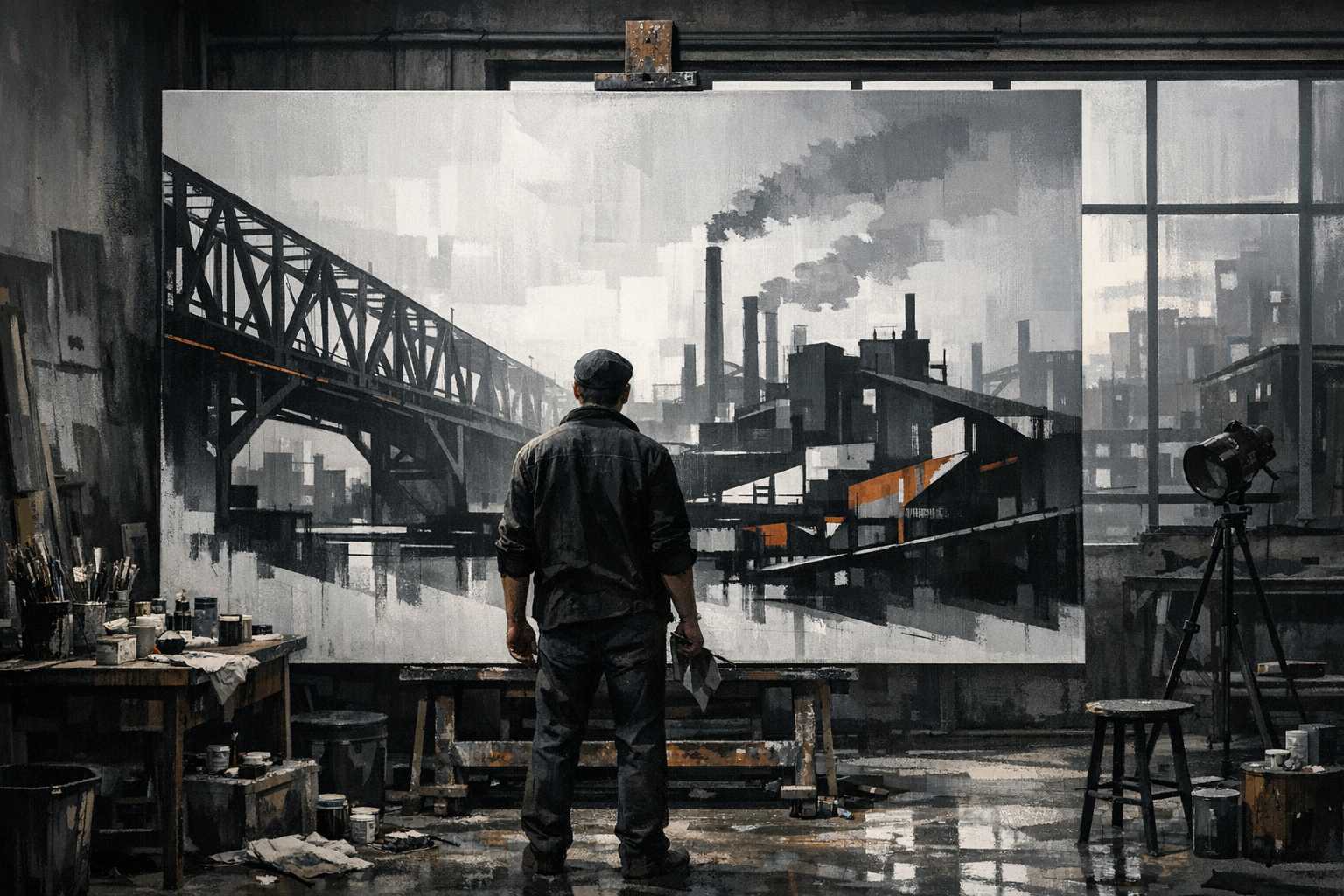
Guide to Industrial Minimalist Art: Painting Urban Structures
Industrial minimalist art is an artistic representation of urban landscapes in their raw form. It discards superfluous details to bring out the simplicity and appeal of city architecture, a form of art that glorifies sharp lines, geometric patterns, and industrial materials.
Industrial Minimalist Art: The Unique Elements
The sophistication of industrial minimalist art lies in its simplicity and utility. Drawing its muse from the architectural aesthetics of factories, bridges, and urban structures, it uncovers beauty within the harsh industrial landscapes.
This particular genre accentuates the use of negative space and pronounced contrasts. Employing minimal color schemes, artists manage to convey maximum effect, creating a genre of art that feels contemporary yet timeless.
Necessities for Urban Structure Artwork
Being prepared with the right art supplies is vital. You don't need high-priced materials to create impressive pieces - quality, basic supplies will serve their purpose well.
Selected Paints and Brushes
Acrylic paints are best suited for beginners as they dry quickly and are easy to clean with just water. Opt for neutral shades like blacks, whites, muted blues, and grays.
Flat brushes are perfect for creating sharp, clean lines while angular ones are helpful for geometric shapes. A selection of high-quality brushes is preferable over a larger collection of inferior ones.
Preferred Canvas and Surfaces
A good budget-friendly starting point is to use canvas boards. They offer excellent texture at an affordable cost. Stretched canvases are another option for larger pieces.
Some artists enjoy painting on metal or wood surfaces. These add an element of genuine industrial texture and complement the urban theme extremely well.
Finding your Muse in Urban Structures
Urban structures and cities are teeming with creative inspiration. Industrial buildings serve as infinite sources of artistic fodder, provoking thought with unique angles and geometric shapes.
Top Subjects for Industrial Art
Bridges present excellent subjects for minimalist depictions with their clear-cut lines creating stunning impressions on canvas. Concentrate on basic structural elements instead of ornamental details.
Factory structures offer impactful, rectangular patterns while water towers present unique circular formations, and construction cranes contribute dynamic diagonal lines.
Straightforward design elements like power lines and utility poles produce natural geometric contrasts against the sky, serving as excellent subjects.
Fundamental Techniques for Industrial Minimalist Painting
Start with basic compositions and master foundational techniques before venturing into more complex pieces. Progressing gradually enhances skills and leads to improved results.
Execution of Clean Lines
For perfectly straight edges, use painter's tape. Detach the tape when the paint is still slightly damp to avoid peeling and to form well-defined boundaries.
Practise brush control for freehand lines. Steady hand movements yield more lifelike structures. Don't be overly concerned about attaining perfect accuracy at first.
The Art of Limited Colors
Limit the number of colors in each painting to three to five. This constraint cultivates creativity and maintains visual uniformity throughout the pieces.
Gray serves as an excellent primary color. Include one accent color to create interest. Black and white provide much-needed contrast.
Composition Advice for Urban Artwork
Powerful compositions can elevate minimalist pieces. Each component should contribute to purpose. Anything that doesn't enhance the overall design should be discarded.
Role of Rule of Thirds in Industrial Art
By placing essential structural parts along the third lines, you can create dynamic compositions compared to centering everything. This technique leads the viewer's gaze naturally across the painting.
Horizon lines situated on upper or lower thirds create an engaging visual balance, which is more interesting than having them exactly in the center.
Effective Utilization of Negative Space
Unpainted areas are just as crucial as the painted ones, providing resting spaces for the eyes. Negative space brings out the emphasis on industrial structures.
Sky areas act as natural negative space. Keeping them basic and uncluttered allows the architectural elements to be the highlight of the painting.
Color Theory in Industrial Minimalism
Understanding color relationships can drastically improve your artwork. Industrial settings impart ideal color schemes, with nature doing the designing for us.
Monochromatic Schemes
One-color schemes create gorgeous renditions of industrial subjects. Different tints and shades of a single color create sophisticated compositions.
With its various shades, ranging from near-white to almost-black, gray is versatile for industrial themes, offering variation within a single color family.
Using Strategic Color Accents
Just one vivid color can invigorate an entire piece. Industrial structures naturally display rust-orange while construction equipment often showcases safety yellow.
Use these accent colors sparingly for the most dramatic effect. Small areas of bright color attract the viewer's attention and introduce an emotional warmth to otherwise cool compositions.
Systematic Painting Process
Avoid overwhelming yourself by adopting a systematic process. Understand that complex scenes can be broken down into manageable tasks. This approach not only builds confidence but improves results.
Planning Your Composition
Before painting, create thumbnail sketches. Experiment with different placements and perspectives. Small sketches are helpful to recognize the most potent compositions.
Capture reference photos from various angles. Realize that industrial structures seem different at different times of the day, with early morning and late evening lighting creating stunning shadows.
Establishing Basic Shapes
Focusing on large, basic shapes is key at the beginning. Let the details wait. Your main focus should be on achieving correct proportions and placements.
Start with light colors that can be easily painted over for easy amendments later. Create complexity gradually, through several layers.
Adding Details and Refinemenst
Only after the basic shapes fall into place, should you add the finer details. In industrial minimalism, less is often more, so use restraint with intricate detailing.
Highlight elements that reinforce the composition. Remove or simplify anything that creates visual clutter. Every stroke you make should contribute to the overall design.
Common Errors to Steer Clear of
Benefiting from common errors can save both time and exasperation. Familiarity with these common traps can help you avoid them.
Over-embellishing Simple Subjects
Industrial minimalism is about celebrating the ordinary. Avoid the inclusion of unnecessary embellishments or ornamental details. The power of this art form comes from reduction rather than addition.
Relish in the sophisticated simplicity. Viewers appreciate neat, uncluttered compositions more than intricate, detailed paintings.
Overlooking Value Relations
Values (shades of light and dark) are more crucial than colors in a painting. Squint at your painting to check the value patterns. Strong contrasting values make for powerful visual experiences.
Take photos of your artwork in progress. By converting them to black and white digitally, you can spot value issues that colors can sometimes obscure.
How to Complete and Display Your Industrial Art
Suitable finishing not only protects your art but enhances its presentation. Minimalist pieces suit simple frames best - the frame should blend in and not compete with the artwork.
Varnishing and Protection
It's beneficial to apply a varnish to acrylic paintings. The varnish serves as a protective layer, preventing dust collection and color fading. For long-term preservation, use removable varnishes.
Ensure you apply the varnish in thin, even layers. Make sure you are working under good lighting to catch any missed spots. There should be enough drying time between two coats.
Framing Minimalist Artwork
Simple black or metal frames beautifully complement industrial themes. Steer clear of ornate or decorative frame styles. The frame should add value to, not distract from, the artwork.
Consider floating frames for modern displays. They create a visual gap between the artwork and the wall, perfectly emphasizing the minimalist aesthetics.
Taking Your Industrial Art to the Next Level
Upon mastering the basic techniques, it's time to delve into advanced concepts. Industrial minimalism leaves ample room for personal expression. Develop your distinctive artistic voice within this framework.
Creating a Cohesive Series
Develop a series of paintings with a unified theme. Such an approach makes for a stronger artistic statement. Galleries and collectors admire coherent collections of work.
Maintain consistency in style elements while varying compositions. Use aligned color schemes across multiple pieces for a visual harmony when displaying as a group.
Showcasing Your Work Online
Social media platforms work excellently for sharing art. Instagram serves visual artists well. Utilize appropriate hashtags to capture the attention of interested viewers.
Capture your painting process using progression photos. Many people take pleasure in witnessing the development of artwork. Such content usually performs well on social platforms.
Industrial minimalist art provides limitless opportunities for creative exploration. The urban world is ever-ready, offering constant inspiration for novel compositions. Start with the basics, practice often, and evolve your unique artistic vision.
Bear in mind that minimalism is not merely about negative space but is about purposeful choices. Every part of your painting should serve a purpose. With practice, you will gain the confidence to create profound, understated artwork that beautifully captures the essence of industrial structures.