Contemporary Minimalist Art: Modern Gallery Style Guide
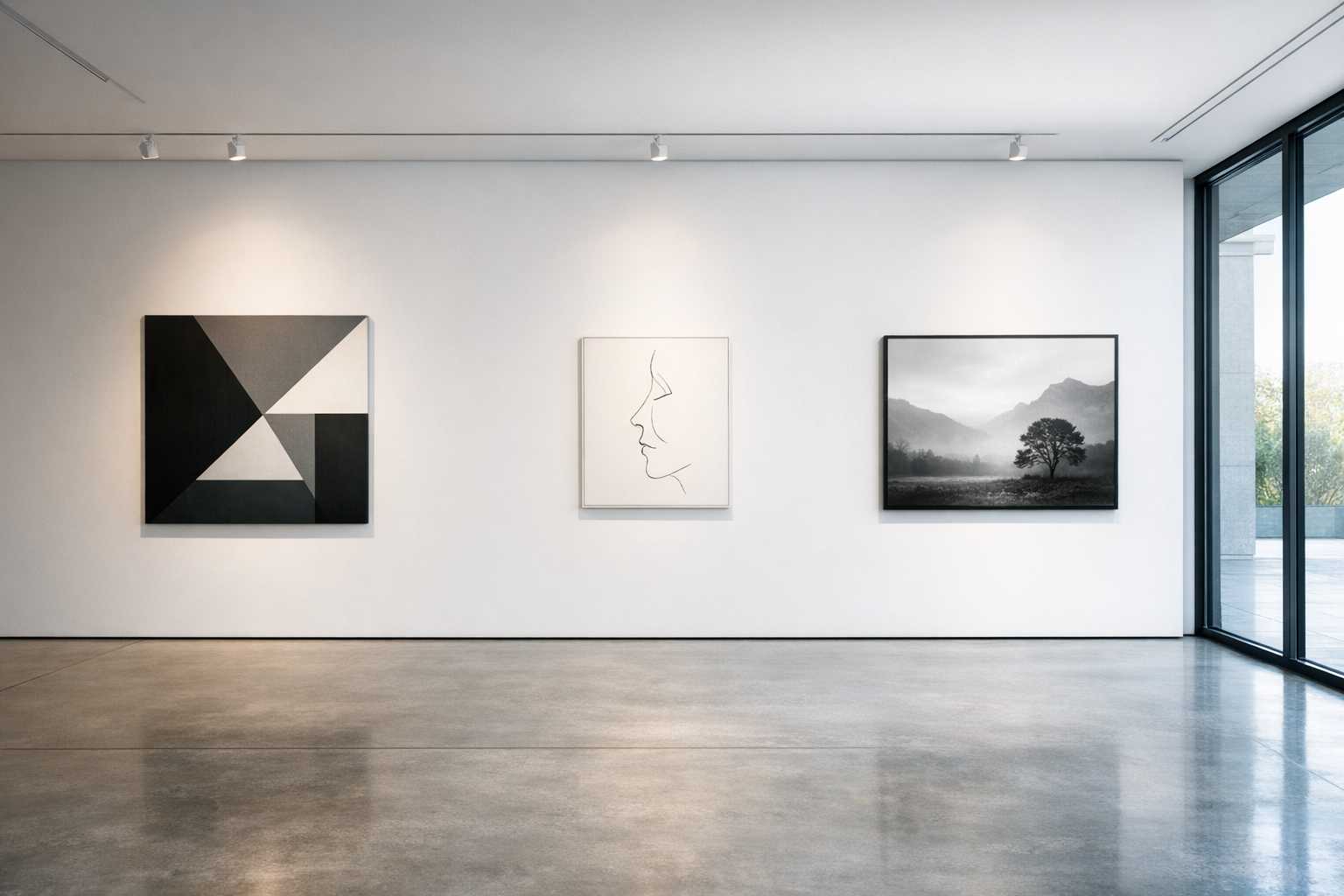
Guide to Modern Gallery Style: Embracing Contemporary Minimalist Art
Have you ever taken a step into a gallery and immediately felt a wave of tranquility wash over you? That's the bewitching charm of contemporary minimalist art. This art style is all about eliminating the unnecessary and focusing on what truly resonates.
Minimalist art is not just a fleeting trend. It's a potent tool used to transform any environment into a serene haven.
Unraveling the Charm of Contemporary Minimalist Art
Contemporary minimalist art burst onto the scene during the 1960s. Artists sought to deviate from emotionally dense and complex art forms, turning to simplicity instead.
The emphasis of this genre is on fundamental elements. It showcases clean lines, neutral tones, and geometric patterns. The objective is to attain a strong impact with minimal elements.
Eminent minimalist artists such as Donald Judd, Dan Flavin, and Agnes Martin have greatly influenced today's modern creators with their groundbreaking work.
Key Features of Gallery Design in Minimalist Art
Simplistic Lines and Shapes
Minimalist art exalts the beauty of simplicity. Paintings on rectangular canvases typify this style, while compositions incorporating circles or triangles also fit exceedingly well.
Instead of elaborate frames, opt for sleek, slender borders, or better yet, go completely frameless.
Neutral Shade Palettes
Employ shades of white, black, and gray as the base. The inclusion of beige and cream introduces warmth without overpowering the design. A hint of a single accent color can forge an eye-catching highlight.
Remember, in minimalist design, moderation is the key.
Application of Negative Space
Negative space, or the empty area around and between the subject of an image, is far from being a wasted space—it's a purposeful provision of breathing room. This technique makes each piece more striking.
Avoid the impulse to cram artwork into every nook. Instead, give your artworks the space to breathe and shine on their own.
Expert Tips on Showcasing Minimalist Art
Wall Spacing and Arrangement
Stay true to the 57-inch rule when hanging artworks, positioning the center of the paintings at this height from the floor as per professional gallery standards.
Leave a gap of between 6 to 12 inches between artworks when clustered. For standalone large pieces, ensure that they have ample isolated space.
Lighting Aspects
Minimalist pieces thrive best under natural lighting. When feasible, position artworks at a right angle to windows.
For artificial lighting, opt for warm LED spotlights and steer clear of severe fluorescent bulbs that cast undesirable shadows.
Room Navigation and Movement
Carve visual pathways throughout your space, facilitating fluid movement from one artwork to another.
Take note of the room's architecture and make use of existing lines and ratios.
Popular Styles of Minimalist Art for Contemporary Spaces
Abstract Geometric Art
Simple shapes flaunting monochrome palettes embody timeless elegance. Square and rectangular layouts are particularly effective.
Such pieces gel seamlessly with modern furniture, introducing visual interest without creating a competition for attention.
Line Art and Sketches
Drawings comprised of one line form an elegant centerpiece. Black ink on white paper brings forth everlasting appeal.
Such artworks pair stunningly with natural textures and lush greenery.
Monochromatic Photography
Minimalist spaces naturally accommodate black and white photography. Select images that offer high contrast and intricate subjects.
Photographs capturing landscapes and architecture are typically a fantastic fit.
Textured Canvas Works
Textured works of art in all-white or homogeneous colors introduce depth. They captivate interest through textural variation rather than color.
Such pieces look striking when under directional illumination.
Building Your Own Minimalist Gallery Wall
Outlining Your Arrangement
Start with paper templates cut to match the sizes of your artworks. Affix them to the wall first to test various layouts.
This allows you to experiment without leaving unsightly holes in your wall. Continue adjusting until you are satisfied with your composition.
Balancing Different Sizes
Combine artworks of varying sizes to generate visual intrigue. Pair one large piece with two smaller ones to strike a balance.
Avoid an excess of different sizes and instead, stick to a maximum of 2-3 size variations.
Keeping Visual Equilibrium
Equalize visual heft throughout the display—a dark, large artwork requires space to shine, whereas lighter, smaller pieces can be grouped together.
Step back at regular intervals to examine the overall look and feel.
Ideal Color Schemes
Monochromatic Themes
A monochromatic scheme radiates tranquility and harmony. Various shades of gray fit together impeccably.
This approach imparts an air of sophistication and unfeigned intent.
Classic Black and White
This timeless duo consistently delivers. It can effortlessly adapt to any room style or color scheme.
Black and white photographic art especially sparkles within this palette.
Warm Neutral Blends
Incorporate cream, beige, and gentle browns to inject warmth. These colors create a welcoming atmosphere without compromising the minimalist aesthetic.
They are particularly effective in living rooms and bedrooms.
Affordable Options for Minimalist Art
Digital Prints and Downloads
Platforms like Etsy provide reasonably priced digital downloads. Have them printed at a local store for immediate artwork.
Ensure you select high-resolution files for the best results.
Home-Made Minimalist Creations
Craft your own geometric paintings, using painter's tape for crisp, clean lines. Acrylic paints are particularly friendly for beginners.
Keep it simple—you can achieve a lot with just a few basic tools.
Thrift Store and Antique Discoveries
Hunt for understated and simple finds. Sometimes, a minimalist masterpiece may be hiding behind an ornate frame.
Swap out busy frames for more straightforward alternatives.
How to Care for Your Minimalist Art Collection
Adequate Cleaning Methods
Regularly dust with microfiber cloths. For framed pieces, use streak-free cleaners to wipe down the glass.
Steer clear of abrasive chemicals on any unprotected artwork.
Shielding from Sun Damage
Prolonged exposure to UV rays can fade artwork over time. For valuable pieces, consider using UV-filtering glass.
Regularly switch out displays to prevent excessive exposure.
Storing Best Practices
Keep artwork in cool, dry locations. Use acid-free materials when wrapping and storing pieces.
Climate-controlled storage is the best choice for keeping valuable works in top shape.
Common Pitfalls to Avoid
Overfilled Layouts
In minimalist design, less is definitely more. Opt for fewer, but superior quality pieces.
Give each artwork enough room to make its own statement.
Disregarding Scale and Proportion
Small artworks can become lost on expansive walls, just as jumbo ones can intimidate compact spaces.
Measure with care and then proceed to hang your pieces.
Introducing Too Many Styles
Stay faithful to your minimalist aesthetic. Resist the temptation to introduce "just one" ornamental piece.
Consistency is key to creating the serene atmosphere you're striving for.
Contemporary minimalist art has the capacity to transform spaces into tranquil havens. You can begin with just one standout piece, gradually building your collection with deliberate consideration.
Keep in mind that the objective is not merely to fill space but to create breathing areas for both your art and your mind.
Over time, your minimalist gallery will evolve into a daily source of peace and inspiration.