Abstract Minimalist Landscapes: Essential Techniques Guide
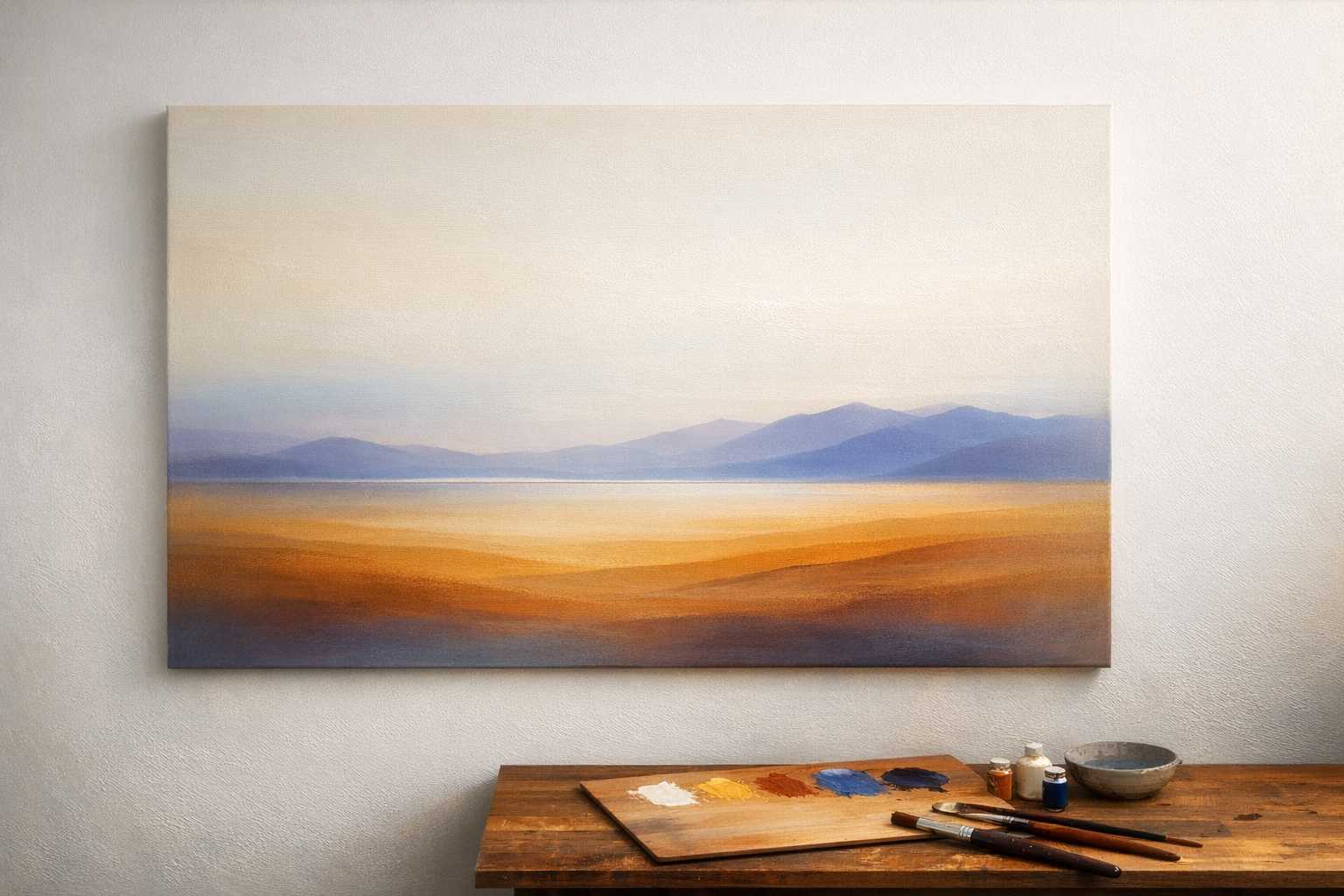
A Comprehensive Guide to Abstract Minimalist Landscapes: Must-Know Techniques
Have you ever found yourself captivated by the simplicity of a landscape painting? That's the mesmerizing allure of abstract minimalist landscapes. This type of artwork removes extraneous details to unveil the pure emotion and beauty of nature.
In my journey exploring this intriguing art form, I've unlocked key techniques that I will share with you today. These methods will help you transition your landscape paintings from being excessively detailed to enchanting and minimalist.
Abstract Minimalist Landscapes: An Overview
Rather than focusing on realistic details, abstract minimalist landscapes capture the essence of nature. The simplicity is created through the use of basic shapes, a restricted color palette, and precise lines. They bring to mind expansive skies marked by a single horizon line or gently rolling hills painted in subdued tones.
Such paintings inclusively do not attempt to represent every single tree or stone. Instead, they succeed at capturing the feeling of being present in that space, allowing viewers to fill in the gaps with their imagination.
Keys to Using Color Effectively
Embrace a Limited Palette
Select only three to five colors for your painting. This strategy enables harmony and avoids visual disorder. I recommend starting with a warm color (such as ochre or burnt sienna), a cool color (ultramarine or cerulean blue), a neutral tone (raw umber or payne's gray), and white for mixing.
Understand Color Temperature
Warm colors give the illusion of being closer to the viewer while cool colors appear to recede into the distance. Utilize this principle to create a sense of depth without incorporating intricate details. For instance, distant mountains can be painted in cool blues and purples, while elements in the foreground can be slightly warmer to add dimension.
Incorporate Smooth Color Gradations
Seamless transitions between color tones are essential to minimalist art. Practice your blending techniques to create smooth color gradients. Even a simple blue-to-white fade could imply boundless space.
Fundamental Principles of Composition
The Significance of Negative Space
Don't feel compelled to cover every inch of your canvas with paint. The empty or negative space can be just as important as the painted areas, providing a place for the viewer's eye to rest.
Use the Rule of Thirds Thoughtfully
Locate your horizon line either on the upper or lower third of the painting but not in the center unless you're aiming for a perfectly balanced, meditative ambiance. A more elevated horizon line places emphasis on the foreground elements while a lower one highlights the drama of stunning skies.
Achieve Rhythm with Recurring Elements
Incorporating similar shapes in your composition, such as rolling hills or cloud formations, creates a visual rhythm. Avoid potential monotony by varying their sizes.
Simplify Shapes and Forms
Focus on Basic Shapes
Transform the complexity of natural elements into basic forms. Mountains can be depicted as triangles, hills as soft curves, trees as vertical rectangles or ovals, and water as horizontal bands.
Employ Overlapping for a Sense of Depth
Add depth by layering simplified shapes. For instance, a darker hill overlapping a lighter mountain generates an immediate sense of depth, with no need for detailed shading.
Embracing Brushwork and Texture Techniques
Decide Between Flat and Textured Applications
Smooth areas with consistent color suggest tranquillity, while textured brush strokes infuse energy and movement. Choose your technique based on the ambiance you want to create.
Keep Details to a Minimum
Introduce only enough texture to suggest the landscape element. Trust in the viewers' ability to understand the scene despite minimal information.
Working with Light and Atmospheric Effects
Simplify the Lighting
Adhere to a single predominant light source. Overly complex lighting can create confusing shadows.
Use Edges to Convey Atmosphere
Use soft, blurred edges to suggest mist, distance or diffused light. Sharp edges bring elements forward and intensify the drama.
Give Importance to Value Relationships
Frequently squint at your art piece or reference image. This action exposes the value structure underneath. High contrast in values create points of focus, while similar values give a sense of unity and calm.
Pitfalls to Dodge
Overcomplicating Your Artwork
The common pitfall I've observed is the addition of unnecessary details. Every brushstroke has to contribute to your story.
Focusing on Particular Areas
Avoid getting caught up in perfecting minor areas. Regularly step back to assess your entire composition because the overall impact is more important than small details.
Overusing Colors
Maintain your limited color palette. Even if you are tempted to add more colors, resist that urge as it may disrupt the harmony you've painstakingly created.
Helpful Exercises for Enhancement
Start with Value Sketches
Before introducing color, create small sketches only using black, white, and gray. This practice helps build strong compositions without being distracted by color.
Practice Painting from Memory
Spend a few minutes studying a landscape and then paint it from memory. This exercise trains you to recall only the essential elements while discarding non-crucial details.
The Five-Minute Painting Challenge
Limit yourself to a five-minute time frame to complete a landscape study. This teaches you to convey your intention with quick, decisive marks.
Establishing Your Unique Style
Learn from Masters
Observe the works of famous artists like Giorgio Morandi, Mark Rothko, or David Hockney. Learn their unique ways of handling space, color and form.
Consistent Workflow
Develop consistent methods for mixing colors, conceptualizing compositions, and decision making.
Constructive Approach to Imperfection
In your journey, remember that not every painting needs to be a masterpiece. Even unsuccessful experiments can offer valuable insights.
Essential Tools and Materials
Keep Your Supplies Simple
To create stunning work, you do not need extravagant materials. Standard acrylic or oil paints are adequate for starters. Choose brushes that are comfortable to use.
Canvas Preparation
Choose a smooth, neutral-toned ground for your minimalist work. Avoid stark white canvases as they can complicate the color mixing process.
Concluding Thoughts
In abstract minimalist landscapes, minimalism and simplicity reveal the emotional heart of natural spaces.
Start from basics. Focus on mastering one technique at a time and enjoy the tranquil process of simplifying nature's complexity to its fundamental forms.
Understand that the unique path you choose for abstract minimalist landscape will be transformative. Each painting becomes a lesson in perception, emotion, and expression.
Instead of striving for photographic realism, aim for emotional integrity. Trust your instincts, encourage simplicity, and allow your landscape art to have its own breathing space.