Seasonal Light Effects in Impressionist Landscapes
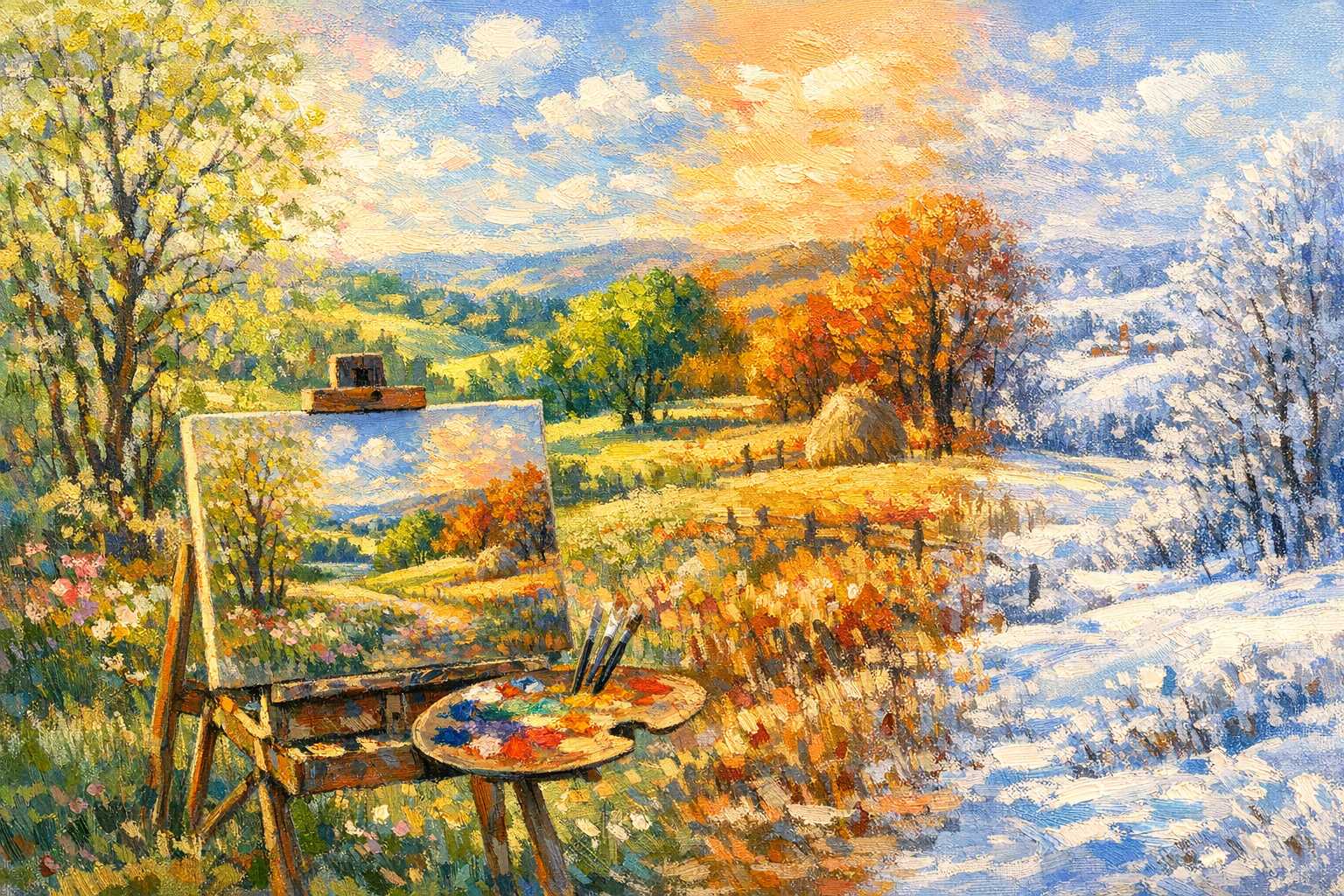
Capturing the Dancing Light in Seasonal Landscapes: An Impressionist Achievement
Ever wondered what brings Impressionist landscapes to life? The answer lies in the artists' talents of harnessing the enchanting effects of seasonal light. The ever-evolving ambiance of the Impressionists' landscapes beams with the unique aura of each season.
The Captivating Seasons: The Impressionist's Easel
Light, the Impressionists' object of fascination, propelled them to paint the same scenery repeatedly. Reason? Light is the divine touch that gives life to their art.
The glow of the gentle rays of the spring morning, the rigorous afternoon radiance of the summer sun, the warm amber hues of fall, and the frosty silvery light of winter - each season spun its own tales through their brushstrokes.
Spring: The Birth of Light
Impressionist spring landscapes are energized by a vibrant newness. Artists like Claude Monet imbued their canvases with the gentle morning light playing on budding foliage.
Their springtime works exude a palpable sense of hope and tranquility through soft yellows and pale greens. These paintings invariably create an air of warmth returning to life.
A perfect example is Renoir's spring gardens whose strokes echo the vivid sparkle of sunlight on fresh foliage.
Summer: Fierce Brilliance
Summer posed both a challenge and a bounty of opportunities for the Impressionists. The harsh sun at midday presented dramatic contrasts of deep shadows and bright highlights.
In a race against time to capture the momentary light, Impressionists mastered the art of swift painting.
Caillebotte's scintillating summer street scenes are a testament to this technique. The canvases vividly portray the blazing white pavements under the blistering sun, with people hunting for elusive shade.
Autumn: Golden Spectacle
Autumn paintbrushes dipped into the gold of the slanting sunrays brought dramatic effects to Impressionist landscapes. They made the scenery appear illuminated from within.
Pissarro topped the charts of Impressionists capturing autumn hues. His scenes from the harvest are alive with a golden radiance.
This season, offering longer painting sessions, allowed artists a leisurely space to ply their brushes.
Winter: Delicate Splendour
The challenge that winter light brought for Impressionist artists was of a different kind. With the sun taking a low arc, the lengthening shadows cast a blueish hue on the snow.
Monet’s famous winter scenes evocatively capture this effect. His currents of blue shadows convey the impact of the winter sky on everything underneath.
A winter light, subtle yet overwhelming, calls for a delicate observation to be effectively captured.
Technique Behind the Seasonal Light
Impressionists tailored specific approaches to capture each seasonal mood. They played with color mixtures and paint application.
While translucent layers spelt spring, thick, audacious strokes told tales of summer. Warm color blending echoed autumn, while cool undertones reflected winter.
Working en plein air, or outdoors, was an Impressionist mantra. Experiencing the moods of the light at firsthand was a pathbreaking feat in landscape painting.
Masterpieces to Marvel
To witness an artistic feast of seasonal light, one can study Monet’s Rouen Cathedral series. His renditions of the same structure at different times of the year and day puts the transformative power of light on display.
Sisley's landscapes offer a parallel account. His trees take on different personas with each passing season, ranging from the ethereal nature of spring to the immutable force of winter.
Relevance in Modern Art
Contemporary artists continue to draw inspiration from the Impressionists' understanding of seasonal light effects.
Photographers too, appreciate the importance of light, knowing full well that it can make or mar a landscape shot.
The principles remain clear - steady observation, swift working, and a careful capture of the fleeting moments.
The Current Significance
Observation is the core lesson that seasonal light effects in Impressionist landscapes teach us. These artists opened our eyes to the beauty in mundane moments and commonplace scenes.
Their legacy prompts us to take notice of the ever-changing play of light around us, with each moment bearing something distinctive and ravishing.
We should try observing the light the next time we're outdoors and see its effect throughout the day and the changing seasons. Investing in this practice of observation is the real takeaway from Impressionist landscapes, for they inspire us to see the everyday with a renewed sense of awe.
Wrapping Up
Impressionist landscapes, immortalized by the transformative effects of seasonal light, transcend mere scenes. They encapsulate fleeting moments, myriad moods, and the quintessential spirit of every season in their strokes.
This legacy breathes life into every artist's work that dares to harness the light outdoors. The exquisite dance of seasonal light continues to beguile artists the world over.
Examine their methods. Study the light around you. Landscape viewing will never be the same again.
As the Impressionists unveiled to us, each season has its distinct light; each moment, its inherent beauty. All it takes is a little observation.