Basic Shape Painting: Geometric Art Guide for Beginners
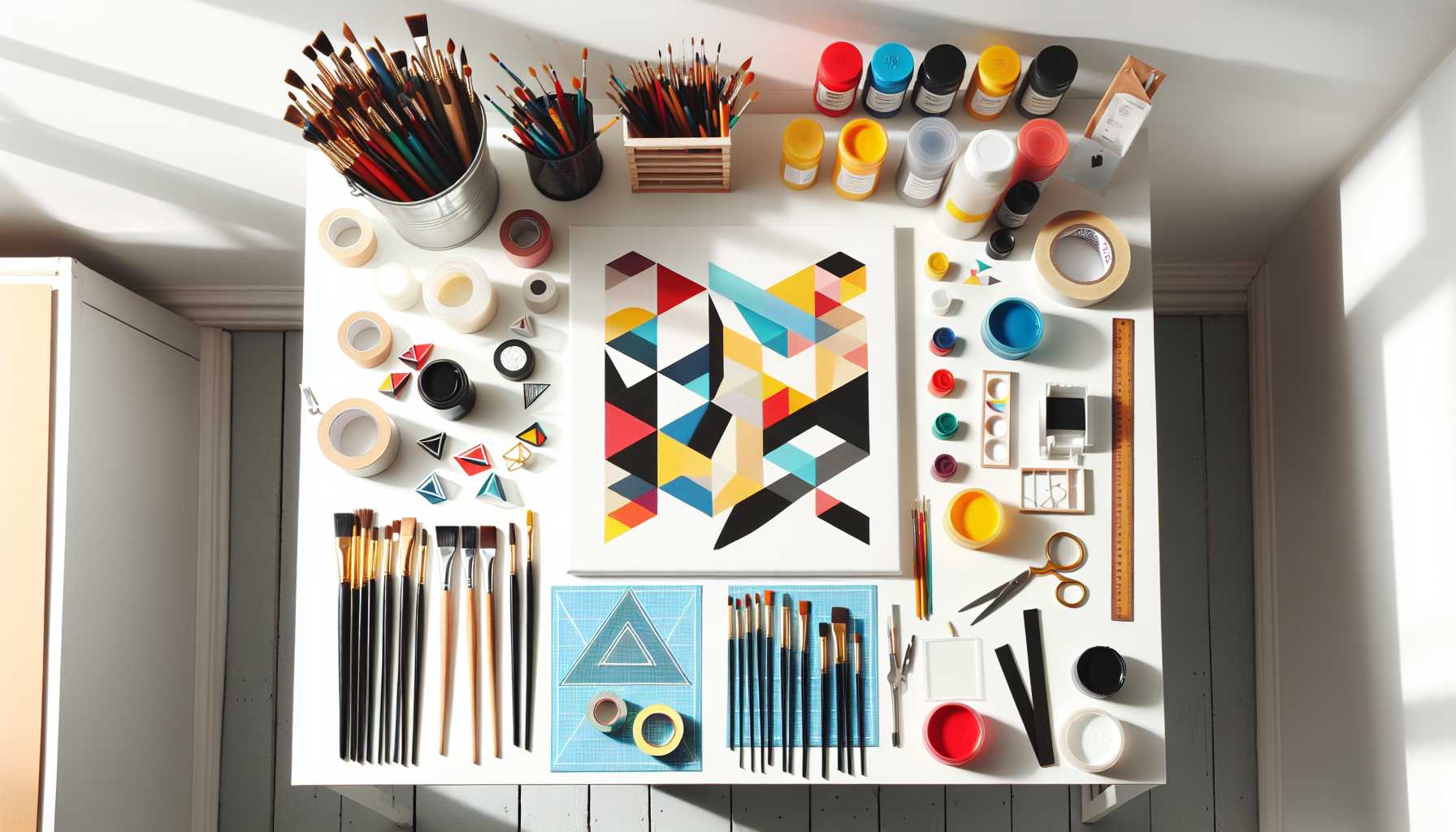
Beginner's Guide to Geometric Art: Fundamentals of Basic Shape Painting
Have you ever admired a geometric painting and thought, "I could never make something like that"? I'm here to reassure you that you certainly can! As one of the most beginner-friendly and satisfying forms of art, basic shape painting is a great place to start.
Allow me to guide you through everything you need to embark on your geometric art journey today.
Defining Basic Shape Painting
In essence, basic shape painting is about creating artwork by using basic geometric forms such as circles, squares, triangles, and rectangles. These uncomplicated shapes will form the foundation blocks of your creation.
The beauty of this art form lies in its simplicity. You won't need to master intricate drawing techniques, but rather learn how to artistically combine these basic forms.
Artists like Piet Mondrian or Wassily Kandinsky are perfect examples of individuals who used simple geometric forms to create globally acclaimed masterpieces.
Fundamental Supplies for Geometric Art
Getting started on your basic shape painting journey doesn't necessitate expensive equipment. For beginners, I recommend the following:
Paints
- Acrylic paints are ideal for beginners
- Begin with primary colors - red, blue, and yellow
- Include black and white in your collection
- These five colors can be mixed to make countless hues
Brushes
- Use flat brushes for neat edges
- Round brushes work well for circles and curves
- Choose small detail brushes for meticulous work
- Employ a foam brush for larger sections
Additional Supplies
- A canvas or canvas board
- A ruler to measure with accuracy
- A pencil for initial sketching
- Painter's tape for crisp lines
- Paper towels for cleaning up
Crafting Your First Geometric Painting
Before you dive into painting, spend some time planning your artwork. This crucial step can be the difference between an unorganized jumble and a breathtaking masterpiece.
Shape Selection
Start off with just 2-3 shapes. You might want to merge circles with squares, or pair triangles with rectangles.
Color Scheme Choice
Select 3-4 colors that complement each other. Using complementary colors will produce vibrant contrasts, while analogous colors ensure a harmony and flow.
Preliminary Sketch
With a pencil, lightly sketch your design onto the canvas. This isn't about achieving perfection, but creating a guide for your painting.
Step-by-Step Approach to Basic Shape Painting
Are you ready to make your first geometric masterpiece? Let's breakdown the process into bite-sized steps.
Step 1: Organize Your Workspace
Ensure good lighting when setting up your easel or workstation. Arrange your paints, brushes, and containers for water. Wear old clothes or an apron to protect against paint splatters.
Step 2: Outline Your Design
Transfer your planned design onto the canvas using light pencil strokes, use a ruler for straight lines, and ensure your pencil marks are light enough to paint over.
Step 3: Begin with Larger Shapes
Start painting with your largest shapes, which will lay the core foundation of your composition. Flat brushes would work best to attain neat, straight edges.
Step 4: Proceed with Medium-Sized Shapes
Proceed to medium-sized elements. If your design requires it, stack the shapes on top of each other. Wait for each layer to completely dry before applying the next.
Step 5: Complete with Details
Introduce smaller forms and intricate details last. Here, you should use your smaller brushes and take your time to ensure accuracy.
Step 6: Smoothen Out Edges
Utilize painter's tape to achieve perfectly straight lines if required. Use a small brush to touch up any uneven edges.
Color Theory in the Context of Geometric Art
A basic understanding of color theory will dramatically elevate your geometric paintings. Don't fret - I'll keep this straightforward and practical.
Primary Colors
Red, blue, and yellow are your base colors. These cannot be produced through the mixing of other hues.
Secondary Colors
Green, orange, and purple are obtained by combining primary colors. These generate lively combinations in geometric art.
Complementary Colors
Colors that are opposite each other on the color wheel create engaging contrasts. A combination you could try would be green with red, or blue paired with orange.
Monochromatic Schemes
Constructing an artwork using variations of the same color delivers classy, balanced compositions.
Common Errors Beginners Should Avoid
These mistakes are quite common among beginners. Draw lessons from their experiences to potentially save you from unnecessary frustration.
Hastening Through The Process
Creating geometric art requires patience. Allow each layer to fully dry before adding another, as rushing might lead to a blending of colors and blurred lines.
Overcomplicating The Design
Simplicity is key for your initial few paintings. Be confident in your usage of basic shapes before moving onto intricate geometric patterns.
Neglecting Color Balance
Try to balance your colors across your painting, avoid lumping all your brighter shades in one corner.
Skipping Drawing Out Designs
Remember to always sketch your design first. Doing so prevents composition issues arising later on.
Creative Ideas for Future Projects
Are you feeling inspired? Here are some beginner-friendly project concepts to try:
Geometric Landscapes
Using triangles for mountains, circles for the sun, and rectangles for buildings, you can build a simple yet appealing landscape.
Abstract Designs
Organize various shapes into pleasing patterns. Concentrate on color relationships and overall balance.
Mondrian-Inspired Grids
Paint squares separated by black lines, use primary colors sparingly for the maximum effect.
Layered Circles
Give your art depth by layering circles of diverse colors. Play around with transparency effects for added texture.
Developing Your Skills in Geometric Art
As with any skill, basic shape painting improves with practice. Dedicate some time to painting regularly, even if it’s just half an hour a week.
Practice Exercises
- Freehand perfect circles
- Draw straight lines without a ruler
- Experiment with mixing colors to achieve specific shades
- Familiarize yourself with different brush techniques
Study Renowned Artists
Examine the works of acclaimed geometric artists. Pay attention to how they use color, create compositions, and maintain balance. Try recreating simpler versions of their pieces.
Engage with Art Communities
Reach out to other artists online or local to you. Sharing your work and gathering constructive feedback can be extremely beneficial.
Overcoming Common Problems
Every artist encounters challenges. Here's how you can solve common issues associated with geometric art:
Wavy Lines
For perfectly straight edges, use painter's tape. Steady hand movements can be practiced with brush exercises.
Impure Colors
Make sure to clean your brush properly between different colors. Let each layer dry before starting the next one to avoid the colors merging.
Imbalanced Compositions
Take breaks from your work to step back and observe it from afar. This can help detect any balance issues early on.
Lack of Contrast
Inject more life into your painting with darker or lighter shapes. Don’t hesitate to experiment with bold color combinations.
Upgrading Your Art Skills
Once you're comfortable with basic shape painting, you can venture into more advanced techniques.
Introducing Texture
Explore different brush strokes and painting techniques to create texture within your geometric shapes.
Experimenting with Size
Play around with the size of your shapes. Integrating small details with large, strong elements can create an interesting dynamic.
Exploring Mixed Media
Include elements of collage, drawing, or other materials in your geometric paintings.
Creating 3D Effects
Use the techniques of shading and highlighting to give your flat shapes a three-dimensional appearance.
Wrap-Up
Basic shape painting presents endless creative possibilities. You don't need extensive training or costly supplies to develop beautiful geometric art.
Begin with simple shapes and basic colors. Dedicate attention to neat execution and aesthetically pleasing compositions. Above all, remember to enjoy the process.
Keep in mind that all renowned artists started with basic shapes. Your journey towards mastering geometric art starts with a single brushstroke. So pick up that brush, gather your paints, and begin creating your first geometric masterpiece today.
The world awaits your unique artistic interpretations. Basic shape painting marks the beginning of your stimulating creative journey.