Sound Art Painting: Audiovisual Modern Techniques
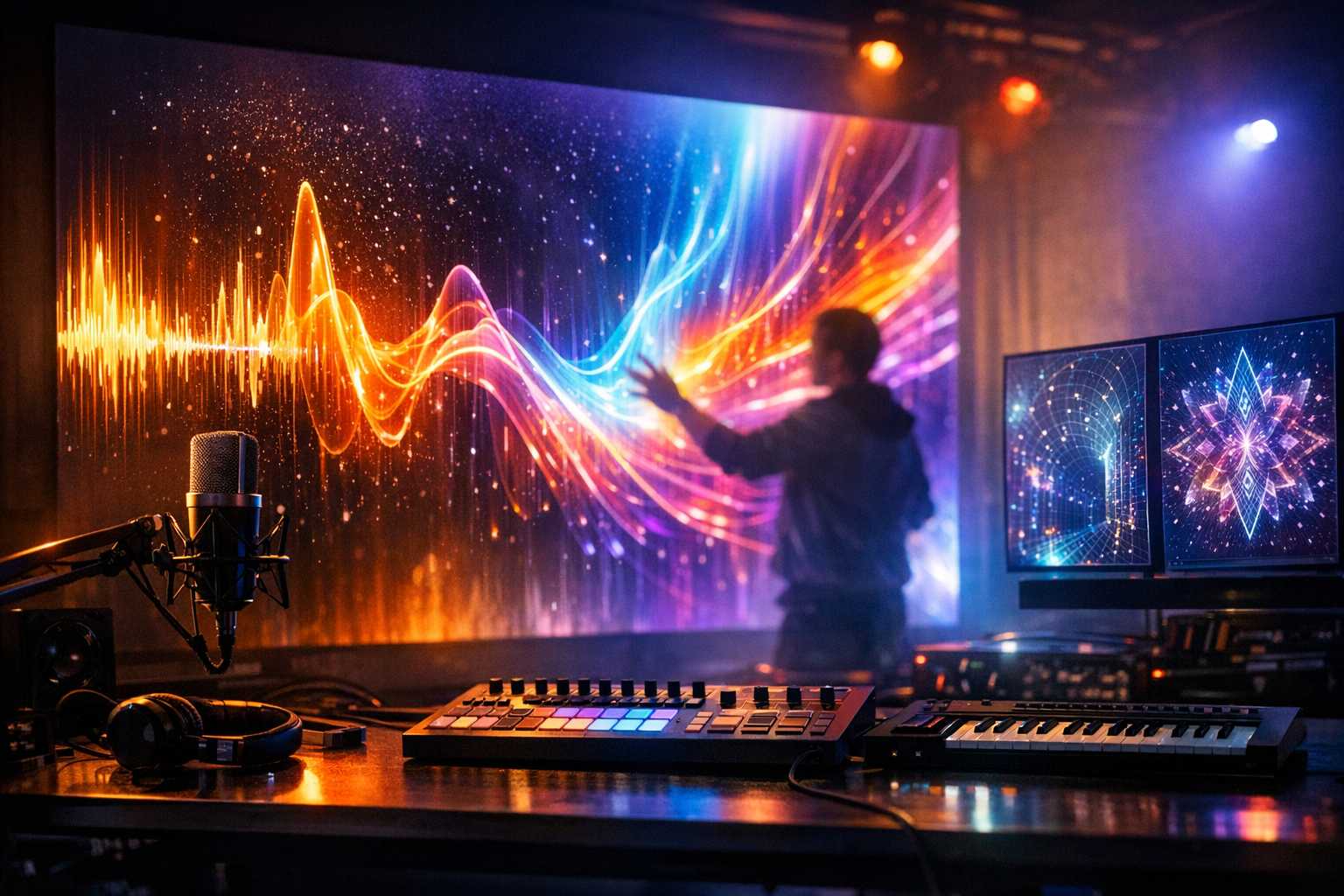
Exploring Sound Art Painting: Advanced Audiovisual Techniques
Sound and color have been intertwined throughout the history of art, forming a fascinating and magical bond. Due to the evolution of modern technology, we can now bring them closer together by actually painting with sound.
An Introduction to Sound Art Painting
Sound art painting is an extraordinary medium that utilizes sound to create visual art. Artists deploy specific software and tools to transform sound waves into vibrant colors and captivating shapes. This process makes every note a stroke of paint, and every rhythm a unique pattern.
Going a step further from traditional painting methods, this innovative technique brings artwork to life - making it more vivacious in tune with music. This results in a canvas that pulsates with resonating sounds.
Contemporary Technologies and Digital Tools for Sound Art
Artist today have a vast assortment of top-notch digital tools within their reach. Software like Processing and Max/MSP enable the visualization of sound. These tools interpret audio frequencies and convert them into appealing visual components.
Renowned software comprises: - TouchDesigner for immediate visuals - Pure Data for managing sound - VVVV for developing interactive installations - Resolume for organizing live performances
Artists can now perform live art with continuous music playing. Each artwork is not only fascinating but also inimitably distinct.
Techniques for Interactive Art Installations
Sound art installations have become a popular and intriguing attraction at museums and galleries. Visitors can interact in spaces where their movements generate both sound and visuals. Artistically wisely installed motion sensors register people's presence and initiate artistic reactions.
Various installations employ: - Ground sensors that generate color waves - Projection on walls that react to sound - Suspended elements that sway in response to sound - Advanced light systems sync to soundtrack
These vibrant spaces allow everyone to discover the artist within. Your simple walk could paint a spectrum of colors; your voice can splash vibrant hues onto the walls.
How to Craft Your Own Sound Paintings
Launching into sound art painting doesn't require lavish equipment. Numerous smartphone apps can materialize sound visually in real-time. Simple tools facilitate beginners to discover this artistic realm.
Basic techniques to begin with: - Capture everyday sounds - Utilize free visualization applications - Experiment with diverse music styles - Practice painting while blaring music - Track your preferred combinations
Play around, experiment and above all enjoy the process. Each distinct sound produces different visual probabilities.
The Scientific Perspective of Audio-Visual Art
According to science, our brains naturally intertwine sound and vision. A phenomenon known as synesthesia explains this condition, where some people perceive colors corresponding to the music they listen to.
Research shows certain common patterns: - Low frequencies commonly manifest as warm hues - High frequencies project as cool blues & purples - Loud sounds generate larger visual components - Rhythm is converted into movement designs
Acknowledging this scientifically proven data, artists are able to create more visually stunning works.
Celebrated Sound Art Painting Artists
Several notable artists have guided this field, including Kandinsky who painted while attuned to music. Contemporary artists now create art with technology beyond Kandinsky's wildest dreams.
Famous modern day artists include: - Casey Reas, known for his algorithmic art - Rafael Lozano-Hemmer, renowned for interactive assemblies - Memo Akten, who blend AI with sound art - Zach Lieberman, who crafts interactive playful works
These artists encourage upcoming generations, exhibiting the vibrant potential when sound and visual art collide.
High-End Equipment for Professional Outcomes
A professional sound artist rightfully invests in premium equipment. High-end microphones ensure the capture of clear audio signals and powerful computers process information rapidly. High-resolution projectors provide sharp visuals.
Essential equipment comprises: - Audio interface for clear sound input - Reliable computer with a high-performance graphics card - Quality speakers for optimum sound monitoring - Projectors or screens for clear display - MIDI controllers for real-time manipulation
Financial investment largely depends on individual goals. If you're pursuing sound art painting as a hobby, you’d need less equipment than professional installation artists.
Anticipating the Future of Audiovisual Art
The future of audiovisual art sits on the brink of unprecedented advancements. Virtual reality is fostering the development of immersive sound painting experiences while artificial intelligence is introducing imaginative new possibilities. Brain-computer interfaces may even enable us to paint with our minds.
Cutting-edge technologies include: - Painting in 3D sound spaces with VR - AI that picks up artistic styles - Haptic feedback for enhanced touch experiences - Real-time remote collaboration
Artists consistently strive to push boundaries, ensuring the sound paintings of tomorrow will mesmerize us even more.
Getting Started Today
Eager to delve into sound art painting? Start by gradually honing your skills. Join digital communities where you can connect with fellow artists, share your work and learn from others.
Keep these tips in mind: - Begin with basic tools - Keep practicing - Document your growth - Engage with other artists - Enjoy the journey of experimentation
The expansive world of sound art painting is inclusive and seeks unique perspectives to enrich this bourgeoning art form.
Sound art painting serves as a representation of artistic expression in the future. It harmoniously melds our auditory and visual senses, transforming them into breathtaking art. The dream of painting with sound that was once considered ancient is now possible for everyone, thanks to modern technology.