Installation Art Painting: Large-Scale Modern Techniques
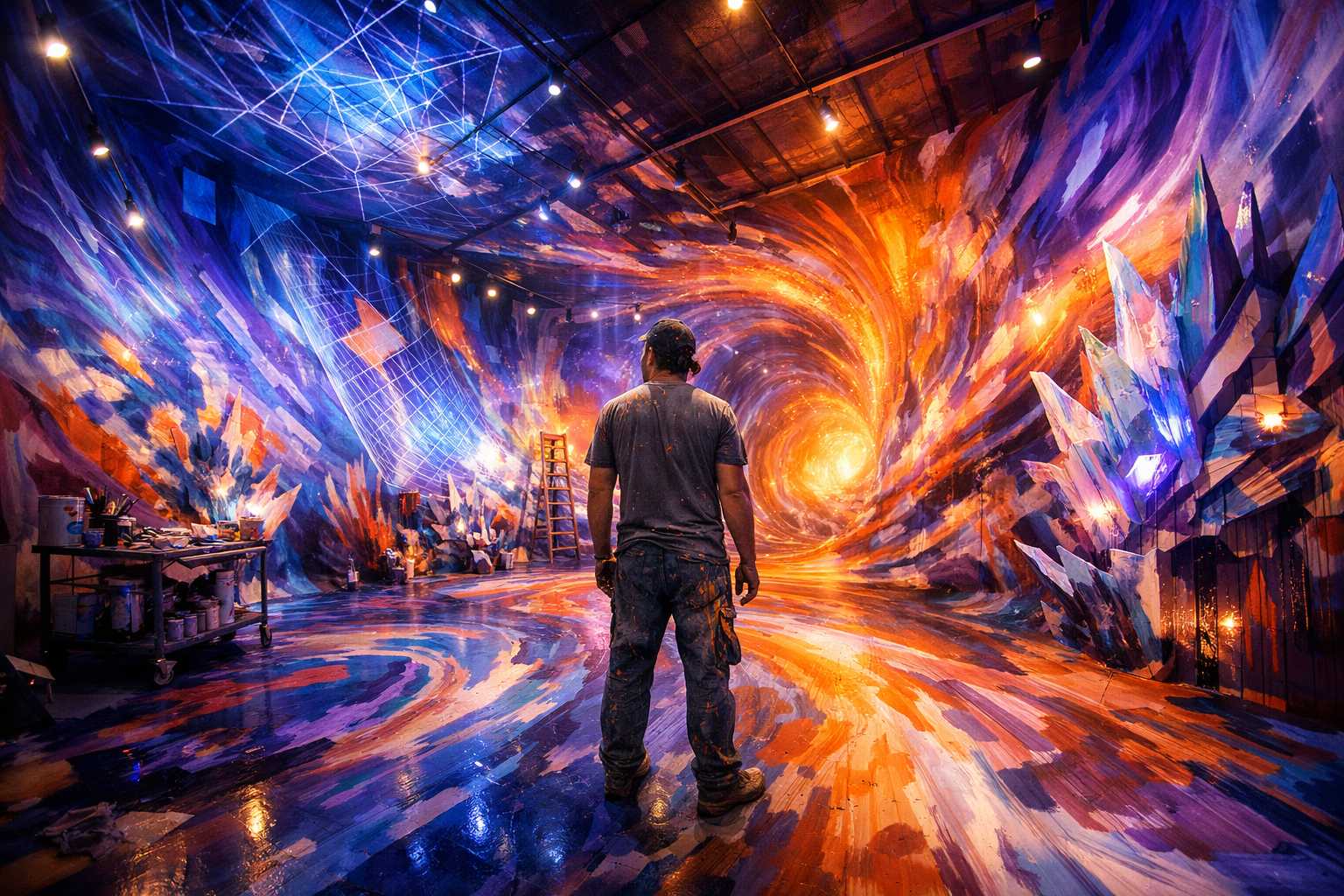
Exploring Installation Art Painting: The Art of Modern Large-Scale Techniques
The realm of art has been redefined by the advent of installation art painting. This unique form of art goes beyond traditional paintings hung on walls, instead offering rich immersive experiences that envelope the audience.
I have been captivated by this unique and mesmerizing form of artistic expression for many years. There is an extraordinary feeling associated with stepping into a painted environment, it resembles a journey into the depth of an artist's imagination.
Unveiling the Charm of Installation Art Painting
Contrasting to traditional paintings, installation art painting is more encompassing and engaging. The magnitude of these installations is often breathtaking—sometimes covering entire rooms or outdoor spaces.
In these installations, viewers often become part of the artwork. This form of art is not just viewed from a distance, instead, it encourages you to explore it, wander around, interact with it and at times, touch it.
A large number of artists creating these installations choose to paint on unconventional surfaces, such as trees, ceilings, and floors. Certain works are temporary creations, only lasting for a short period of time.
The emotional engagement with these artworks can be profoundly intense. A well-executed installation art painting can whisk you away, making you feel like you've entered another universe.
Indispensable Materials for Large-Scale Artwork
Crafting an installation art painting is different from usual studio work and calls for distinctive materials. You must opt for paints that can endure various surfaces and withstand changing weather conditions.
Acrylic paints are usually preferred for most projects because they dry quickly and can adhere to almost any surface. For outdoor installations, it's advised to go for weather-resistant paints.
Additionally, make sure not to forget about primers—they are crucial for preparing large surfaces. Using primers can determine how your paintwork looks and how long it lasts.
For larger installations, brushes and rollers are handy for covering larger areas swiftly. But many artists also use spray guns and airbrushes for creating smooth gradients over vast spaces.
Safety gear is also essential, given that you'll be dealing with chemicals and often working at heights. Sufficient ventilation and protective equipment are necessities.
Modern Techniques Used in Installation Art Painting
Projection Mapping
Projection mapping has been a significant game-changer in the field of installation art painting. Artists project designed digital patterns onto surfaces, which are then painted over or beside. This technique results in incredibly precise and complex patterns which would otherwise be impossible to paint manually.
Stencil Systems
For ensuring consistency over huge surfaces, large-scale stencils are used. Artists create modular stencil systems that can be repositioned and combined in different ways. Computer-generated stencils lend amazing detail and allow artists to replicate intricate designs consistently across vast spaces.
Collaborative Painting
Some of the finest installation art paintings are created with team collaboration. Multiple artists work together, dividing the artwork into sections. This not only accelerates the process but also amalgamates diverse styles into a single piece. However, communication is vital in such projects to align every team member with the overall vision.
Incorporation of Mixed Media
Modern installation painters tend to merge painting with other forms of art like sculpture, lighting, and digital elements. LED strips might induce a glowing effect in painted elements, while sculptural aspects add depth and texture. Sound integration can further elevate the overall experience.
Approaching Your Large-Scale Project
The key to succeeding in installation art painting lies in meticulous planning. Spontaneously showing up and starting to paint isn't advisable.
Before starting, get to know your space intimately. Take thorough measurements and photograph it from various angles—understanding of the environment is crucial.
Consider how people will navigate through the space—make note of entry and exit points. What will the viewers see first?
Lighting conditions should also be taken into consideration. Since natural light varies throughout the day, and artificial lighting can significantly influence colors, it is crucial to plan accordingly.
Prepare detailed sketches and scale models. 3D modeling software can be beneficial to visualize the final result.
Don't overlook practical concerns such as, where will you store the materials? How will you access high areas? Are there any permits needed?
Understanding Color Theory for Large Spaces
Working with colors in a universal context of installation art painting can be challenging. Colors tend to behave differently in large spaces as compared to smaller ones.
Bright colors may become overwhelming when used extensively—it may look suitable on a small test panel but tiresome when painted in a room.
Distance plays a role in how we perceive colors—a color may look vibrant up close, but faded from afar.
Even the psychological impact of colors needs to be considered. For instance, cool colors may give an illusion of a larger space, while warm colors can create a sense of intimacy but may feel confining in larger installations.
It's always recommended to test your color combinations in the actual space, as the existing lighting and surrounding elements can affect how colors appear.
Dealing with Common Challenges
Weather and Environmental Factors
Outdoor installation art painting might be subject to multiple potential threats including rain, wind, and UV rays, which can ruin your work rapidly.
Plan for possible weather delays—always set backup dates for outdoor projects.
Use suitable materials for your specific climate—what works in dry conditions might not hold up in humid ones.
Problems with Scale and Perspective
Details that seem perfect in sketches might not look as good when executed on a full scale—perspective can dramatically change with increasing size.
During the course of your work, take some time to step back frequently and review your progress from different angles. Using drones or tall ladders to view your work from different perspectives can reveal underlying issues.
Time Management
Large-scale projects typically take up more time than expected—paint needs time to dry, weather can cause delays, and equipment might break down.
Always incorporate extra time into your plans. It's better to finish ahead of time rather than rush at the end.
Tackle the project in phases—fully completing one section before moving to the next.
Right Tooling and Equipment for Success
In the world of installation art painting, investing in the right tools is of paramount importance—low quality equipment can bring higher costs in the long run.
For tall installations, solid scaffolding is a must—safety should be your top priority.
High-quality sprayers can quickly cover large areas and also help achieve certain effects that are impossible with brushes.
Ensure you're well equipped with cleanup supplies—large projects are bound to create big messes. Make sure to have ample solvents and rags on hand.
Consider renting specialized equipment—it can be more cost-effective than buying tools that get used sparingly.
Maintenance and Preservation of Installation Art Painting
Long-term care is as essential as creating installation art paintings—your artwork could need continual attention even after it's painted.
Document your work—with high-quality snapshots that can assist in future restoration projects.
Maintenance schedules should be set for permanent installations—regular touch-ups can prevent major degradation.
Ensure that the caretakers are educated about your work—it's crucial to understand the difference between normal wear and damage.
The lifespan of your materials also needs to be taken into account—temporary installations require different care compared to those meant to last for decades.
The Future of Installation Art Painting
The future of installation art painting is evolving rapidly with ongoing technological advancements. Virtual reality is letting artists experience their work before physically creating it.
Augmented reality is adding new dimensions to painted installations—viewers can now see additional elements through their smartphones.
Emerging trends include smart paints that change color or glow, presenting thrilling new opportunities.
Environmental considerations are also shaping the field—more artists are focusing on sustainable materials and methods.
Embarking on Your First Installation Art Painting Project
Ready to embark on creating your first installation art painting project? Begin with small, yet ambitious projects.
Select space you are familiar with. Your garage or a friend's wall provides a great introductory canvas.
Work on honing your skills on a smaller scale before taking on larger projects.
Surround yourself with other installation artists—the community is nurturing and offers loads of constructive advice.
Record your process—reviewing it later will help you learn from your past experience.
But above all, never shy away from taking risks. Making bold choices and thinking creatively is what brings innovation to installation art painting.
The world of art always invites new artists pushing the boundaries. You could be the genius behind the next breakthrough in installation art painting by sharing your unique vision.
Remember, every accomplished artist began somewhere. The important part is to dive in, learn continually, and persist in advancing your skills. The journey in installation art painting mutely awaits your maiden brushstroke.