Basic Color Mixing: Simple Guide for Beautiful Results
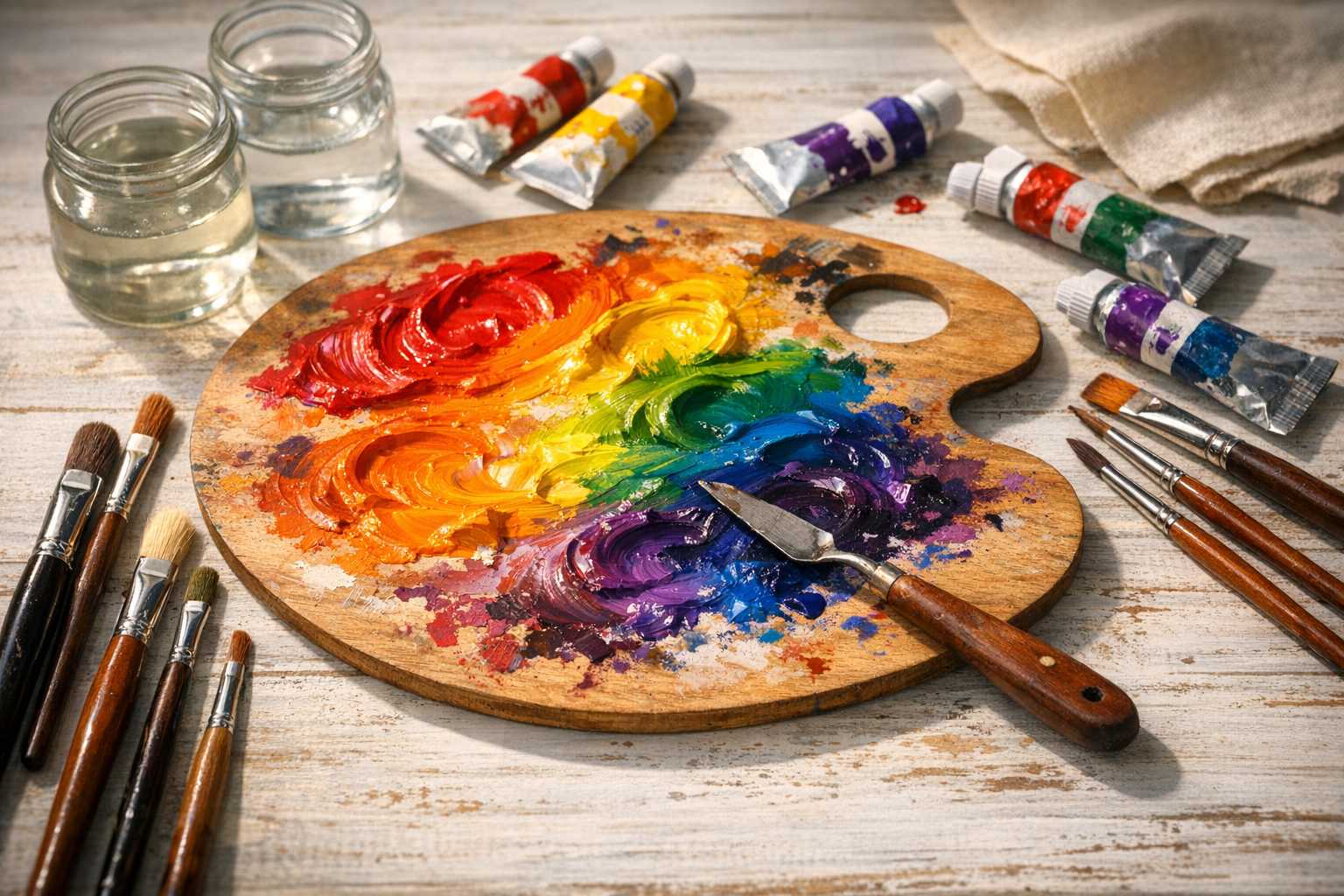
Simplified Guide to Color Mixing: Achieve Stunning Results
Mixing colors can initially seem daunting. But take it from me, it's one of the most rewarding skills to acquire. Whether you're creating your first painting or assisting your children with their art projects, understanding colors can unlock an entirely new realm of creativity.
Grasping Primary Colors
Let's begin from the beginning. Primary colors are your fundamental visual elements. These comprise red, blue, and yellow. You can't produce these colors by merging others. You can think of them as the bedrock of all your palettes.
These three hues are akin to the ABCs of artistry: everything else is constructed from here. Ensure to keep high-grade primary colors in your repertoire. They will be invariably beneficial in every project.
Generating Secondary Colors
Here's where the excitement begins! Secondary colors result from mixing two primary colors. Here is the easy formula for their creation:
- Red + Blue = Purple
- Blue + Yellow = Green
- Yellow + Red = Orange
Initiate with equal proportions of each color. Thereafter, modify to obtain your desired shade. Craving a greener yellow hue? Simply add more yellow. It's as easy as that.
Perfecting Tertiary Colors
When a primary and secondary color are mixed, you attain tertiary colors. These include shades like red-orange or blue-green, which add depth and beauty to your work.
The key lies in playing around and exploring. Experiment with different proportions. Sometimes, a smidgeon of one color can completely revolutionize your blend. Don't hesitate in dabbling.
Fundamental Color Mixing Advice
Start small with color blending. You can always produce more, but you cannot retract color. Always mix your colors on a palette first. Test them before implementing them onto your primary work.
Ensure your brush is clean between each color. Brushes cloaked in residue lead to muddled colors. Have water and paper towels at hand. You'll thank yourself later.
Utilizing Warm and Cool Colors
Colors possess temperature. Warm hues include reds, oranges, and yellows, and they evoke feelings of vivacity and comfort. Cool shades are blues, greens, and purples, which instill a sense of tranquility and serenity.
Intriguing effects can be created by mixing warm and cool colors. A blend of cool blue and warm yellow results in different greens depending on the ratio used. Experimenting with temperature can aid in setting the mood of your artwork.
Common Color Mixing Blunders
Every artist makes mistakes while learning how to mix colors. Here are prominent ones to steer clear of:
Refrain from blending too many colors simultaneously as this commonly results in a murky mix. Stick to a maximum of two or three colors.
Avoid black to darken shades. Rather, try incorporating the color's complementary or a darker variant of the same hue. This maintains the vibrancy of your colors.
Bear in mind that paint hues may appear different when wet as opposed to when dry. Always allow test patches to dry before finalizing your decisions.
Beneficial Color Mixing Drills
To hone your skills, consider the following exercises:
Create a color wheel with just your three primary colors. Mix each secondary color and place them in their proper order. This exercise serves to aid in understanding color relationships.
Work on producing various shades of a single color. Start with the pure hue, then progressively add white for lightening or darker hues for shading.
Blend complementary colors (those opposite on the color wheel) to produce neutral grays and browns. This technique is highly beneficial for realistic painting.
Building Confidence in Color
Improvement in color mixing comes with practice. Don't strive for instantaneous perfection. Keep a color diary where you jot down successful combinations for future reference.
Study colors in nature. Observe that shadows aren't merely darker versions of the original color. Often, complementary colors can be identified. This study will enhance your mixing intuition.
Begin with basic projects. Try painting a sunset using just red, yellow, and white. Or endeavor a straightforward landscape with blue, yellow, and a hint of red. Each small victory boosts confidence.
Advancing Your Color Skills
Once you've mastered the basics, try out more complex techniques. Learn how the temperature of colors affects perception. Understand that colors can alter each other's appearance when juxtaposed.
Consider investing in additional hues beyond the primaries. A solid red, blue, and yellow along with white and burnt umber can cater to most mixing requirements.
Remember, art is subjective. So once you've grasped the basic color theory, feel free to experiment, even ignore some rules. Some of the most staggering art results from unconventional color combinations.
Color mixing is a continuous learning process, not a one-off achievement. Stay open to learning throughout your artistic journey. Take pleasure in the process and the discoveries it unfolds. And most importantly, have fun while creating beautiful hues that reflect your distinctive visual language.
Your artistic journey starts with mastering these simple color mixing basics. Grab your brush, dispatch your primary colors, and get creative. Astonishing results are just a mix away.