Easy Abstract Shapes: Non-Representational Art for Beginners
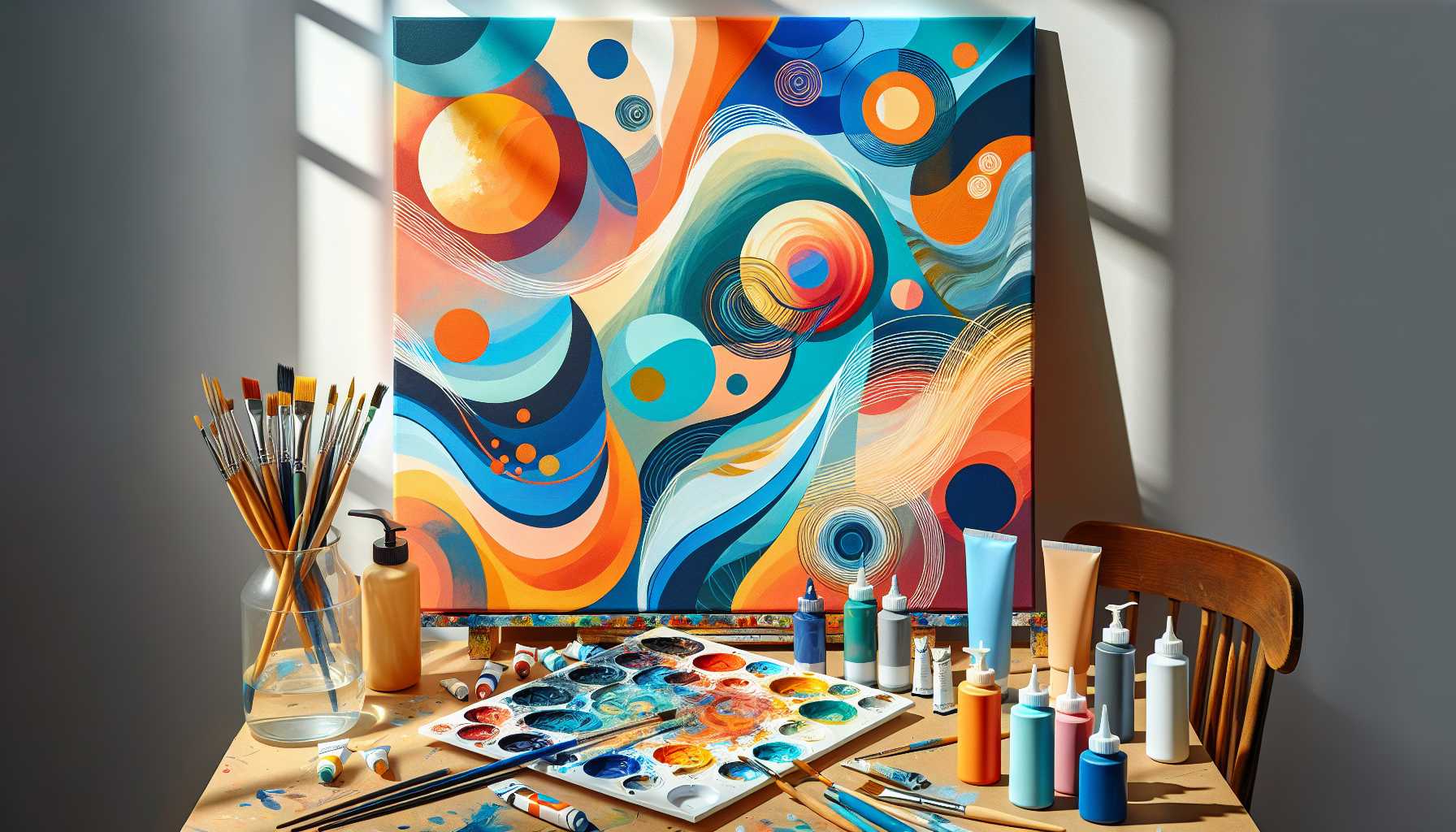
Simple Abstract Shapes: Learning Non-Representational Art Made Easy
Have you ever stood before a blank canvas, overwhelmed with uncertainty? This is a common experience among budding artists, many of whom wrestle with the looming expectation of creating "realistic" art.
Yet, the beauty of art, particularly abstract art, lies in its liberating nature - It has no established constraints about mirroring reality. It is a universe where your imagination can roam freely and uninhibited.
Abstract Shapes Defined
Abstract shapes are non-literal forms that don't necessarily mirror tangible objects. They are pure expressions of visuals, evoking emotions, ideas, or even simple aesthetic appreciation.
Think of these as circles that are not intended to be suns, triangles that don't aim to depict mountains, lines that teem your canvas without standing for anything in particular.
Their charm is that they communicate through visual language, a concept you instinctively understand.
Engaging with Non-Representational Art
Creating non-representational art allows breathing space, dissolving the need to perfectly depict an image like an apple.
Rather, it allows you to explore:
- Colors that resonate with you
- Shapes that seem right
- Lines that articulate your state of mind
- Textures that get your pulse racing
This avenue promotes confidence growth since each stroke you make is valued and every color choice is appropriate.
Necessary Tools for Creating Abstract Shape Art
High-priced materials aren't a prerequisite. Beginners should acquire:
Basic Tools: - Canvas or durable paper - Acrylic paints (fundamental colors along with black and white) - Brushes of various dimensions - Palette knife - Receptacles for water - Paper towels
Supplemental Tools: - Markers or crayons - Materials for collage - Stencils - Masking tape
Begin with the essentials. As your intrigue intensifies, consider expanding your supply collection.
Basic Techniques to Test
The Circle Technique
Start with circles of varying dimensions on your canvas.
Overlay some, isolate others, and use distinct colors for each circle.
This process acquaints you with: - Color correlations - Composition equilibrium - Spacial perception
Building with Geometric Blocks
Merge simple shapes like squares, triangles, and rectangles to structure your composition.
Experiment with layering shapes and try playing with transparency by diluting your paint with water or a medium.
Free-Form Flowing Shapes
Guide your brush effortlessly across the canvas, creating organic, flowing shapes that appear spontaneous and natural.
Typically, these shapes mirror: - Cloud forms - Water patterns - Organic growth structures
Bear in mind, they don't need to replicate anything specific.
Simplified Color Theory
Grasping basic color relationships can instantly enrich your abstract work.
Complementary colors located across each other on the color wheel offer vibrant contrast when combined: - Red and green - Blue and orange - Yellow and purple
Analogous colors situated beside each other create harmony and evoke tranquility: - Blue, blue-green, and green - Red, red-orange, and orange
Monochromatic schemes incorporate different shades of the same color to generate stylish, calming compositions.
Begin by mastering one color scheme before delving into intricate combinations.
Useful Composition Tips for Beginners
A well-planned composition allows abstract art to evoke intention instead of randomness.
Rule of Thirds
Imagine your canvas as nine equally divided sections. Locate pivotal shapes along these section lines or at their intersections.
This creates natural focal points that appeal to the eye.
Balance and Heaviness
Thick, dark shapes appear heavier, while light, vibrant shapes seem airy and floating.
Aim to equally distribute these elements across your canvas. Consider adding visual weight to balance a heavy shape on one side.
Establishing Movement
Use lines and shapes to maneuver the viewer's gaze around your composition.
Diagonal lines infuse energy, curved lines give a gentle, flowing impression, while horizontal lines emanate calm and stability.
Avoiding Beginner's Mistakes
Overdoing Your Work
Understand when to stop. Abstract art often thrives on freshness and spontaneity.
Continuously altering and adding elements could take away from the initial energy, which may have been the piece’s unique attribute.
Fear of Making Bold Choices
Many beginners fall into the trap of sticking to muted colors and undersized shapes.
Don't shy away from: - Applying bright, rich colors - Creating large, showy shapes - Maximizing your canvas space
Comparing Your Work to Others'
Remember, your artistic voice is unique. Stay true to your natural style rather than trying to imitate another artist's manner.
Abstract art is deeply personal. What stirs emotions in you may not resonate with another artist.
Developing Your Unique Style
Style naturally matures over time. Let it evolve at its own pace.
Take note of: - The colors you repeatedly gravitate towards - The shapes you effortlessly create - Textures you enjoy crafting - Emotional reactions to your work
Maintain consistency in practice. Your preferences will manifest over time through continuous creation.
Exercises to Refine Your Skills
Daily Shape Studies
Allocate 15 minutes each day to create abstract shapes using varied materials.
Consider: - Monday: Watercolors - Tuesday: Pencil sketches - Wednesday: Markers - Thursday: Collage - Friday: Mixed media
Emotion Mapping with Colors
Craft abstract compositions expressing specific feelings: - Joy through warm, vivid colors - Calmness using cool, subtle hues - Energy through contrasting colors - Mystery with dark, intricate shapes
Size Fluctuation Exercise
Recreate a basic composition in various sizes: - Passport size (4" x 6") - Regular paper (8.5" x 11") - Canvas board (11" x 14")
Reflect on how size influences your artwork's impact and perception.
Enhancing Confidence Through Experimentation
Abstract art rewards adventurous attempts. Experiment with new strategies without fearing the results.
Mixed Media Experiments
Incorporate diverse materials in a single piece: - Paint and collage elements - Markers over watercolor wash - Textured materials paired with smooth paints
Exploring Different Tools
Experiment painting with unconventional tools: - Sponges for texture - Credit cards for scrape effects - Your fingers for natural marks - Combs for line patterns
Different tools promise different marks and textures, adding an edge to your creative process.
Showcasing Your Abstract Art Journey
Sharing your work builds confidence and allows you to connect with fellow artists, so don't hide your creations.
Start Small
Kick-off by showing your artwork to supportive friends or family. Their positive feedback will inspire you to keep creating.
Join Online Communities
Become a part of social media groups devoted to abstract art. These communities offer: - Constructive criticism - Opportunities for technique sharing - Inspiration from other artists - Encouragement during creative ruts
Participate in Local Art Groups
Many neighborhood communities host informal art gatherings that accommodate beginners. Look out for: - Local library art programs - Community center classes - Coffee shop art meetups - Recreational center workshops
Expanding Your Abstract Art Skills
As you acquaint yourself with basic methods, consider exploring advanced techniques.
Series Development
Produce multiple pieces exploring a common theme or method. This deepens your understanding and results in cohesive collections of work.
Experimenting with Different Scales
Attempt working on larger or smaller scales than usual. Different degrees yield entirely different viewer experiences.
Mastering A Technique
Choose a technique that excites you and delve in. Your unique approach to that particular method could become your artistic signature.
Embracing the Abstract Art Philosophy
Abstract art is about letting go of the idea of perfection to fully embrace expression.
Remember, there are no mistakes, only revelations. Your individual perspective is of value, and continual practice yields progress, while finding joy in the process is always more fulfilling than the final piece.
Begin Your Abstract Art Adventure Today
Don’t wait for ideal conditions or additional supplies. Seize your available art materials, reserve 30 minutes, and let your hand move unrestricted across the paper.
Have faith in yourself, the process, and the belief that your creative expression deserves an audience.
Abstract art is not about creating perfect, museum-standard pieces from the get-go; it's about unveiling the joy of unhindered creativity and visual expression.
Your expedition into non-representational art begins with just one stroke. So, make that mark today, and let the world see your creation.