10 Simple Circle Painting Ideas for Complete Beginners
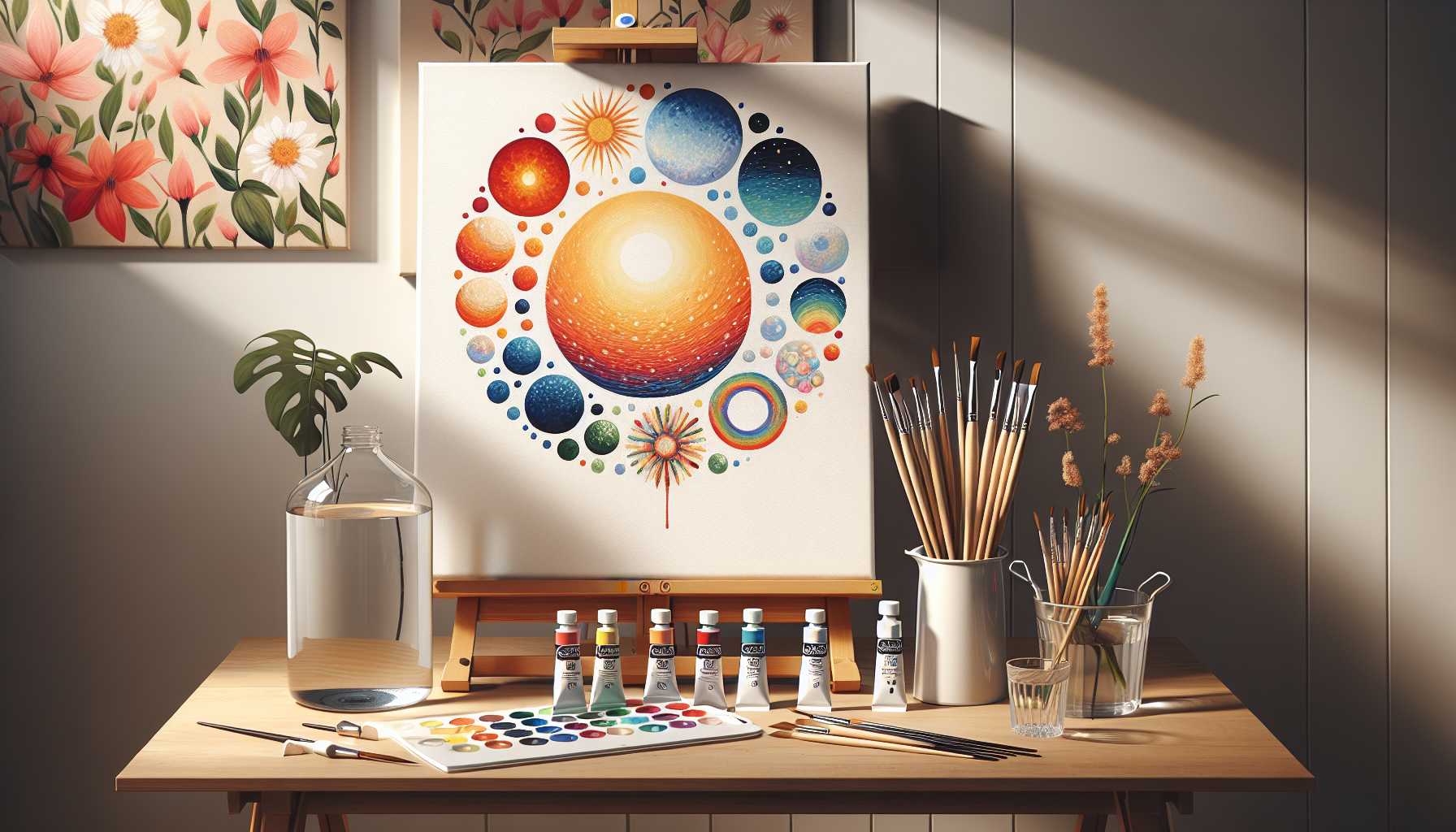
10 Basic Ideas for Circle Paintings for Absolute Beginners
Embarking on your painting journey can sometimes feel intimidating. However, here's a comforting fact: some of the most spectacular artworks are initiated with simple forms, and circular shapes, due to their forgiving and versatile nature, are excellent for beginners.
You do not require high-end supplies or years of formal training. All you need is a selection of basic paints, a brush, and a bit of creativity. Now, let's create something stunning together!
The Advantages of Circle Paintings
Circles can be easily spotted in nature. They are reflected in things like the sun, moon, flowers, and bubbles, making them naturally pleasing to look at.
Working with circular shapes allows you to practice your brush control skills and teaches you the chopping and changing of colors without being concerned about intricate shapes. Furthermore, there's something quite calming about painting circles.
What are the Necessary Supplies?
Keep it uncomplicated! Here are the essentials:
- Acrylic paints (primary colors complemented by white and black)
- A set of brushes (small, medium, and large)
- Canvas or pencil
- Container for water
- Paper towels
- Pencil for preliminary sketching
Don't push yourself into purchasing expensive art supplies. Begin with the basics from your nearest craft store.
1. Bright Abstract Bubbles
This is an excellent circle painting project for beginners. Start by drawing circles of various sizes across your canvas.
Every circle should be painted in a unique bright color. Overlapping some circles can create intriguing color mixes. Add white detailing to give them the appearance of floating bubbles.
The significant part? There are no errors made in this. Each bubble painting turns out unique and exquisite.
2. Uncomplicated Sunset with an Ideal Sun
Who doesn't admire a beautiful sunset painting? Start painting your background with warm colors like orange, pink, and yellow.
Paint a large circle to represent the sun near the skyline. Use either of your warm shades for the sun. Simple horizontal lines can create the effect of water reflection.
This painting will teach you all about warm colors and provide instant gratification.
3. Night Scene Featuring a Full Moon
Create a supernatural nighttime scene with a bright moon. Paint your backdrop in dark hues of blue and purple.
A large white or pale-yellow circle will serve as the full moon. Add some simple tree silhouettes or mountains painted black.
Tiny white dots can serve as the stars. This painting appears intricate but relies on basic techniques.
4. Exuberant Flower Garden
Flowers are essentially circles with petals! Begin by painting a circle for the flower's center in yellow or orange.
Add basic petal shapes around each center. Use lively colors like red, pink, purple, and blue. Paint the stems and leaves in green below each flower.
Don't get too wrapped up in making them look true to life. Artistic flowers have their charm.
5. Mandala Style Circular Art
Mandalas are both relaxing to paint and visually stunning. Start with a large center circle on your canvas.
Paint it in your favorite shade. Add smaller circles around it in different shades. Decorate your design with dots, lines, and more miniature circles.
Mandalas are made to be unique. So even if you make a "misperception," it's just another part of the pattern!
6. Polka Dot Fun
Sometimes the simple concepts are the ones that truly stand out. Choose two contrasting colors for this project.
Cover your entire canvas in one color. Let it dry thoroughly. Then use either a sponge or brush to drop in circles of your second shade.
Vary the sizes and locations. This results in a playful, contemporary piece perfect for interior decoration.
7. Solar System Expedition
Paint your very own interpretation of the solar system! Start with a backdrop in black or dark blue.
Add different sized and colored circles to represent the planets. Make Jupiter large and in an orangish hue. Paint Saturn with simple ring shapes. Paint Earth blue and green.
Don't worry too much about accuracy. Focus on having fun, being creative with colors, and showing your imagination.
8. Cross-Section of Tree Rings
This unique concept imitates the rings inside a tree trunk. Start with a large circle that almost fills your canvas.
Paint concentric circles (circles inside circles) with varying shades of brown and tan. Make the rings slightly irregular for a natural look.
This tactic teaches variation in color and creates a visually interesting texture.
9. Rainbow Circle Gradient
Use this rainbow circle project to practice your color blending skills. Begin by sketching a large circle on the canvas.
Separate the circle into pie-like sections and paint each a different rainbow color. Blend the colors at the borderlines for a smooth design.
Through this project, you can understand color theory while creating a bright and cheery piece.
10. Planet with Moons
Craft your own imaginary planetary scene. Paint a large circle for your central planet using any colors you prefer.
Add texture through varied brush strokes or color variations. Paint smaller circles around it to symbolize moons in different phases.
A starry backdrop can be created with tiny white dots. This piece combines several circle painting techniques in one.
Advice for Success
Begin with faint pencil sketches, as paint can always cover them up should you make a mistake. These often lead to spontaneous happy outcomes.
Allow each coating to dry before adding the next to prevent color muddiness. Clean your paintbrush between each color use for clear, vivid results.
Primarily, have a blast! Art is centered around personal expression, not perfection.
Cultivating Your Confidence
Every circle painting you complete will build on your talent. You'll see improvements in brush control, color mixing, and composition.
Preserve your early pieces. You'll be shocked at your progress after a handful of projects. Snap photos of your completed paintings to document your artistic journey.
Share your creations with friends and family. Their acknowledgment will motivate you to continue with your new hobby.
Next Steps in Your Art Journey
Once you have mastered the circle, attempt combining them with other shapes. Experiment with different painting mediums, like watercolors or oils.
Consider joining local or online art groups. Fellow artists often offer helpful advice and encouragement. Think about taking a beginners' painting class for a more formal understanding.
Finally, bear in mind that even professional artists started by mastering straightforward shapes and basic techniques. Your circle paintings are setting the stage for greater artistic endeavors in your future.
The most essential step is to get started. Pick up that brush, select your preferred option from the circular ideas provided, and get creating today!