No-Brush Painting Guide: Alternative Tools for Beginners
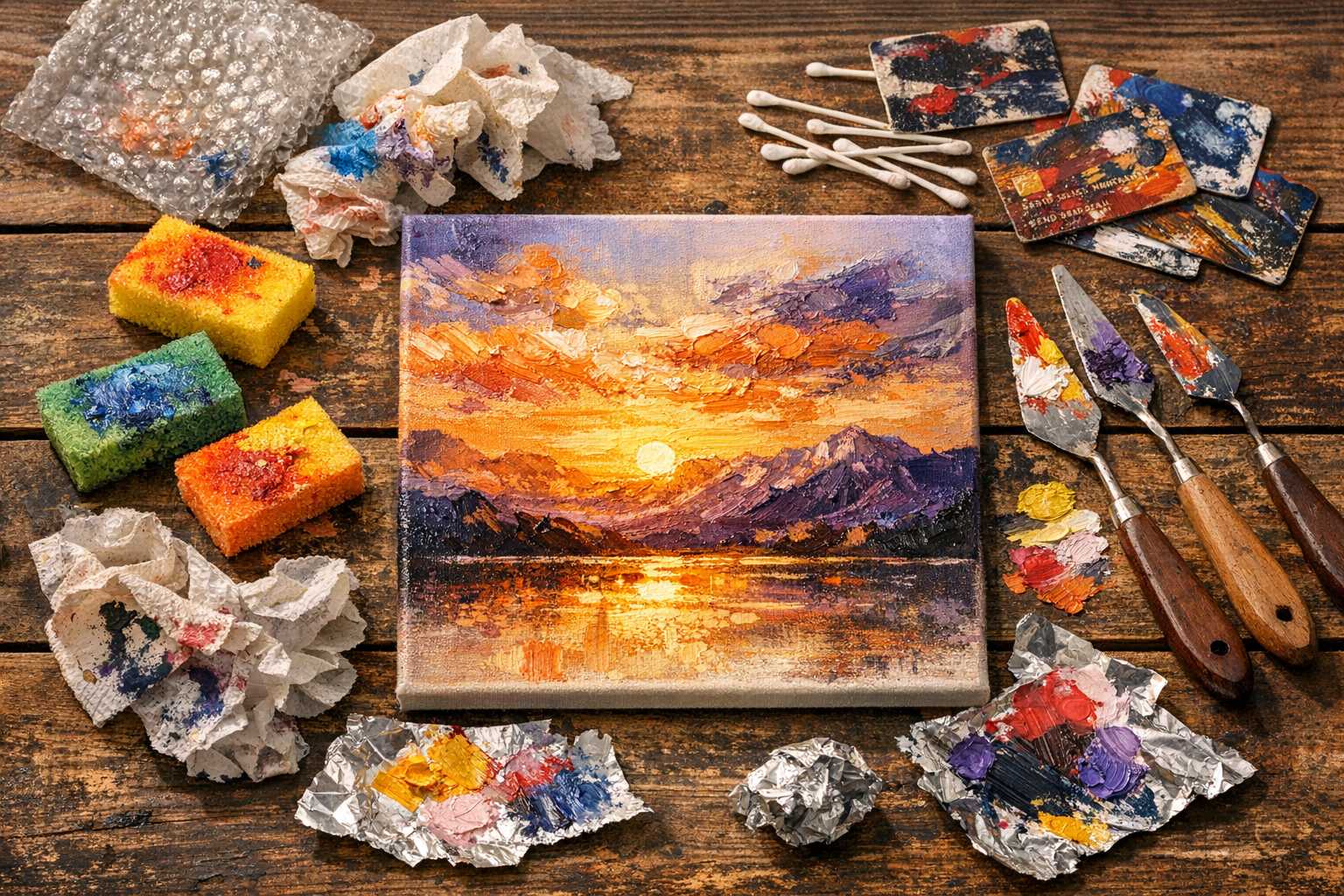
The No-Brush Painting Guide: Getting Started with Alternative Tools
Why Ditch the Conventional Paint Brush?
Feeling daunted by the prospect of painting brushes? You're not the only one! Many novice artists mistakenly believe that they need costly brushes to produce attractive art.
The reality, however, is that some of the most captivating paintings have been created using unorthodox tools. These no-brush painting techniques can be more forgiving for beginners, often yielding unique textures that traditional brushes just can't replicate.
Common Household Items: Your Essential Non-brush Painting Tools
Kitchen Sponges
Ordinary kitchen sponges can work wonders with paint, creating stunning cloud effects and textured backdrops. All you need to do is dab them in paint and press onto your canvas.
Natural sea sponges are even more effective, generating more organic and random patterns.
Cotton Swabs and Q-Tips
These small yet powerful tools are ideal for adding fine details to your artwork. They can be used for: - Tiny flowers - Starry night skies - Detail highlighting - Blending small patches of color
Paper Towels
When crumpled, paper towels can effortlessly create rock-like textures. They're also great for lifting paint to form highlights.
Palette Knife Wonders
The Uniqueness of Palette Knives
Palette knives aren't restricted to mixing paint colors. Their flat blades can be used to create bold, confident strokes in your art.
You can use them to scrape, spread and sculpt paint. This technique, known as "impasto," adds a tactile dimension to your piece.
Basic Palette Knife Techniques for Beginners
Start with uncomplicated landscapes. Using the edge of the knife, create tree trunks and use the larger flat side to shape mountains and buildings.
Don't overcomplicate things. Let the knife guide your creativity.
Unusual Household Items
Old Credit and Gift Cards
Old plastic cards can be great paint spreaders, creating smooth gradients and intriguing geometric forms.
Drag a card through wet paint to create stunning streaked effects.
Bubble Wrap
This common packing material, when pressed into wet paint, can add an instant texture to your artwork. It can be incredibly effective in creating water reflections or abstract backgrounds.
Aluminum Foil
Crumpled aluminum foil provides metallic textures, perfect for painting rocks, bark, or weathered surfaces. Its irregular surface creates unpredictable, natural-looking patterns.
Finger Painting Isn’t Just for Kids
It’s Okay to Get Your Hands Dirty!
Your fingers offer a tangible and instinctual tool to sense the paint's consistency and control pressure.
Finger painting isn't just for children. Many professional artists use their fingers to achieve specific effects.
Techniques to Experiment with
Use your fingertips for small details, the palm of your hand for larger strokes, and your knuckles to create rough textures.
Always keep wet wipes on hand. You'll thank me later!
Spray Bottles and Misting
Creating Dreamy Effects
Filling spray bottles with paint and water can help you create dreamy, atmospheric effects. It’s a great tool for: - Misty landscapes - Abstract backgrounds - Galaxy paintings - Weathered textures
Safety Considerations
Whenever you’re spraying paint, ensure you’re in a well-ventilated area. Use plastic or newspapers to protect surrounding surfaces.
Using Stamps and Found Items
Nature as Your Stamp
Leaves, flowers, and shells can be used as natural stamps. Just press them into the paint, then onto your canvas.
Each stamp provides unique, organic patterns that brushes simply can’t match.
Household Stamps
Believe it or not, cork screws, bottle caps, and textured containers can all make interesting stamps. Just look around your home through the lens of an artist.
Blending Techniques Without Brushes
The Gentle Art of Tissue Paper
Soft tissue paper is an excellent tool for blending colors. It's more delicate than paper towels and won't damage your painted surface.
Using circular motions, subtly blend the colors while the paint is still wet.
Your Clean Fingers as Blending Tools
Clean fingers are fantastic tools for blending, as they warm the paint slightly, allowing for smoother blending.
Common Mistakes to Avoid
Overuse of Paint
With no-brush techniques, less is indeed more. Starting with tiny amounts of paint is best—you can always add more later.
A heavy application of paint can quickly result in a muddled mess.
Not Cleaning Your Tools
Don't forget to clean your alternative tools—just like brushes! Buildup of paint can ruin the texture you're aiming for.
Rushing Through the Process
Resist the urge to rush. Allow each layer to dry before applying the next one.
Kickstarting your Journey Today
Your First No-Brush Project
Begin with a simple sunset landscape. Use a sponge for clouds, a palette knife for mountains, and cotton swabs for the stars.
Keep it simple. The goal is to enjoy the process.
Building Confidence
Start with abstract pieces. There's no such thing as a "wrong" way to create abstract art, making it the perfect avenue for experimenting with different tools.
Practice Makes Perfect
Don’t expect instant perfection. Every technique requires practice. Embrace the learning journey!
Advanced Techniques
Combining Different Tools in One Piece
Layer multiple tools in one painting. You could start with sponge-applied backgrounds, build up palette knife details, and finish with cotton swab highlights.
This approach creates rich, complex textures.
On-canvas Color Mixing
No-brush techniques are excellent at color mixing directly on the canvas, resulting in more vibrant, realistic color transitions.
Cleaning and Maintenance
Looking After Your Tools
While most household items could be disposable, palette knives will last longer with proper cleaning and care.
Always clean them right after using, as dried paint can damage the blades.
Storing Your Tools
Keep your alternative tools in a designated box to avoid cross-contamination and to stay organized.
Concluding Thoughts
No-brush painting opens a world of creative possibilities, often providing a more intuitive experience than traditional brush techniques.
Many beginners find it refreshing and less intimidating.
The key is to remember that there are no right or wrong ways to create art. These techniques are simply stepping stones.
Embrace your creativity, and most importantly, have fun! Art should be a joyous experience, not a source of stress.
So grab a few household items, and start your artistic experimentation today.
Your artistic journey begins with that first mark on the canvas. The tool you use is inconsequential. What truly matters is that you make a start!