Water Reflection Techniques in Impressionist Style
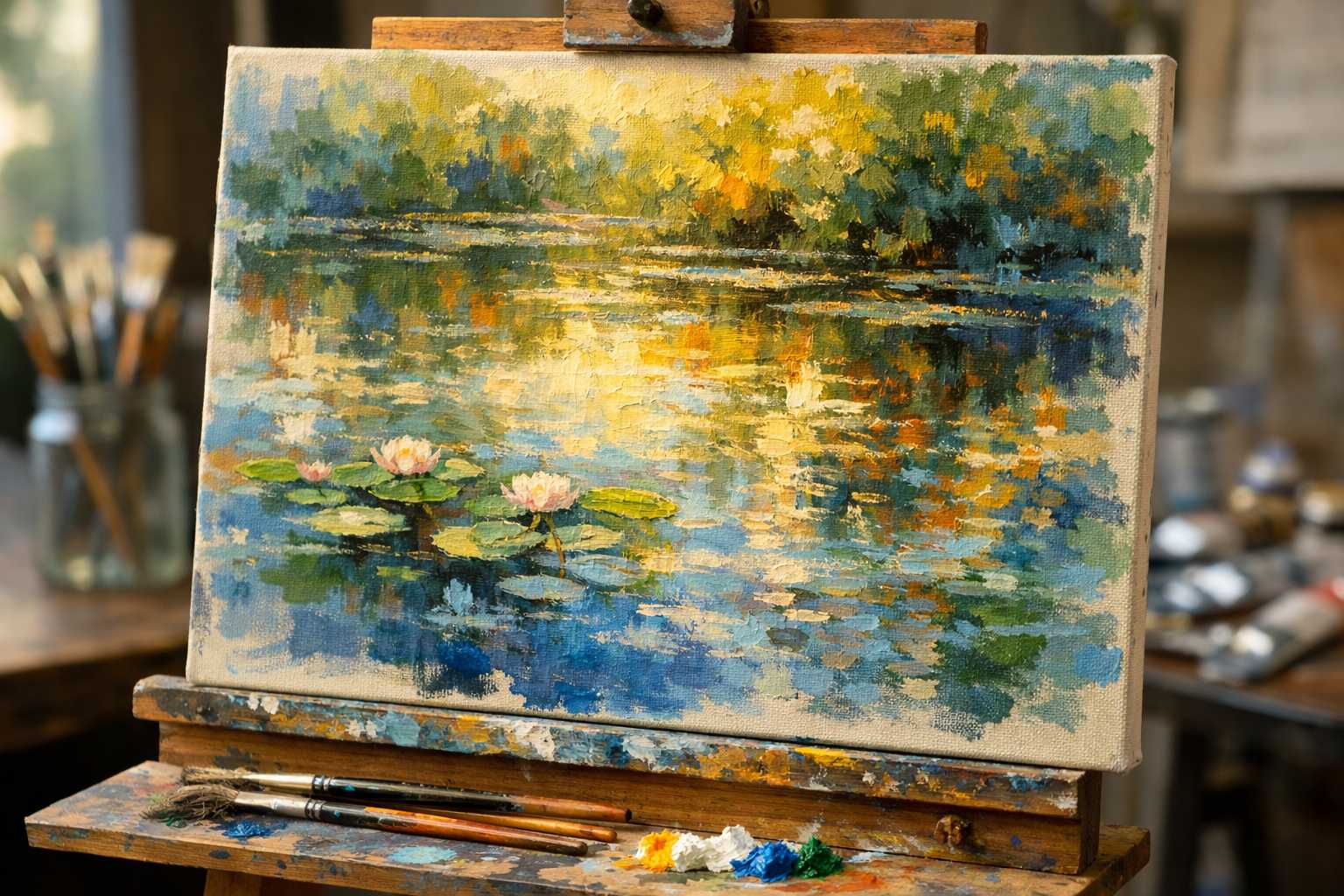
Impressionist Water Reflection Techniques
The artistic depiction of water has always intrigued artists. Particularly, the way light interacts with water surfaces to create mobile pictures filled with allure. Artists of the Impressionistic tradition have become notably adept at encapsulating these fleeting moments within their works.
This piece brings their time-honoured techniques to you. Here, you will learn how to breathe life and vibrancy into your water paintings.
Impressionist Understanding of Water
Impressionist painters brought a new perspective to painting water. They essentially pivoted away from creating perfect mirror images in their paintings. They rather focused on the motion and feel of water, endeavoring to evoke emotions in the viewers.
Claude Monet, a stalwart of the Impressionist movement, dedicated countless hours to understanding and capturing water lilies. He observed how their reflections would subtly change under every brush of the wind. This became central to Impressionist water paintings.
The key is to paint as you see it, not as you think it should be. The continuous movement of water ought to be represented in your brush strokes.
Important Color Mixing Techniques for Water Reflections
The colors mirrored on water surfaces aren't simply darker iterations of the objects from which they're reflected. Rather, they're intricate mixtures influenced by many elements.
Begin with using sky colours as your default. Water reflections often mirror the colour of the sky more so than other surrounding objects. Include slight hints of the reflected object.
Here are some crucial colour principles: - Reflections will usually appear darker than the original object - Add contrasting colours for depth - Distant water should have cooler tones - Foreground reflections should be slightly warmer
Mix colours on your canvas, instead of just your palette. This technique leads to the creation of an effect known as "broken colour," which was greatly admired by impressionist painters.
Effective Brushwork Techniques
Your brush strokes narrate the story of the water's movement. Horizontal brushstrokes typically suggest still water, while vertical dabs hint at rippled water surfaces.
For large water areas, use flat brushes. For finer, more intricate reflection details, switch to liner brushes. Varying painting pressure can lead to differing textures.
Here are some efficient brushwork techniques: - Horizontal strokes for tranquil water - Interrupted vertical strokes for gentle ripples - Cross-hatching for turbulent water - The dry brush technique for sparkling highlights
Avoid overworking your strokes. Fresh, bold marks are more natural-appearing than detailed, overly fussed ones.
Capturing Light and Movement
Light is the true dynamic force behind water. Impressionists grasped this concept better than their predecessors. Instead of merely painting water, they painted light.
Observe how light behaves differently during different times of the day. The golden glow from morning light leads to soft, tender reflections. Midday sun, on the other hand, casts sharp, bold highlights.
Reuse some visible canvas through your paint. This small peeks of white create impressive glisten effects. This technique is often referred to as "broken colour".
A keen eye must be kept on the direction of light. Reflections appear elongated when light sources are behind them. Side lighting causes dramatic shadows and highlights.
Techniques for Different Water Conditions
Different water bodies behave differently. Still water bodies like ponds enable the creation of mirror-like reflections. Rivers reflect constant movement. Ocean waves shatter reflections into numerous fragments.
For still water, you may use these techniques: - Smooth, horizontal brushstrokes - Clear, defined reflections - Relatively pure colours - Sparse, subtle ripples
For moving water, consider these approaches: - Breaking up reflections with vertical strokes - A wider use of mixed, muddy colors - Varying brushstroke directions - Emphasizing horizontal flow lines
Creating Dimension in Water Scenes
Like any element in a landscape painting, water extends into the distance. To portray this depth effectively, use an atmospheric perspective.
Water in the foreground should have greater contrast and detail. Conversely, water in the background turns lighter and less defined, creating a sense of space and distance.
Add depth by overlapping elements within your painting. Use tree branches to cross over water areas and place rocks or boats to disrupt large expanses of water.
Use warmer colours in the foreground. Cooler colours naturally fall back, giving the illusion of distant water being farther away.
Common Mistakes to Avoid
Novice painters often make the mistake of painting water as glass or mirrors. Real water has motion and individuality. Avoid making reflections too symmetrical or perfect.
Avoid using excessive white paint for highlights. It is preferable to mix your light colours. Pure white can appear stark and synthetic.
Avoid the urge to paint every single ripple you see. Communicate movement through confident, bold brush strokes. An impressionist painting often uses the principle of "less is more".
Maintain purity of colour by cleaning your brushes frequently, thus avoiding muddy colours. Always keep your brush loaded with paint.
Exercises for Improving Skills
Start with simple subjects. For example, try painting a lone tree reflected in still water. Concentrate on getting the basic shapes and colours correct.
An interesting exercise would be painting the same water scene at different times of the day. Keep note of how changing light gives everything a different appearance. This exercise helps improve observational skills.
Speed painting can also be a helpful practice. Limit yourself to just 20 minutes to capture a water reflection scene. This compels you to focus on essential aspects rather than details.
It may also be beneficial to closely study works of the masters. Analyze how Monet, Renoir, and Pissarro depicted water. Pay attention to their brushwork and selection of colours.
Advanced Impressionist Water Techniques
Once you have a solid understanding of the basics, proceed with experimenting with more complex scenarios. Start with painting more than one object reflecting in disturbed water. This will challenge your skills significantly.
Give the "wet-on-wet" technique a try. Apply paint to areas that are slightly damp. This allows for colours to naturally blend together, which create soft, atmospheric effects.
Occasionally use palette knives. They offer different textural results than brushes and are perfect for suggesting choppy water or strong highlights.
Overlaying layers of transparent glaze over dry paint is a technique that lends depth and richness to water areas in your painting.
Conclusion
Mastering Impressionist techniques for capturing water reflections requires practice and patience. Begin with simpler scenes and gradually proceed to more intricate subject matters.
Remember to observe your subject matter carefully, paint what you see and keep your brushwork honest and fresh. Concentrate on capturing the essence of water rather than copy exactly what you see.
Impressionists deviated from traditional norms and showed us that painting water is as much about painting light and movement. Embrace this philosophy in your works.
With consistency in practice, you will eventually evolve your individual style of painting water. Your reflections will come alive with the magical element that made Impressionist paintings timeless.
Allow yourself to experiment and relish the process. Painting water should be as fluid and enjoyable as the subject matter itself.