Impressionist Light Effects: Mastering Natural Illumination in Art
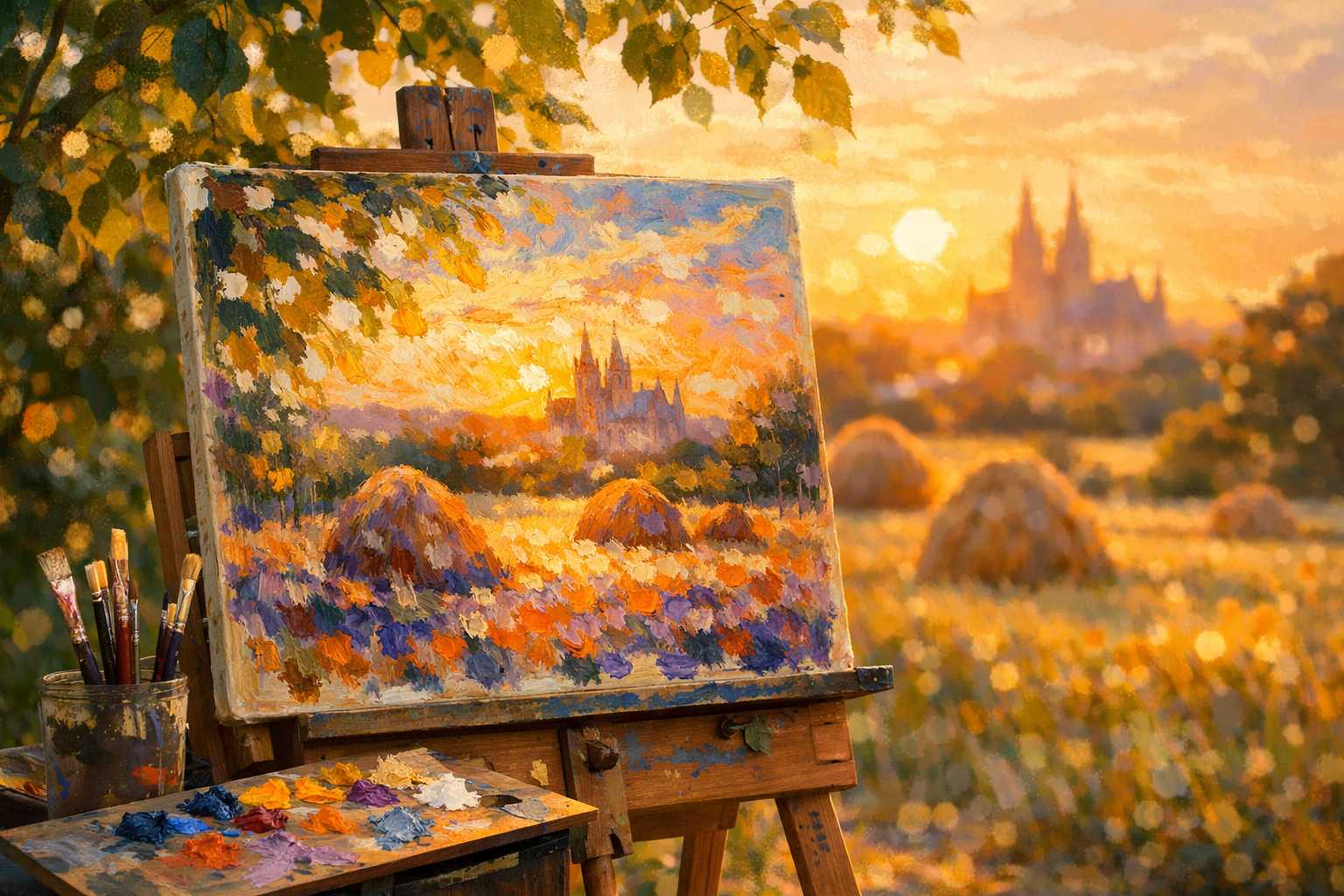
Unraveling the Magic of Light: A Glimpse into the Heart of Impressionist Art
Ever wondered what brings Impressionist paintings to life? The answer is their transformative approach to portraying light. Rather than merely painting objects, these artists painted the light that bathed these objects.
The Dawn of Impressionistic Light Techniques
The initiation of the Impressionist style in the 1860s forever transformed the art world. Notable artists like Claude Monet and Pierre-Auguste Renoir pushed the boundaries and broke traditional rules of painting, predominantly shifting their canvases outdoors to observe and study natural light intimately.
Their adventurous step stunned the traditional art society, who were accustomed to creating art in studios with manipulated lighting. The Impressionists replaced these static confines with the limitless and ever-changing beauty of natural sunlight.
The impact was nothing short of extraordinary. Their paintings frozen moments of transient illumination. Each stroke of the brush encapsulated the playful interaction of light with different surfaces.
The Art of Studying Natural Light
The Impressionists quickly grew into scholars of light, observing its varying nature throughout the day. They noticed how the sunlight transformed from a cool, crisp hue in the morning to a harsh, direct intensity at midday and eventually mellowed into a warm, golden glow at dusk.
They became aware of how light would ricochet off surfaces, creating shadows that were not merely dark spaces but a reflection of colors from neighboring objects. This epiphany gave rise to a massive shift in their artistic approach.
Impressionists were also drawn to the impact of weather conditions on natural light. The soft, diffused illumination on cloudy days and the intense contrasts and bright hues of sunny days provided a plethora of unique opportunities for their paintings.
The Science of Color in Light Effects
While traditional artists would blend colors to create darker shadows, Impressionists took a different, innovative path. They employed contrasting colors to depict the dance between light and shadow.
They placed orange-lit areas adjacent to blue shadows, or paired purple shadows against yellow highlights. This technique imbued their paintings with a pulsating vitality.
Impressionists also steered clear of using black paint for shadows. Instead, they mixed deep purples, blues, and browns, thus making the shadows dynamic and radiant.
Their signature move was the 'broken color technique'. Rather than blending colors, Impressionists placed pure colors side by side, allowing the viewer's eyes to naturally merge these hues.
Brushwork: The Essence of Impressionist Techniques
Impressionist brushwork was instrumental in capturing the fleeting essence of light. Brisk, decisive strokes represented motion and vitality, with every mark carrying unique significance.
They employed short, jagged brushstrokes to impart texture and sparkle, while long, flowing strokes implied smooth surfaces and delicate movement. The brushstrokes’ direction mirrored the natural course of light.
Intentionally visible brushstrokes infused energy into their paintings besides revealing the hand of the artist and their individuality.
Impressionists often used the 'wet-on-wet' painting technique for generating soft, fused results— by applying fresh paint onto already wet layers— for portraying atmospheric conditions perfectly.
The Challenges of Painting Different Times of the Day
The delicate beauty of the morning light, with its cool tones and long, gentle shadows traversing landscapes, provided a unique challenge to the artists.
The harsh contrasts of light and shadow characteristic of midday required bold choices of color. Artists had to work speedily to keep pace with the rapidly changing light conditions.
The 'golden hour', with its warm light transforming everyday scenes into enchanting visuals, became a favorite among the Impressionists.
They were even intrigued by artificial sources of light, with gas lamps and candlelight enabling the creation of warm, intimate imagery.
Master Impressionists and Their Trademark Techniques
Claude Monet had a fascination for shifting light and his series of haystack and cathedral paintings— displaying the same subjects under varying light conditions— showed a stunning range of colors and moods.
Renoir excelled at portraying dappled sunlight filtering through leaves, creating an enchanting play of light and shadow, and imparted a warm, radiant glow on skin tones.
Camille Pissarro was a maestro at capturing urban light effects in his paintings of busy avenues and market scenes, demonstrating the visible difference between city light and country illumination.
Edgar Degas explored the dramatic possibilities of artificial light in his famous ballet dancer paintings, where the gas lamps created an enigmatic, theatrical aura.
Impressionist Light Techniques in the Modern Age
Today's artists, including digital artists, continue to study the principles of Impressionist light. These foundational observations about natural light extend beyond traditional painting and have permeated photography, influencing phenomena like golden hour photography and studies of warm/cool light.
Even interior designers implement Impressionist color theories, understanding how natural light influences the color of a room throughout the day, which is instrumental in creating harmonious living spaces.
The Journey to Mastering Light Studies
Starting your own light study involves keen observation of daily surroundings, noting the changing hues of shadows throughout the day as light bounces off different surfaces.
Begin with subjects as simple as standalone objects placed near windows, where the light changes naturally. Follow up with painting or sketching the same object at different times of the day.
Maintain a journal to document your observations about the temperature of colors, the direction of shadows, and weather conditions. Engaging in this will refine your eye to perceive like the Impressionist masters.
Practicing en plein air painting or sketching will provide valuable insights on natural light. No need to press for perfection initially.
The Timeless Influence of Mastering Light
The Impressionists' revolutionary methods changed the way we perceive art, proving that light could be the star of the show rather than merely illuminating objects.
Their techniques have left a deep impact on succeeding art movements. Post-Impressionists advanced from their early breakthroughs, and many modern art styles owe a great deal to their innovative ideas.
The brilliance of Impressionist art is celebrated in museums across the globe. The wonder of how the paintings seem to glow from within remains as captivating to today's audiences as it was 150 years ago.
Delving into the world of Impressionist light effects opens up exciting artistic vistas whether you engage in painting, photography, or simply appreciating the art. The lessons imparted by the masters continue to inspire artists in their pursuit of capturing the perfect light.