Broken Color Technique: Master Guide to Impressionist Style
The Art of Broken Color Technique: A Comprehensive Guide to an Impressionist's Approach
Curious as to how Impressionist artists produce such captivating, glimmering effects in their paintings? The answer lies in the unique method known as the broken color technique.
This revolutionary painting approach appeared in the 19th century, changing the face of art. In the present day, artists use the same method to produce spectacular, vivid creations that seem to dance in light.
An Explanation of the Broken Color Technique
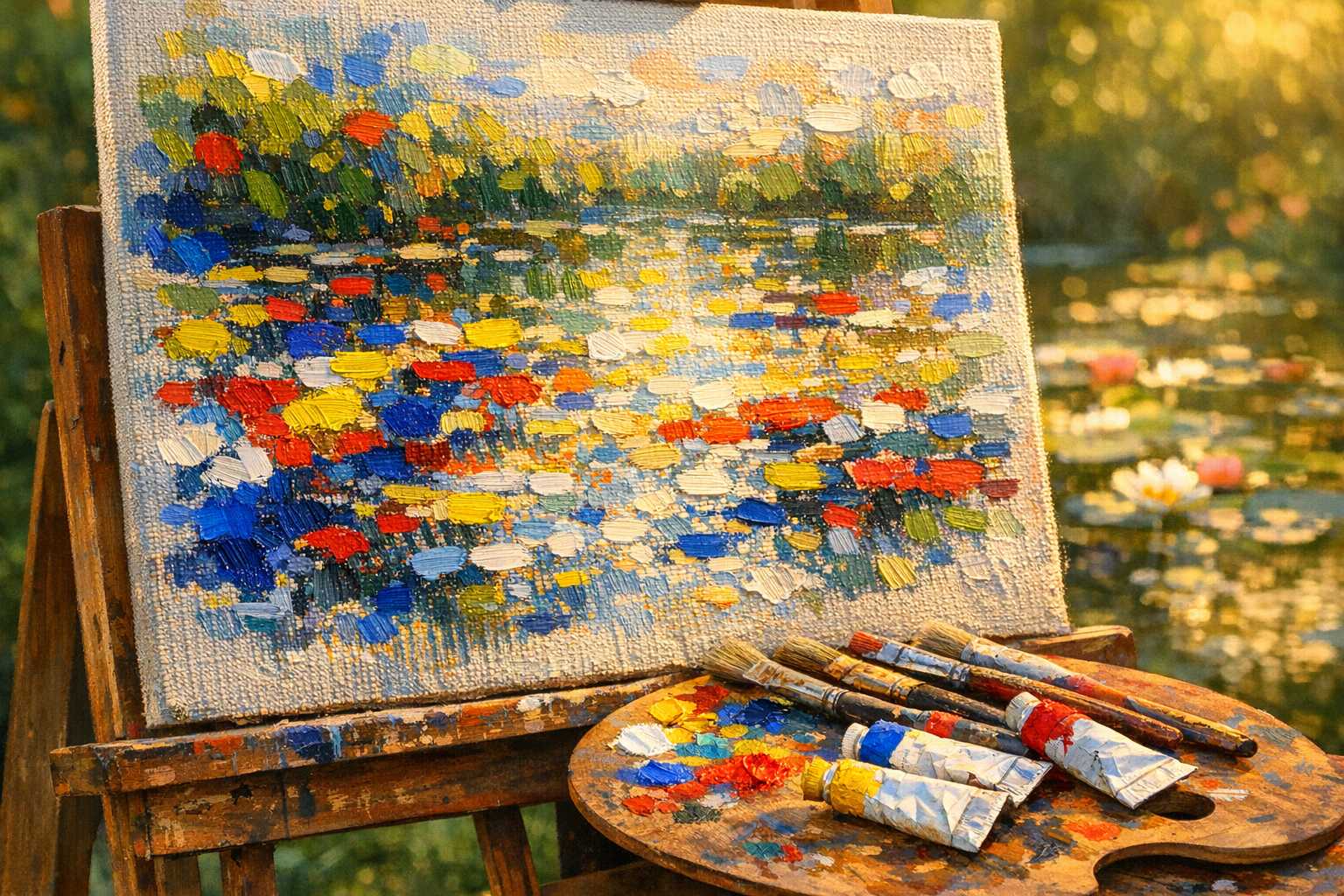
The broken color technique involves applying raw colors directly onto the canvas. However, instead of merging the colors on your palette, you position them side by side.
As an observer, your eye instinctively blends the colors from a distance, allowing for a vibrant and luminous impact that cannot be achieved through the usual color mixing.
Analogously, it is similar to pixels on a digital screen. On close examination, the individual color dots are distinctly visible. As you move away, these dots blur to form a smooth, complete image.
The Origin of this Pioneering Approach
This forward-thinking technique was led by French Impressionists in the 1860s, with Claude Monet being one of the earliest pioneers to fully utilize broken coloring.
Conventionally, the painting method was designed to swiftly capture transitory light effects. The artists found the traditional painting methods to be too slow and rigid for their creative vision.
It benefited the artists by enabling them to work promptly outdoors, effectively capturing the changing luminosity throughout the day.
Other noteworthy practitioners, such as Pierre-Auguste Renoir and Camille Pissarro, adapted and developed their personalized techniques of broken color.
The Method's Appeal to Artists
Mirroring Nature's Play of Light
Just as sunlight encompasses all colors of the spectrum, the broken color technique emulates how we perceive light in the natural world. When light lands on an object, it reflects an array of colors into our eyes. This technique beautifully replicates this phenomenon.
Infusing Life into Art
By placing pure colors side by side, artists can create visual tension, which results in lively, energetic creations. This technique ensures that the colors retain their vibrant intensity and clarity, preventing them from becoming dulled or muddy.
Ideal for Plein Air Artistry
The swift application of colors makes this method ideally suited for plein air painting, allowing you to capture changing light conditions swiftly. Gone are the days of spending time creating the perfect color on your palette. Just choose the color and apply it directly.
Vital Tools and Materials
Selection of Paints
Opt for premium paints that possess a high concentration of pigments. You would require primary colors along with earth tones.
Indispensable colors encompass:
- Cadmium yellow
- Ultramarine blue
- Cadmium red
- Titanium white
- Burnt umber
- Raw sienna
Recommended Brushes
Short and stiff brushes are ideal for applying broken colors. Flat brushes yield pleasing rectangular shapes, while round brushes create softer, organic shapes. It's advised to have different sizes handy to achieve varied effects.
Canvas Preparation
Slightly textured canvases work best for this technique, as they assist in catching and retaining paint marks. A linen canvas, in particular, offers a suitable texture.
Before getting started, prime your canvas with a light, neutral tone. This ensures that the broken color passages come together in harmony.
A Step-by-step Guide
Step 1: Sorting Out your Color Strategy
Before you start, carefully inspect your object. Recognize the main color families you would require. Consider the relationships between warm and cool colors and decide where each category will dominate.
Step 2: Drawing Major Shapes
Begin with loose, broken strokes for larger areas. Don't be overly concerned about achieving perfect coverage at first.
Ensure leaving small gaps between each stroke. These gaps are instrumental in achieving the broken color effect.
Step 3: Inserting Additional Colors
Layer secondary, complementing colors into your initial blocks. Place cool toned colors adjacent to warm ones.
Introduce variation in the size and direction of your brushstrokes to create movement and visual interest.
Step 4: Refine and Adjust
Often step back to assess your progress. The optical illusion of the broken color effect is best experienced from a certain distance.
Make final amendments wherever necessary. With this technique, less is usually more.
Major Mistakes to Sidestep
Over-merging of Colors
The gravest error is merging colors together on the canvas, which defeats the whole aim of the technique.
Maintain your brushstrokes as separate entities. Allow your eye to blend the colors, not your brush.
Overuse of Colors
Maintain a limited palette for harmonious results. Overusing colors often results in mayhem rather than unity.
Opt for colors that complement each other. Understanding color theory can assist in recognizing which combinations harmonize.
Working on a Small Scale
It's crucial to give the broken color technique space to breathe. Tiny paintings don't provide enough room for the technique to work effectively.
Begin by working with larger canvases until you have mastered the method. Only then, should you experiment with smaller scales.
Advanced Recommendations for Improved Outcomes
Diversify Your Brushwork
Avoid repeating identical brushstrokes. Blend short jabs with wider sweeps and change the pressure and angle of your brush. This results in creating a dynamic surface texture.
Temperature Consideration
Warm shades appear closer, while cool tones seem distant. Utilize this knowledge to construct depth in your painting.
Warm broken colors work best in the foreground, while cooler tones are ideal for distant elements.
Study Light's Effects
Invest time in understanding how light impacts matter in nature. Take note of how shadows harbor reflected colors.
Appreciation and understanding of individual color notes within large clusters is a skill that improves with experience.
Iconic Examples to Investigate
Monet's Water Lilies Series
These art pieces showcase the brilliance of broken coloring. Monet layered numerous tiny strokes to create sparkling water effects.
Analyse how he modified his brushwork across different sections. Each segment possesses its unique rhythm and exuberance.
Renoir's Luncheon of the Boating Party
This particular piece is an excellent demonstration of broken coloring in figurative work. Renoir used this technique for both background aspects as well as figures.
Observe how the technique creates an authentic representation of light and atmosphere in the composition.
Pissarro's Boulevard Scenes
These cityscapes display the application of broken color to architectural subjects. Pissarro successfully captured the hustle and vitality of city life.
His loose brushwork suggests motion and activity without an overemphasis on details.
Contemporary Applications
Digital Art Innovations
Many digital artists are now becoming inspired by the effects of broken coloring. Various custom brushes can imitate traditional painting techniques.
Research traditional examples to comprehend the fundamental principles, before manipulating them with digital tools.
Exploration of Mixed Media
Combining broken color with other techniques can yield extraordinary effects. Try incorporating pastel, crayon, or even collage elements.
The crux of the method lies in staying true to the basic principle of optical color blending.
Essential Exercises for Practising
Exercise 1: Elementary Color Studies
Paint basic shapes utilizing ONLY broken colors. Attempt to paint a red apple using various shades of red, oranges, and complementing greens.
Focus on maintaining the strokes separate and defining. Do not blur or smooth them together.
Exercise 2: Landscape Sketches
Choose a simple landscape scene for practice. Start with only three or four colors.
Swiftly catch the essence rather than the intricacies. This helps you concentrate on the relationships between colors.
Exercise 3: Light Study
Try painting the same subject at multiple times of the day. Observe how the hues alter with the shifting light.
This exercise significantly contributes to developing your color observation skills.
Concluding Remarks
The broken color technique gives you the opportunity to diversify your artistic capabilities. Perfecting it requires diligence, but the outcome unquestionably repays your efforts.
Start with simple subjects and a limited palette. Slowly gain confidence before venturing into complex scenes.
Remember, this technique aims to encapsulate the essence of light and color. Avoid getting overly absorbed in minute details.
But most importantly, ENJOY it! The Impressionists painted with enthusiasm and spontaneity. Let their spirit guide your artistic exploration.
By being patient and continually honing your skills, you will soon produce paintings that radiate life and luminosity. The broken color technique may well revolutionize your perception and your depiction of the world around you.